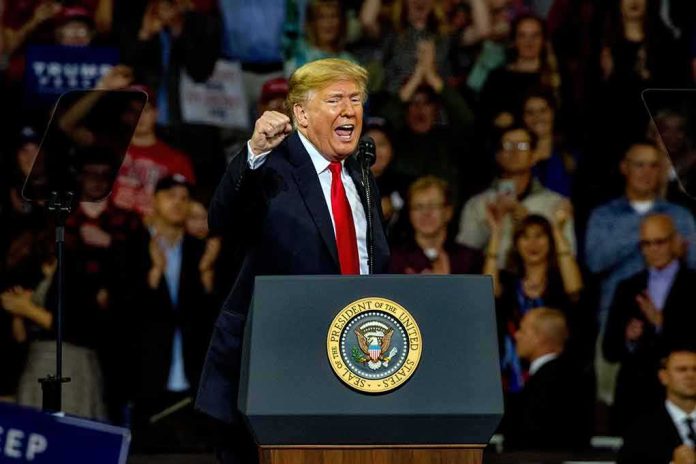
When heads of state talk trade on a podium built for sport, markets still listen; President Trump’s on-course promise to scrap whiskey tariffs was not a throwaway line, it was a policy signal with immediate commercial consequences for distillers in Scotland, Northern Ireland, and potentially Ireland itself.
The Short Version
- President Trump announced the removal of tariffs and restrictions on whiskey imports, framed around the UK royal state visit and reiterated during golf-related public remarks.
- UK officials briefed that the change covered all UK-distilled whisky, and some outlets reported that coverage extended to Irish whiskey as well.
- Even modest changes to spirits tariffs swing margins and shelf prices; whiskey is a perennial bargaining chip in larger U.S.–EU/UK disputes.
- Expect competitive shifts within the “Irish whiskey” category, especially between Northern Ireland (UK) and the Republic of Ireland (EU), if differential rates persist.
What Trump announced, and who it covers
President Trump stated that the United States would remove “all tariffs and restrictions on whisky imports” in honor of the UK royal state visit, a gesture immediately interpreted through the lens of Scotch Whisky and, crucially, whiskey distilled anywhere in the UK. Subsequent coverage and UK government briefings indicated the commitment applied across UK-origin whisky, not just Scotland, with reporting in multiple outlets emphasizing that Northern Irish producers would benefit immediately from zero-duty access to the U.S. market. Some reporting went further, asserting that officials confirmed the scope included Irish whiskey more broadly, though contemporaneous pieces also captured uncertainty from Irish industry bodies pending formal tariff-schedule updates.
The short-term commercial read-through is straightforward. Zero tariffs for UK-distilled product lower landed costs and firm up pricing headroom in the U.S. for Scotch and Northern Irish whiskey. If Irish whiskey from the Republic continued to face the prevailing U.S. tariff, the shift would hand Northern Irish distillers a price advantage against their cross-border competitors—small in percentage terms, but material at the brand level where gross margins are tight and distributors calibrate depletions carefully.
Why whiskey keeps getting dragged into bigger trade fights
Whiskey and whisky (the latter a protected Scotch geographic indication) repeatedly end up collateral in disputes that have little to do with spirits—steel and aluminum fights, aerospace subsidies, and “reciprocity” drives. The pattern since 2018 is familiar: the U.S. levies or threatens broad measures; the EU and UK retaliate or suspend in kind; spirits become bargaining chips until a pause or partial truce resets the scoreboard. Industry timelines document the 2018–2021 cycle, when the EU imposed a 25% tariff on American whiskey in response to U.S. metal tariffs, followed by suspensions and five-year standstills as negotiators de-linked liquor from aircraft and metals spats. This is tariff whiplash: not a permanent alcohol policy, but a lever inside larger deals.
The Trump White House has repeatedly used alcoholic beverages as pressure points in Europe-focused disputes, including threats of 200% tariffs on EU wine and spirits in retaliation for EU moves on U.S. whiskey—blunt instruments that concentrate political pain in export-reliant regions and iconic categories. Against that backdrop, a unilateral U.S. removal of duty on UK whisky serves both symbolism and leverage: it rewards a close partner while isolating other European producers until broader terms shift. BorderLex reporting characterized the royal-visit announcement as a zero-for-zero understanding on UK whisky; Irish industry voices, by contrast, asked for clarity and parity while waiting for the tariff code to catch up.
The Irish whiskey wrinkle: one category, two jurisdictions
“Irish whiskey” is a protected spirit category produced on the island of Ireland—both in the Republic of Ireland (an EU member) and Northern Ireland (part of the UK). When Washington alters tariffs for UK-origin spirits, Northern Irish whiskey is inside the tent; whiskey from the Republic is not. That jurisdictional split matters commercially. BBC and trade coverage highlighted that the U.S. shift would advantage Northern Irish distillers versus producers in the Republic if the latter remained at the general tariff rate then in force under the U.S.–EU trade posture. Irish industry groups have repeatedly warned that even a 10–15% headline rate erodes margins and can knock brands off U.S. retail shelves where price points are finely tiered.
If, as some reporting suggested, the UK brief extended the U.S. zero-duty approach to “all whiskey including Irish,” that would imply a broader carve-out beyond UK origin. But Irish bodies and public broadcasters flagged the absence of immediate schedule changes at the time of the announcement—a reminder that in customs, implementation follows proclamation. In practice, importers and distributors watch the Harmonized Tariff Schedule entries and U.S. Customs instructions; the policy is real when the bill of lading clears at the promised rate.
Mechanics: how a few percentage points move markets
Tariffs land on the customs value, then ripple through excise, state three-tier markups, and retail pricing ladders. In a category where a $2–$4 swing can bump a bottle into a new shelf tier, a 10–15% change at the border can easily translate to $5–$10 on the shelf—enough to alter consumer substitution among Irish, Scotch, and American whiskeys. Distributors react by rebalancing portfolios; control states adjust list prices; on-premise operators tweak cocktail specs. For producers, the arithmetic is starker: hold price by sacrificing gross margin, or protect margin and risk velocity. That is why seemingly “symbolic” tariff moves ignite immediate phone calls among CFOs, compliance teams, and U.S. import partners.
The cross-Channel dynamic compounds the effect. A Scotch producer regaining duty-free access gains room to spend on trade marketing; a Northern Irish distillery can undercut a rival from County Cork by a few dollars and win a placement; U.S. bourbon brands monitor the response risk in Europe, recalling the 2018–2021 sales hit when retaliatory tariffs chilled exports. Industry coalitions track this choreography obsessively because spirits are easy targets and slow to recover once delisted abroad.
Trump just announced he is removing the
USA tariffs of Irish whisky , in Ireland!— Brian Flanagan (@BrainFlana49911) September 13, 2026
Where the real uncertainty lies—and what to watch next
The headline is settled: the U.S. commitment to lift tariffs and restrictions on UK whisky was publicly declared and affirmed by UK officials. The open questions live in scope and reciprocity. If the operational texts (proclamations, Federal Register notices, U.S. Customs guidance) codify a clean, durable zero rate for UK-origin whisky, the benefits crystalize for Scotch and Northern Irish whiskey quickly. If Irish whiskey from the Republic remains at a separate EU-linked tariff, expect a period of price dispersion and market-share stress inside the broader “Irish whiskey” set.
Two signposts will tell you where this lands. First, the tariff schedules themselves—watch the HTSUS lines for distilled spirits and any accompanying USTR notes that specify origin and preferential treatment. Second, the larger trade chessboard—wine-and-spirits threats, steel-and-aluminum talks, and any bilateral “zero-for-zero” understandings that pair relief on whisky with concessions elsewhere. Whiskey has been here before, and the industry’s muscle memory is clear: celebrate relief, bank the gains quickly, and prepare for the next turn of the screw if broader negotiations sour.
Sources:
facebook.com, bbc.com, farmersjournal.ie, borderlex.net, rte.ie, pwc.ie, abcnews.com, cnn.com, apnews.com, tandfonline.com