When secondary schools erupt, the smoke almost always signals something deeper than teenage restlessness: it is a referendum on state capacity. France’s wave of lycéen blockades, street clashes, and fires was fundamentally about classrooms that are too full, teachers who aren’t there, and buildings that no longer do their job.
The Short Version
- Students protested overcrowded classes, teacher shortages, and deteriorating facilities; officials acknowledged parts of the grievance as legitimate.
- Disruptions spread nationwide, with hundreds of schools affected and blockades at scores of sites.
- Police detained large numbers over several days, reflecting the breadth of the unrest.
- Violence and politicized framing risked eclipsing the core issue: France’s ability to staff and maintain its schools.
What actually happened: scale, cities, and the state’s own numbers
Across France, students organized blockades and walkouts that disrupted hundreds of secondary schools. The Education Ministry said roughly 400 schools were impacted on a single day early in the wave, while later tallies described effects across more than a thousand lycées, with formal blockades at over two hundred of them. The footprint spanned Paris and its suburbs and reached Lille, Lyon, Marseille, Strasbourg, Dijon, Nantes, and parts of Gironde—evidence that this was not a parochial dispute but a national one.
Public-order figures tracked the same escalation. The Interior Ministry reported 440 detentions on one day and 625 the next, most of them minors. By Thursday, the cumulative arrest number neared 2,000. The counts vary by outlet and cutoff time, but the pattern is consistent: a large, fast-moving mobilization that forced a national response.
What students said—and what officials conceded
Talk to the students and the list is concrete, not abstract: missing math teachers, no immediate replacements when staff are absent, one nurse for a school of thousands, prefab classrooms that overheat in summer and can be frigid in winter, ventilation so poor that windows barely open. Those accounts, gathered on the ground by broadcasters, align across multiple cities and schools. Crucially, Education Minister Édouard Geffray publicly recognized that some of the demands were legitimate—even as he condemned violence—an admission that places the dispute squarely within the realm of solvable service delivery, not culture-war theatrics.
This is the heart of the matter. Overcrowding and vacancy rates are not rhetorical flourishes; they are operational constraints that turn every timetable change into triage. When a centralized system fails to supply replacement teachers at pace, or when local maintenance backlogs leave classrooms unusable during heat waves, the burden shows up where teenagers spend their days—on the timetable, in the corridor, and at the school gate.
Mechanism: how shortages and crumbling buildings become public-order crises
French secondary education is centralized in funding and staffing. That design has virtues—equity of curriculum, national hiring pipelines—but it also creates single points of failure. Replacement staffing depends on available pools and administrative speed; facilities management competes with every other public investment priority. When vacancy rates persist and maintenance is deferred, pressure accumulates quietly until a triggering moment—often the start of term, a heat wave, or a high-profile staffing lapse—converts long-simmering frustration into visible action. Blockades and “lycée fermés” signs are not simply symbolic; they are leverage in a system where disruption is often the only tactic that produces urgent attention.
That leverage was amplified by timing. The protests rose alongside a broader public-sector mobilization and budget debate, the traditional environment in which education grievances become a proxy contest over fiscal choices. In such periods, students’ claims about class size and absent teachers are heard not only as school complaints but as arguments about the state’s broader capacity and priorities.
Violence, attribution, and the risk of losing the thread
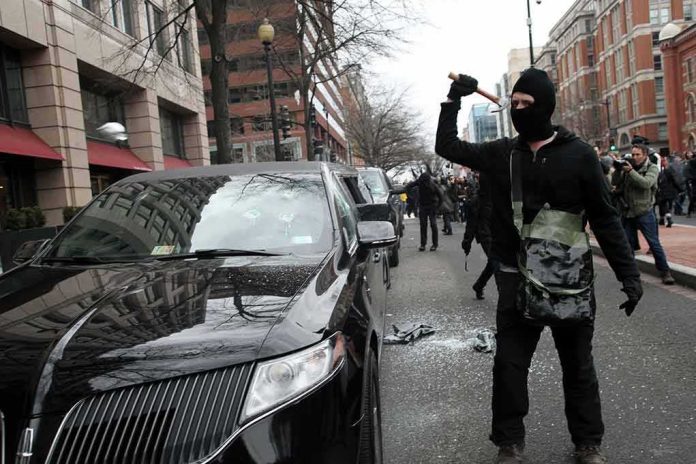
As the days wore on, fires at school entrances, projectiles, and clashes with riot police became part of the visual grammar of the story. That imagery matters—but it also scrambles attribution. Officials suggested some of the most violent actors were not students, a familiar complication in urban unrest. Whatever the mix, the state recorded dozens of injuries, opened oversight inquiries into police conduct in specific incidents, and emphasized a public-order frame. The result is a narrative shift that can crowd out the service-delivery question that started the mobilization.
Two things can be true at once: violence is unacceptable around schools, and the baseline grievances are credible. Both the arrest numbers and the ministerial acknowledgment point to a phenomenon larger than opportunistic vandalism. The task for policymakers is to separate criminal acts—which require investigation—from the structural shortfalls that only budgets, staffing pipelines, and maintenance backlogs can resolve.
Student protests spread across France over school conditions and funding, with clashes reported in several cities, around 400 high schools closed, and 2,000 arrests reported.#MadhyaPradesh #France #StudentProtests #Education#sanewsmadhyapradesh pic.twitter.com/r2BY3yllgv
— SA News Madhya Pradesh (@SAnewsMP) October 2, 2026
Why this keeps happening: the French base rate
France has a long pattern in which education becomes the stage for more general battles over state capacity. When class sizes creep up, replacement teachers fail to materialize, and buildings decline, students and their allies have few institutional venues that deliver relief at speed. Blockades, walkouts, and media-saturated confrontations, however costly, often succeed at moving education to the front of the national docket. That cycle is not mysterious—it is institutional feedback. Unless the state reforms the mechanisms that allocate staff and maintain facilities, the next iteration is a matter of when, not if.
The deeper lesson is operational, not ideological. Centralization without responsive local execution breeds brittle systems. A credible fix therefore looks less like a one-off infusion and more like plumbing: faster substitute-teacher deployment protocols, transparent vacancy and replacement dashboards by academy, ring-fenced maintenance funding with publishable backlogs, and heat-and-ventilation standards that are enforced, not aspirational. When those nuts-and-bolts functions work, there is nothing for teenagers to blockade.
What the numbers say—and don’t
Reported figures differ across days and outlets—400 schools impacted one day, more than a thousand in scope later; 440 detentions Tuesday, 625 Wednesday, nearly 2,000 by Thursday—because the situation evolved quickly and agencies used different counting windows. The discrepancies are not contradictions so much as snapshots. The consistent signal across sources is breadth: hundreds of schools touched, nationwide geography, and high-volume detentions that the Interior Ministry itself confirmed.
If anything, the casualty of the fast-moving cycle is granular documentation of the underlying conditions. News cameras see smoke and shields more easily than vacancy rosters and HVAC logs. Yet the on-record student accounts, the ministerial concession on legitimacy, and the multi-city spread together form a coherent picture of stress in the system that predates the first barricade.
What would count as resolution
France knows how to pour political energy into a social fire; it is harder to do the boring work that prevents the next one. Resolution here is not a slogan but a service-delivery plan with accountability: academy-by-academy vacancy reduction targets and published fill rates; emergency replacement pools sized to realistic absence patterns; thermal comfort and ventilation audits with deadlines and budgets; and a nursing and counseling baseline per student population that reflects modern needs. Pair that with a durable channel for student and staff input that triggers action faster than a blockade, and the incentive to close gates evaporates.
Sources:
humanevents.com, internazionale.it, bbc.com, lemonde.fr, cnn.com, france24.com, theguardian.com