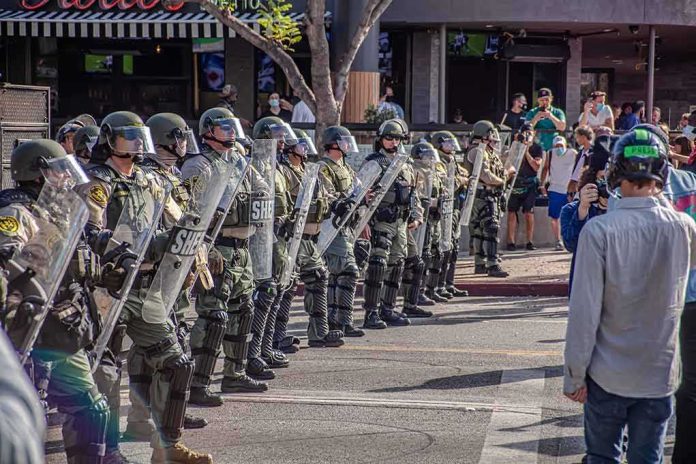
A viral July 4 video of a mob dragging a South Carolina officer to the ground is now testing trust in both the community and the police who are supposed to protect it.
Story Snapshot
- Six people, including four juveniles, face serious charges after a North Charleston July 4 block party turned violent.
- Police say they recovered four guns, two capable of automatic fire, plus a makeshift spear from the chaotic scene.
- Video shows a crowd swarming an officer, while 911 callers described what “felt like a war” before police arrived.
- The party was a permitted event with a 10‑year calm history, and officials admit they still do not know what triggered the explosion.
From Permitted Party to Violent Clash
North Charleston’s July 4 block party was not a rogue street gathering but a permitted neighborhood event that had reportedly run for a decade without major trouble. Police leaders say officers met earlier with organizers to talk about traffic and safety, trying to keep a crowded celebration under control. That calm record matters. Many readers on both the right and left feel that basic community events should be safe spaces, not scenes of chaos where families suddenly find themselves dodging fights and gunfire.
On this holiday night, though, 911 callers began describing a very different picture. In newly released audio, callers talked about people firing guns and aiming fireworks at cars, painting a scene one person compared to a “full‑on war.” By the time officers moved in, police say roughly 400 people were in the area. This scale is important. Large crowds mixed with alcohol, fireworks, and firearms have turned many July 4 events around the country into danger zones, feeding the shared sense that public order is breaking down.
What Happened When Police Stepped In
Police reports say officers first tried to end the party through loud public announcements, telling people the event was over and they needed to leave. According to the department, some in the crowd ignored those orders, and fights broke out. Then came the moment captured in the viral video: an officer is swarmed, dragged to the ground, and hit multiple times as others rush in. A teenage girl appears to strike the officer with a club‑like object, while others crowd around and record the attack on their phones.
Authorities say two female officers suffered minor injuries during the attacks but were able to return to duty. Police later announced multiple arrests, though the numbers shifted as more suspects were processed. Early statements mentioned four arrests; later reports described six, and then seven people facing charges tied to the brawl and the assault on officers. That changing count troubles many Americans who already doubt the system’s honesty. When basic facts move around, it feeds the impression that officials are scrambling to manage a public relations crisis rather than calmly laying out the truth.
Guns, a Spear, and Serious Charges
North Charleston’s police chief says officers recovered four guns at the scene, including two that could fire automatically, plus what he described as a makeshift spear. One 19‑year‑old, Giovanni Mekhi Sincere Campbell, is charged with possession of a machine gun, while 18‑year‑old Sa’Mya Adriana Collette Weaver faces charges of assault on police while resisting arrest. Police say juveniles in the group face accusations of assault by mob and weapons offenses, but they have not clearly matched each charge to each young person.
Investigators also linked the melee to stolen police gear. Separate court records describe how officers later executed a search warrant at the home of 21‑year‑old Dejuan Ravenel. They say they found a stolen stun gun and loaded gun magazines taken from an officer during the chaos. For many readers, details like machine guns, a spear, and stolen police equipment signal a deeper breakdown. Whether you worry about crime or about over‑policing, it feels like basic lines of respect between citizens and law enforcement are eroding in ways that make every encounter more dangerous.
Unanswered Questions and the Trust Gap
Even as they describe the violence, police admit they do not yet know what lit the fuse. The chief says the investigation is still trying to determine the specific trigger between first contact with the crowd and the moment when things turned violent. That gap matters. Without a clear timeline, people are left to fill in the blanks themselves, based on their politics and past experiences. For some, this looks like proof of “lawless teens.” For others, it raises questions about police tactics at a permitted, long‑running neighborhood event.
Exclusive- North Charleston Mayor Reggie Burgess to me about the viral 4th of July block party video: 'Nothing wrong is right.'
WATCH:https://t.co/6isc6kWa1S#chsnews
— Quintin Washington (@QuintinReports) July 9, 2026
The bigger problem is that the most complete record of what happened may never be seen by the public. Police leaders say body camera footage is under review for more arrests but will not be released. In a country where past videos have exposed both brutal crimes and serious police misconduct, that decision cuts both ways. Many conservatives see it as needed protection for officers under siege. Many liberals see it as a shield for possible abuse. Growing numbers on both sides simply see it as another example of a closed system that answers more to itself than to ordinary citizens.
Holiday Violence and a Fraying Social Contract
This North Charleston case fits a wider July 4 pattern. National groups tracking gun violence say recent holiday weekends have seen hundreds of shootings and scores of deaths across almost every state. Independence Day, once mainly about family cookouts and small town parades, now often comes with headlines about mass shootings, street brawls, and clashes with police. Each new incident, whether in a poor city neighborhood or a suburban festival, adds to the feeling that officials are unable or unwilling to get a grip on rising disorder.
At the same time, research on police violence and racial disparities shows that many communities, especially Black communities in places like North Charleston, have deep, justified fear of how quickly force can escalate. People remember cases where video led to officers being fired, charged, or even sent to prison for excessive or deadly force. So when leaders refuse to release footage and commentators call for automatic 10‑year sentences for teens, both left and right see a familiar pattern: a political and legal system that talks about “justice” and “safety” but too often serves elites, protects itself, and leaves regular people caught between dangerous streets and unaccountable power.
Sources:
facebook.com, youtube.com, abcnews4.com, live5news.com, foxnews.com, instagram.com