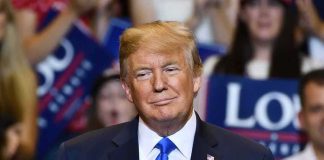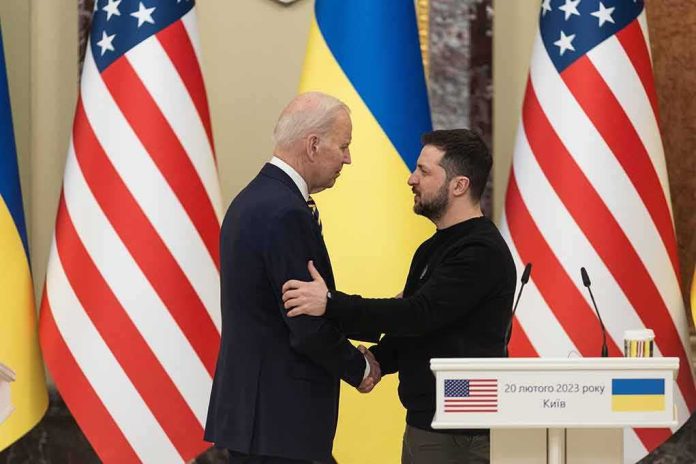
When Trump and Zelenskyy return to the table, the immediate outcomes are often modest, but the signal is unmistakable: the diplomatic track is being kept alive alongside a grinding war that neither side has yet been able to end by force.
Key Points
- The latest Trump–Zelenskyy meeting at the White House was closed-door, lasted about an hour, and was described by both sides as a “good meeting.”
- The core agenda combined concrete defense-industrial issues — notably Patriot interceptor production licenses — with a push to “reinvigorate” diplomacy with Russia.
- This encounter fits a broader pattern: Trump–Zelenskyy bilaterals are high‑visibility and heavy on optimistic language, but often light on immediately verifiable commitments.
- Despite that gap, repeated interactions have gradually sketched out the architecture of potential security guarantees and a peace framework, even as territorial questions and Russian buy‑in remain unresolved.
Trump and Zelenskyy Back at the Table: What Actually Happened
The most recent meeting between President Trump and President Volodymyr Zelenskyy took place behind closed doors at the White House, with only the two leaders and a limited circle of advisers present. This format matters; it marks a return to a leaders‑only channel after earlier, publicly contentious sessions in the Oval Office that ended without agreement and, in one case, with a minerals deal abruptly canceled. Zelenskyy later posted that he and Trump had a “good meeting,” a formulation he has used before when he believes talks have moved the ball forward but stopped short of a breakthrough.
In his public summary, Zelenskyy highlighted two focal points. First, he said they discussed licenses for the production of interceptor missiles for the US‑made Patriot air defense system — not just deliveries, but Ukraine’s ability to produce key components itself. Second, he stressed the need to “reinvigorate” diplomacy, signaling that Kyiv sees renewed US engagement as essential to any serious attempt to move toward a negotiated end to Russia’s invasion. No detailed communiqués or joint statements followed, but the choice to foreground defense‑industrial cooperation and diplomatic process rather than immediate battlefield aid says a great deal about where the relationship now sits.
A Pattern of High-Signal, Low-Verifiability Diplomacy
To understand the significance of this meeting, you have to place it in the sequence of Trump–Zelenskyy encounters since the war began. From Mar‑a‑Lago to Washington, Ankara, Davos, and summit sidelines, these meetings have repeatedly produced strong public language about progress, coupled with striking vagueness on the operational details of any deal.
Florida sessions in late 2025 and early 2026 are a textbook example. After hours of talks at Mar‑a‑Lago, both leaders spoke of “significant strides” and an agreement that was “about 90%” complete. Zelenskyy praised “strong security guarantees” and at one point said those guarantees were “100% agreed,” while simultaneously acknowledging that key elements remained unclear and would require further meetings with Trump and European leaders in January. Trump, for his part, talked about negotiations being in their “final stages” but declined to offer a timeline, citing “thorny issues” still on the table, and noting that any peace would ultimately hinge on President Putin’s consent.
Independent reporting has consistently flagged the gap between rhetoric and concrete deliverables. A BBC review of one Washington round concluded that, despite optimistic statements, “by the end of Monday, there were no tangible commitments regarding security assurances or progress towards a peace agreement.” The Council on Foreign Relations described another summit as clarifying that there was broad coalition consensus to focus on Ukrainian security guarantees, but with few hard details on what a truce would actually entail. This latest “good meeting” at the White House follows that pattern: clear signals of momentum, limited publicly verifiable substance — at least for now.
Security Guarantees: The Emerging Architecture, Not Yet a Blueprint
If there is a thread tying these encounters together, it is the slow, uneven construction of an architecture of security guarantees for Ukraine. Over multiple meetings, Zelenskyy and Trump have talked about guarantee durations, financial structures, defense‑industrial cooperation, and the role of European partners in underwriting US systems.
In Florida discussions on a reworked peace proposal, Zelenskyy said the United States had offered assurances lasting 15 years, while he argued for guarantees extending up to 50 years. He reiterated his belief that an overall peace accord was roughly 90% complete, but acknowledged that the length and enforceability of those guarantees remained open. In parallel, CNN and other outlets reported Zelenskyy’s description of plans for Ukraine to acquire around $90 billion in American weaponry through European financing, with elements of the package involving Ukrainian production of certain systems that the US would partially purchase. Those arrangements were described as under negotiation, with Zelenskyy expecting formalization within “the next week or ten days” — deadlines that, to date, have slipped.
The new White House meeting’s focus on licenses for Patriot interceptor production fits neatly into this evolving picture. Patriot, a long‑range air defense system, is one of the few platforms with both military and political symbolism: it is technically demanding, expensive, and seen as a hallmark of US commitment. Moving from pure imports to licensed production in Ukraine would deepen industrial interdependence and give Kyiv more predictable control over a critical defensive capability. That, in turn, could make any future security arrangement more credible, even if the precise treaty language remains unsettled.
Diplomacy With Russia: Keeping the Door Open While the War Grinds On
The other half of the puzzle is diplomacy with Russia. Trump has repeatedly framed himself as a potential broker, telling reporters he believes both Zelenskyy and Putin “truly want peace” and offering to help find a solution to the war. He has held extended calls with Putin — one lasted around 90 minutes, according to the Kremlin — and publicly described them as “businesslike and very constructive.” In several instances, he has said he is working to arrange a direct meeting between Zelenskyy and Putin, potentially under US auspices.
On the Ukrainian side, Zelenskyy has alternated between caution and readiness. He has told audiences that roughly 90% of a peace plan’s terms are agreed, but that territorial issues, including Donbas, remain “very tough” and that Moscow has shown no sign of budging on its demands. He has also indicated that Ukraine is prepared for trilateral talks involving American, Ukrainian, and Russian delegations, but emphasized that the timing and venue depend on Washington and Moscow; Kyiv, in his words, is “waiting on the U.S. and Russia to set the next round of peace talks.”
Recent reports on conversations between Zelenskyy and Trump’s envoys Steve Witkoff and Jared Kushner underscore the same dynamic. According to Ukrainian and US sources, they have been exploring concepts for resuming negotiations with Russia to accelerate an end to the war, with Kyiv seeking clarity on what any Trump‑brokered deal would mean in practice for its sovereignty and security. Against that backdrop, Zelenskyy’s call to “reinvigorate” diplomacy in his latest White House recap is less a rhetorical flourish than a reflection of a strategic necessity: Ukraine cannot afford to rely solely on battlefield outcomes, but it also cannot enter talks from a position of visible weakness.
From Confrontation to Closed Doors: Why Format Matters
One reason this latest meeting has drawn attention is that it appears to mark a reset in tone and format after earlier, more confrontational episodes. The February 2025 Oval Office meeting between Trump, Vice President JD Vance, and Zelenskyy was broadcast live and quickly turned heated; Trump and Vance criticized Zelenskyy as obstructive and ungrateful, and what was supposed to end in a minerals resources agreement instead collapsed in real time. That incident raised doubts in Kyiv and among European partners about the reliability of US support and the stability of the personal relationship between the two presidents.
Subsequent sessions — particularly at Mar‑a‑Lago and during G7 and NATO gatherings — have been more controlled, with negotiators and European leaders present and the cameras kept at a greater distance. The latest White House encounter, held entirely behind closed doors and followed by brief, carefully worded readouts, continues that move toward a more professional diplomatic process. In seasoned diplomacy, this shift matters: leaders‑only formats shield sensitive bargaining from domestic grandstanding, while the absence of immediate, detailed announcements often signals that talks have entered a phase where premature publicity could harden positions rather than soften them.
What Meaningful Progress Looks Like — And What It Doesn’t
Does the renewed Trump–Zelenskyy channel represent “meaningful progress” toward peace and security guarantees? The evidence supports a nuanced answer. On the one hand, there is now a reasonably coherent set of concepts on the table: multi‑year security guarantees, large‑scale financed arms packages, licensed production of systems like Patriot, trilateral or adviser‑level talks with Russia, and an evolving 20‑point plan whose broad contours appear largely agreed. That is more than symbolic optics; it is the scaffolding of a possible settlement.
On the other hand, critical elements remain unsettled. Territorial arrangements — the status of occupied regions, demilitarized zones, and potential referenda — are described by both sides as “thorny” and “very tough,” with no sign that Moscow is prepared to compromise. Guarantee duration and enforcement mechanisms are unresolved, with Zelenskyy pushing far beyond the 15‑year term reportedly offered so far. Many of the numbers and timeframes publicly floated have slipped without explanation, reinforcing the impression that these are aspirational targets rather than binding commitments.
For an informed observer, then, “meaningful progress” lies less in any single meeting than in the persistence of the channel and the gradual accumulation of shared frameworks. Trump and Zelenskyy are not yet at the point of signing a peace accord; they are, however, repeatedly returning to the same set of structural questions and slowly narrowing the distance on some of them, particularly in the realm of long‑term security support. In war termination theory, that kind of iterative convergence is often a prerequisite for later, more decisive bargains.
TRUMP: Great Honor to meet with President Zelenskyy of Ukraine. Many things were discussed. The meeting went very well! pic.twitter.com/mtnjgXAXuH
— Kateryna Lisunova (@KaterynaLis) July 29, 2026
Strategic Implications: Why These Quiet Meetings Matter
For Ukraine, the implications of this renewed dialogue are straightforward but profound. The country needs durable external security guarantees to deter future aggression, long‑run defense‑industrial capacity to sustain its armed forces, and a diplomatic pathway that does not force it to accept territorial capitulation as the price of peace. Every time Zelenskyy sits down with Trump, he is testing whether the United States remains prepared to underwrite those goals at acceptable terms.
For the United States, Trump’s repeated engagement with Zelenskyy — even after publicly contentious episodes — signals that Ukraine remains embedded in broader American strategic calculations. Calls with Putin, meetings with European leaders, and discussions of financing mechanisms all point toward a vision in which Washington uses its leverage to shape an eventual settlement, rather than standing apart as a distant supplier. Whether that vision ultimately produces a stable peace is uncertain. But as long as Trump and Zelenskyy keep returning to the table, the diplomatic track remains open — and in a war entering its fifth year, that alone is no trivial achievement.
Sources:
en.wikipedia.org, youtube.com, nbcnews.com, bbc.com, politico.com, abcnews.com, npr.org, aljazeera.com, cfr.org, pbs.org, whitehouse.gov, cnbc.com, cnn.com