The Cornell “7” case has become a proxy fight over a larger truth: fraternity environments can concentrate risk in ways campus compliance systems struggle to control, yet one case—no matter how disturbing—cannot, by itself, adjudicate whether abolition outperforms rigorous reform.
The Short Version
- Cornell disciplined students and shuttered a fraternity chapter after a Title IX process following detailed allegations of a drug-fueled group assault; prosecutors later reopened a criminal inquiry.
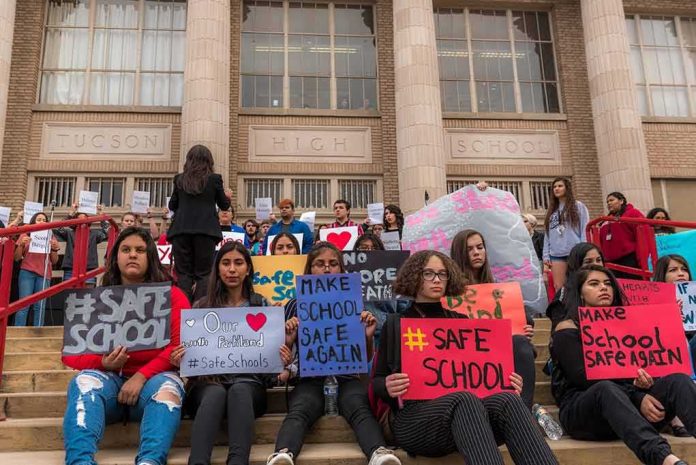
- The case now anchors broader student demands—including at USC—to abolish fraternities as structurally hazardous settings.
- Scholarly and journalistic syntheses associate Greek affiliation with elevated assault risk, but also frame sexual violence as a campus-wide system problem, not confined to Greek life.
- National Greek organizations and professional advisors argue for deep cultural reforms rather than abolition, citing prevention education and coordinated training initiatives.
What the Cornell case established—and what it didn’t
According to multiple outlets, a former Cornell student filed a civil suit alleging she was drugged, assaulted, and gang raped by seven members and former members of Chi Phi at a fraternity house in October 2024; her account centers on pressured ingestion of ketamine, marijuana, and alcohol preceding the alleged assaults. Cornell placed the chapter and involved students on temporary suspension the day the report reached campus police, then—after months of Title IX proceedings—issued sanctions that reportedly included expulsions and suspensions; the chapter was closed and barred from campus. Prosecutors initially declined charges but later reopened the investigation and convened a grand jury review, underscoring the gravity with which law enforcement ultimately treated the matter.
The record here is consequential for policy debate because it shows three things at once. First, the allegations were specific, named, and tied to a fraternity-controlled space. Second, the university exercised disciplinary authority at the student and chapter levels. Third, criminal authorities shifted posture from non-prosecution to renewed review—demonstrating how contested facts can evolve through parallel civil, campus, and criminal processes. Those facts make the case a powerful rhetorical lodestar for abolitionists—but not a definitive, nationwide causal proof about fraternities as a category.
Why fraternities are repeatedly at the center of campus safety debates
The Cornell dispute aligns with a pattern that researchers and reporters have mapped for years: fraternities aggregate conditions—alcohol-heavy events, male peer conformity pressures, house-level autonomy—that can heighten the odds of sexual misconduct relative to other campus contexts. Syntheses of the literature and expert reporting describe Greek affiliation as associated with increased risk in several studies, while simultaneously warning that sexual violence persists across campuses with or without Greek life; the problem is systemic even if fraternities are particularly visible sites within it. In policy terms, this matters: a risk multiplier in one domain can be addressed with targeted controls, but a system-wide driver demands broader prevention architecture that spans dorms, teams, clubs, and off-campus housing.
This dual reality helps explain the policy split. Abolition advocates see concentrated risk and chronic governance friction as reason enough to remove the structure. Reform advocates accept the risk picture but contend that organizational levers—training, standards, insurance-backed compliance, alumni oversight—can reduce harm without destroying what members view as legitimate social and professional benefits. The Cornell episode supercharges the abolitionist case rhetorically, yet the empirical question—abolish versus reform—turns on comparative outcomes, not moral outrage alone.
The abolition argument: clarity about stakes, thinness on comparative proof
Student abolitionists now cite the Cornell case to argue fraternities “frequently facilitate” sexual violence and other harms, and that disaffiliation or incremental reforms merely push problems to less visible venues. They point to Cornell’s own task force process and later sanctions as evidence that universities move decisively only after public pressure, not as a matter of steady, preventative control. The moral claim is forceful: when governance fails to prevent catastrophic harm in spaces designed and branded by men’s social groups, dissolving those groups reads as proportionate.
The stumbling block is evidence breadth. The public record substantiates one high-profile case and a sequence of sanctions and reopened inquiry; it does not, in its current shape, supply a multi-campus, counterfactual dataset showing that abolition reliably outperforms stringent reform in reducing sexual assault, hazing, or substance harm. Nor does it resolve contested case facts—defense denials, earlier prosecutorial language about consent—that, while not dispositive for policy design, complicate sweeping inferences. As an argument for a campus choosing abolition today, the evidence is emotionally powerful and institutionally embarrassing; as a durable template for national policy, it is not yet comparative.
The reform case: real levers, real limits
National Greek organizations and advisors answer abolition with a reformist program: make prevention education a core function, move “beyond compliance” to transform chapter culture, and coordinate cross-fraternity training on sexual misconduct, hazing, and binge drinking. Leaders emphasize bystander intervention skills—recognize, diagnose, and disrupt emerging harm—alongside policies that tie social privileges to safety performance. The thesis is pragmatic: fraternities are deeply embedded in campus social economies; abolishing them is politically and logistically difficult, while targeted interventions can shift behavior at scale.
The critique is equally pragmatic. Training and policy edicts are only as effective as the incentives and enforcement behind them. Chapters embedded in male peer hierarchies with reputational rewards for risk-taking will route around paper requirements unless membership, event access, housing, and insurance hinge on measured safety performance. Reform, to work, must be rigorous: binding risk management standards; independent, surprise audits; third-party event staffing; transparent discipline with public loss of privileges for violations; and alumni-national governance that treats safety failures as existential. Reform framed as “education sessions” alone is reputation management, not risk reduction.
What a serious evidence standard would look like
To move from values to verifiable policy, campuses and national bodies should demand comparative answers to three questions. First, within-institution comparisons: did incident rates in fraternity houses fall—relative to dorms and athletic housing—after specific reforms such as third-party security, sober monitors with authority, and guest-list caps? Second, cross-institution comparisons: do campuses that abolished social fraternities exhibit materially lower assault and hazing rates, controlling for reporting practices and alcohol policy? Third, governance efficacy: which enforcement regimes—insurance mandates, alumni compliance officers, municipal party-registration requirements—predict sustained reductions rather than short-term dips? Today’s debate gestures at these questions; it rarely answers them with reproducible data.
The Cornell case itself could become probative if discovery surfaces chapter communications, risk warnings, or prior incidents that show structural foreseeability or concealment; likewise, the full Title IX record and sanction rationale would clarify which controls failed and why. Until then, the case is best treated as a vivid instance consistent with a larger risk pattern, not as a statistical oracle for national policy.
Practical guidance for institutions deciding now
Universities facing the question need not wait on perfect data to act decisively. A defensible near-term posture is conditional licensure: fraternities operate only under enforceable, audited safety standards with transparent metrics and automatic, public consequences for breaches. Pair that with campus-wide prevention and alcohol controls to avoid displacement effects. If, after two to three academic cycles, measured harms remain concentrated in fraternity contexts despite rigorous enforcement, abolition moves from moral claim to evidence-backed remedy. If harms drop materially and stay down, reform has earned its keep. Either path accepts the core lesson from Cornell: concentrated risk in loosely governed social spaces is not a compliance box to check—it is a governance problem to solve.
Sources:
nypost.com, cnn.com, thecut.com, detroitnews.com, lawcommentary.com, abcnews.com, independent.co.uk, nbcchicago.com, edition.cnn.com