Curfews are a blunt instrument that can either buy a government time to restore order or squander public trust; in France’s 2026 unrest, authorities chose a narrow version of that tool—localized, time‑bounded night restrictions—precisely because the real test wasn’t whether Paris could lock down the country, but whether it could re‑establish control without normalizing emergency rule.
At a Glance
- France opted for localized, short‑horizon curfews instead of an immediate nationwide clampdown, explicitly framed as protection of people, public property, and businesses.
- The scale of disorder—thousands of arrests, widespread arson and looting, and hundreds of injured officers—created a clear public‑order rationale for temporary restrictions.
- Officials kept escalation headroom, signaling a state of emergency only “if needed,” while acknowledging early operational failures and intelligence gaps.
- Protesters and critics tied the crisis to living costs, school conditions, wages, and policing—evidence of a dual narrative: security management versus structural grievances.
Why the government reached for targeted curfews first
French governments have a long emergency toolkit—curfews, protest bans, expanded search powers—hardened by the 1955 emergency law and refined across crises from 2005 to 2015. In October 2026, Prime Minister Sébastien Lecornu steered away from a blanket invocation and instructed prefects to impose “very limited” and “localized” curfews in specific urban zones hit by looting and arson, including parts of Paris and several major cities. The stated objective was narrow and concrete: to protect people and safeguard public buildings and businesses while police regained control of streets experiencing organized theft, fires, and attacks on civic sites. This approach reflects an institutional lesson learned the hard way since 2005: move fast at the point of disorder, but resist normalizing national emergency powers that are difficult to unwind and politically corrosive once routinized.
Mechanically, a localized curfew draws a perimeter around the time and place most correlated with opportunistic offending—late evening into night, in commercial districts and municipal corridors where arson and ransacking concentrate. It reduces the ambient “cover” that crowds and darkness give to small, agile groups, lowers response times, and lets commanders reallocate units from static guarding to mobile interdiction. The promise, if it works, is not subtle: fewer ignitions, fewer smashed shopfronts, fewer overnight injuries. The trade‑off is equally plain—restrictions on movement that inconvenience, and sometimes criminalize, the very residents whose neighborhoods are being protected.
The public‑order case was real—but not sufficient on its own
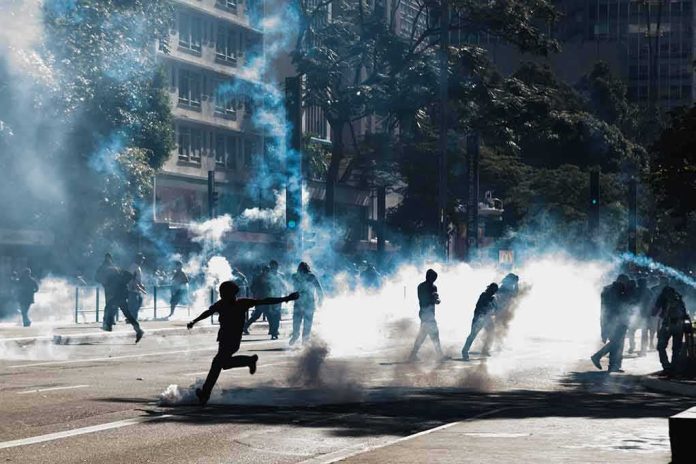
The weekend that triggered curfews was not a routine protest cycle. Contemporary reporting recorded approximately 2,400 arrests alongside nearly 1,000 injured police officers; attacks on city halls and other public buildings; and extensive looting across multiple urban centers. In that context, a geographically bounded, time‑limited curfew is a defensible interim control. Lecornu emphasized that despite severe scenes and extensive property damage, there were no deaths—a framing meant to underline that the state contained a spiraling public‑safety risk, at least in terms of lethal outcomes. Officials also kept escalation flexibility, stating clearly that a nationwide state of emergency remained available if conditions warranted it, but that partial curfews better matched the pattern of disorder then unfolding.
That said, a no‑fatality outcome is not a policy evaluation. It neither demonstrates that curfews caused harm reduction nor speaks to proportionality. Absent granular before‑and‑after data—incident timestamps, arrest geocoding, number of ignitions, response intervals—claims of curfew efficacy are, at best, plausible but not proven. If France wants to treat curfews as a calibrated tool rather than a reflex, it should routinely publish incident‑level data and the legal bases for each prefectural order so independent reviewers can test the match between risk and restriction.
What went wrong before curfews went up
Even a measured emergency response cannot erase what preceded it. Senior officials acknowledged a shortfall in readiness and intelligence—an admission that undercuts triumphalist narratives about control regained and forces a harder question: why were police surprised by the scale, tempo, and spread of violence that piggybacked on otherwise peaceful demonstrations? Public confidence depends as much on institutional foresight as on tactical recovery; when the Interior Minister speaks of being unprepared, it strengthens the case for an after‑action audit of threat assessments, deployment plans, and mayor–prefect coordination in the hours before the worst damage occurred.
There was also overreach in political messaging. The government floated the idea of a “shadowy network” of far‑left instigators. Perhaps such a network exists; France has seen small but potent extremist actors exploit protest energy before. But specificity matters. Without arrests, charging documents, or exposed communication chains, the claim remained an assertion, not evidence. In a polarized information environment, abstract allegations substitute intrigue for proof and invite backlash rather than building the consensus any emergency measure requires.
The other half of the story: grievances that outlast any curfew
Large segments of the mobilizations were anchored in living costs, wages, and deteriorating school conditions—issues that draw students, unions, and Yellow Vest veterans into the same streets. The Louvre blockade and school‑led marches were not fringe theatrics; they reflected widely felt frustrations with overcrowded classrooms, under‑resourced teaching, and a cost‑of‑living squeeze that makes incremental wage settlements feel like retreat, not relief. This does not excuse violence; it does explain why a security‑first narrative can quiet a night yet fail to stabilize a week.
France has been here before. The recurring pattern—acute unrest answered by exceptional policing powers—sits atop chronic territorial inequality and a brittle relationship between police and residents in marginalized districts. Scholarship on the 2005 riots and later protest waves traces how quickly a public‑order lens can become the only lens, crowding out policy remedies for the schools, jobs, and transport deserts that prime neighborhoods for flashpoints. If 2026 repeats that cycle, expect the quiet that follows curfews to be short and grudging, rather than durable and earned.
France imposes curfews in cities after weekend of protests
French authorities set curfews in parts of several cities on Monday, including Paris, Lille and Nice, as they faced pressure over security failings after a weekend of riots and looting stemming from nationwide… pic.twitter.com/En10N1GLiO
— CGTN America (@cgtnamerica) October 20, 2026
How to judge proportionality and success the next time this happens
Emergency tools should carry their own evaluation protocol. Three disciplines would make France’s curfew practice demonstrably proportionate rather than merely defensible. First, publish, as a matter of course, the prefectural orders authorizing each restriction: statutory citations, geographic maps, start–end times, exemption classes, and sunset and review clauses. Second, release a standardized incident dataset—arrests, injuries, fires, looting calls, property damage estimates, police deployment counts—time‑stamped and geo‑located for comparable windows before, during, and after curfews. Third, separate the policing ledger from the policy ledger: track complaints, enforcement disparities, and court challenges, but also show parallel movement on the issues that brought peaceful marchers out—school infrastructure commitments, teacher staffing plans, wage negotiations, and targeted cost‑of‑living relief in most‑affected areas.
A government that pairs narrow, time‑limited curfews with transparent legality, measurable outcomes, and visible progress on grievances will still take political hits when windows break and city halls are charred. But it will have the stronger, more sustainable case: that it used coercion only where risk was concentrated, only as long as necessary, and alongside the work that makes the next curfew less likely. In the end, that is the only standard the public will keep rewarding—order restored without the crutch of permanent exception.
Sources:
theatlantic.com, pbs.org, ibtimes.co.uk, france24.com, reuters.com