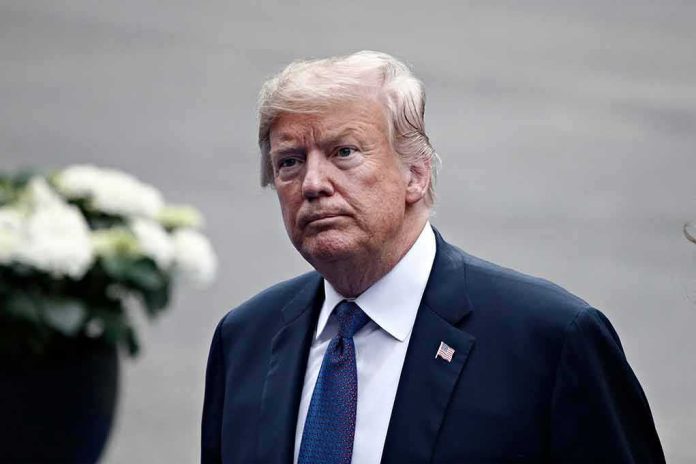
Energy policy is at its most honest when it admits tradeoffs in plain English: safeguarding against a nuclear-armed adversary can mean accepting near-term shocks to oil flows and prices; the strategic rationale and the consumer pain are two sides of the same decision.
The Short Version
- Energy Secretary Chris Wright says President Trump knowingly accepted short-run energy-market disruption as the price of countering Iran’s nuclear ambitions.
- Markets reacted as energy chokepoints were threatened: prices spiked, risk premia widened, and consumers felt it at the pump.
- The Strait of Hormuz sits at the center of this calculus; even credible threats to its throughput can reprice oil and LNG instantly.
- Critics focus on consumer costs; the administration frames the choice as deterrence and nonproliferation over headline fuel prices.
What Wright’s Statement Actually Establishes
In a television interview, Energy Secretary Chris Wright said President Trump “was well aware of the risk to energy flows that were coming out of the Persian Gulf region,” and anticipated higher prices in the short run while pursuing a policy aimed at preventing a nuclear-armed Iran. That is specific, on the record, and not in tension with observed market behavior. It does not claim painless outcomes; it asserts a deliberate weighing of costs and benefits. In policy terms, it places the Iran decision in a classic national security frame: accept immediate, measurable economic costs to avert a larger, longer-run strategic risk. Framed this way, price spikes are not a surprise or a failure; they are a known consequence managed against a larger objective.
That admission matters for credibility. Energy markets punish wishful thinking. Acknowledging the likely price response signals that planners were not blindsided by Hormuz risk, tanker insurance, or refinery feedstock dislocations. It also sets the benchmark for judging execution: if leadership anticipated a shock, what buffers—stock releases, rerouting, demand management—were readied to compress the duration and amplitude of the spike?
Hormuz: Why Threats Move Prices Before Barrels Go Missing
Policy choices around Iran invariably collide with the geography of energy. Roughly a fifth of global crude and liquefied natural gas typically transits the Strait of Hormuz; when a military crisis elevates the probability of disruption, traders price not only today’s loadings but also tomorrow’s risk path. The mechanism is straightforward. Tanker operators face higher insurance and routing uncertainty; buyers scramble to secure prompt cargoes; inventories become more valuable in place; futures curves kink into backwardation or steepen as timing risk rises. The market does not wait for a confirmed shortage to clear its throat—credible threats are sufficient to move prices markedly and immediately.
That is exactly what happened: oil and refined products surged as conflict unfolded and Gulf flows were constrained, with retail fuel prices reacting quickly because refined product logistics are tight, inelastic, and highly visible to consumers. Analysts also flagged a durable “risk premium”—a per-barrel add-on investors demand to hold exposure while the probability of renewed fighting and transit interference remains elevated.
The Immediate Costs Were Real—And Predictable
The consumer-facing impact arrived fast. Within days of the initial strikes, oil rallied, interest rates wobbled, and retail gasoline in the United States jumped sharply as the flow of energy from the Persian Gulf froze or slowed. Commentary from market desks and policy analysts converged on the same point: a conflict centered on a global chokepoint would, by design or by accident, translate into higher prices until alternative routes, emergency stock releases, or a ceasefire relieved the pressure. This is not an exotic thesis. It is how energy systems behave when a fifth of supply sits behind a contested maritime narrows and insurance, shipping, and refinery scheduling tighten simultaneously.
Critics used the run-up at the pump to argue the administration had either underestimated or discounted household costs. But Wright’s remarks—and separate reporting that the White House warned Americans to prepare for higher energy prices—cut against the notion of naïveté; they support a policy choice that accepted visible costs to pursue a strategic end. The real question, then, is not whether the pain was foreseen, but whether it was buffered well.
Buffers, Backstops, and the Art of Shortening a Shock
Once a shock is in motion, technocratic tools matter. Strategic petroleum reserve releases, coordinated stock draws with allies, rerouting cargoes, accelerating pipeline and port throughput elsewhere, waivers to ease refinery bottlenecks, and targeted credit support for commodity trade finance can all compress price volatility. Historically, even partial restoration of Hormuz traffic or credible maritime security can unwind a significant portion of a risk premium quickly—futures markets recalibrate to flows and probabilities in real time. Recent reporting that outbound volumes through Hormuz rebounded toward prewar levels underscores how rapidly prices can adjust as physical constraints ease and shipping resumes under protection.
None of these instruments obviates the initial spike; they shorten and soften it. Their effectiveness is ultimately judged by duration: how long did elevated prices persist, how fast did inventories stabilize, and how quickly did refiners regain predictable feedstock? On that score, the admixture of market resilience—ample non-Gulf supply, inventory draws, and flexible Atlantic Basin refining—and policy backstops did prevent worst-case outcomes, even as prices climbed and consumers felt the bite.
The Critique: Security Framed, Consumers Pay
Where disagreement genuinely lies is not over whether a Hormuz-centered conflict would lift prices—it did—but over whether the strategic objective justified the incidence of those costs on households and small businesses. Commentators emphasized the rapid pass-through to gasoline and diesel, warning that the war would be felt first and hardest by U.S. consumers. Others highlighted the market’s tendency to embed a lingering risk premium—an extra $10 per barrel, in one widely cited estimate—so long as the probability of renewed fighting and transit interruption remains non-trivial.
Those critiques are compatible with the administration’s own framing. A choice can be both deliberate and costly. The policy case rests on the proposition that deterring or dismantling a pathway to nuclear weapons in Iran averts a far more destabilizing—and ultimately costlier—future. The countercase insists that energy insecurity today, layered atop a political pledge to lower living costs, is an unacceptable burden. Both claims are political; only the underlying market mechanics are non-negotiable.
Energy Secretary Chris Wright said Sunday that President Trump was "well aware of the risks to energy flows" before launching the war in Iran earlier this year, but argued "the world cannot sustain a nuclear-armed Iran." https://t.co/yuPclh1VKn
— Face The Nation (@FaceTheNation) October 4, 2026
How to Judge Decisions Like This Going Forward
Three tests separate prudent strategy from wishful thinking in energy-linked conflicts. First, candor: do leaders acknowledge, in advance, that chokepoint risk will tax consumers—and do they prepare the public for it? Wright’s account indicates yes on that front. Second, competence: do energy and security teams execute the tool kit—stock draws, maritime protection, rerouting—with visible speed to cap the spike’s duration? Evidence of flow restoration through Hormuz and market stabilization suggests partial success, with pain but not catastrophe. Third, consistency: do long-run investments reduce exposure to single-point failures? Analysts warning that oil-centric systems are inherently shock-prone make a fair point; diversification—of fuels, routes, and flexibility—blunts the next crisis’s edges.
Sources:
cbsnews.com, politicalwire.com, ground.news, yahoo.com