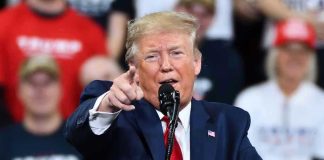
“We’re prosecutors, not regulators” is more than a sound bite; it is the Justice Department’s operating thesis for artificial intelligence under Attorney General Todd Blanche, signaling a commitment to pursue AI-enabled crime vigorously while declining to write de facto AI rules from Main Justice.
The Short Version
- Blanche has drawn a bright line: DOJ will investigate and charge AI-related crimes, but it will not regulate AI or engage in “regulation by prosecution.”
- The department’s stance fits a familiar federal pattern—criminal enforcement under existing statutes, rulemaking left to legislatures and sector regulators.
- Parallel DOJ work on civil-rights risks and interagency coordination proves “non-regulatory” does not mean “hands off” where the law already speaks.
- The practical test is boundary management: how prosecutors pursue AI-enabled fraud, privacy intrusions, and discrimination without backdoor rulemaking.
What Blanche actually committed DOJ to do—and not do
At a White House briefing, Blanche was explicit: if someone “associated with AI” violates criminal law, DOJ will investigate, because the department is a prosecutor, not a regulator. The point was not a retreat from technology cases; it was a jurisdictional claim about method. Criminal statutes—fraud, computer intrusion, identity theft, extortion, market manipulation—already reach a wide class of AI-enabled conduct, and DOJ intends to use them. Blanche also tied this posture to a broader administrative view: avoid constructing substantive AI rules through charging decisions or consent decrees, the pattern critics deride as regulation by prosecution. Coverage of the remarks captured both halves—no AI rulemaking, yes to AI-related prosecutions—and reported the assertion that cases are already in the pipeline or charged.
This is not a vacuum. In digital assets, DOJ under Blanche had earlier signaled the same institutional philosophy: deter crime, but stop using enforcement to superimpose regulatory frameworks—a move that put the onus on “actual regulators” to craft ex ante rules while DOJ polices fraud, hacking, and sanctions evasion. The analogy is not perfect, but it shows the department’s through-line on emergent tech: charge clear crimes; do not create quasi-regulatory codes from the courthouse.
How this fits the U.S. model of governing technology
American governance rarely centers a prosecutor as the primary technology regulator. Congress writes statutes; sector agencies—FTC for unfair practices, SEC/CFTC for markets, FDA for medical devices, NHTSA for vehicles, and so on—craft implementing rules; courts interpret; DOJ prosecutes criminal violations. In fast-moving areas, however, prosecutors’ choices can shape behavior. The line Blanche is drawing aims to discipline that reality: prosecutors may signal priorities and publish guidance, but they should not convert a handful of plea agreements into nationwide technical compliance mandates. That restraint matters in AI, where model architectures, data provenance practices, and deployment safeguards can shift in months, while criminal doctrines evolve case-by-case over years. The promise of this approach is legal clarity; the risk is under-specification where harms proliferate faster than Congress and regulators can act.
It also reflects a strategic calculus: protect U.S. leadership in AI development while deterring misuse. Contemporary reporting placed Blanche’s remarks alongside an administration posture skeptical of alarmist AI rhetoric and wary of burdensome rules that could cede ground to China. Whether one agrees with that weighting, the institutional allocation is coherent—agencies with ex ante tools craft standards; DOJ enforces ex post when conduct crosses codified lines.
What DOJ is already doing on AI that is not “regulation”
“Not a regulator” does not mean “silent on risks.” DOJ’s public AI portfolio shows the department building internal governance for its own AI use and coordinating civil-rights enforcement where existing law applies. The department maintains an AI inventory consistent with government-wide directives to catalog and publish releasable AI use cases—a transparency function about DOJ’s tools, not private-sector rulemaking.
The Civil Rights Division has stated it is committed to confronting issues at the intersection of AI and civil rights, and it has hosted interagency convenings to align enforcement of anti-discrimination laws where automated systems may produce unlawful disparate impacts or deprive benefits. That work operationalizes statutes already on the books; it does not purport to define technical benchmarks for acceptable model behavior outside those laws. In short, DOJ can coordinate enforcement under civil-rights authorities and still refuse to invent a standalone AI regulatory code.
Where the genuine boundary questions lie
Two friction points will test Blanche’s line. First, charging theories in AI-enabled fraud and cybercrime. Deepfake-driven schemes, synthetic-identity rings, automated business email compromise, and model-assisted intrusion can be charged under existing statutes; the challenge is to avoid grafting de facto standards—say, mandatory watermarking or logging—into plea conditions in ways that function as industry rules. The department’s crypto experience is instructive: after years of improvisation risked creating implicit compliance regimes via settlements, DOJ said it would step back from that posture. AI cases will invite the same temptation; the public articulation today counsels restraint.
Second, algorithmic discrimination and due process. Even after executive policy shifts, DOJ’s own materials have emphasized using AI to advance its mission and coordinating to prevent and address unlawful discrimination tied to automated systems. That is classic civil-rights enforcement, but it brushes close to governance when the remedy implies technical change—audits, bias mitigation plans, model documentation. The legal hook is secure when tied to specific statutes and program contexts; it looks like regulation when remedies become generalized AI prescriptions. Expect litigants to contest remedies that read as rulemaking by another name; expect DOJ to defend them as case-specific equitable relief grounded in statutory violations.
Implications for companies building and deploying AI
The compliance signal is straightforward: treat AI as a force multiplier of existing risk, not as a legal vacuum. Fraud, privacy intrusion, IP theft, market manipulation, and obstruction do not become novel because a model was involved. Companies should inventory AI use cases, map them to existing criminal and civil exposure, and ensure controls are commensurate with the heightened velocity and scale AI enables. At the same time, do not expect DOJ to publish a “DOJ AI Rulebook” dictating training-data hygiene or acceptable red-teaming thresholds. That kind of prescriptive standard-setting—if it comes—will emerge from sector regulators and, ultimately, from Congress.
The more subtle signal concerns remedies: when enforcement does arrive, insist on case-linked corrective actions rather than broad technical mandates that outstrip the charged conduct. That is consistent with the department’s stated philosophy and protects against creeping regulation by settlement. It also creates a channel for genuine collaboration: firms can share evidence of controls, incident response, and post-incident improvements without fear that every remediation step will harden into a de facto rule for the entire market.
.@AGTODDBLANCHE ON AI: “WE’RE PROSECUTORS, NOT REGULATORS.”
Asked whether artificial intelligence needs greater regulation or even a slowdown, Todd Blanche says DOJ will investigate criminal violations involving AI, but regulating the technology is not the department’s job.… pic.twitter.com/BLSOgtr7ez
— LindellTV (@RealLindellTV) September 15, 2026
The bottom line
Blanche’s formulation reasserts a constitutional division of labor in the AI age: Congress and civil regulators set prospective rules; DOJ applies criminal law when lines are crossed. The department can still act vigorously—by charging AI-enabled crimes and enforcing civil-rights statutes—and it can still shape practice through guidance and coordination. But it is drawing a boundary against using prosecutions to write the first draft of AI regulation. For a technology moving as quickly as AI, that restraint is not merely philosophical; it is a bid to keep law, policy, and innovation on lanes that can evolve without tripping each other. Whether the model succeeds will be judged not by slogans but by the next wave of cases and the remedies DOJ seeks when it wins them.
Sources:
facebook.com, ground.news, justthenews.com, yahoo.com, legalaiinsights.com, justice.gov, congress.gov