
When a state forces global chemical companies to bankroll long-term cleanup of “forever chemicals,” it does more than close a case; it rewrites the liability map for industrial pollution by converting diffuse, decades-old harms into enforceable, cash-backed obligations that follow the money for years.
At a Glance
- North Carolina secured a settlement valued at roughly $590 million addressing PFAS contamination tied largely to Chemours’ Fayetteville Works, blending $455 million in payments with a dedicated reserve to protect future cleanup.
- Funds are scheduled over 10–15 years and shared by the state and 11 local governments, aligning dollars with on-the-ground treatment, filtration upgrades, and water service extensions.
- The deal sits within a national wave of PFAS litigation that channels complex, long-tail risk into layered settlements rather than single verdicts.
- A parallel federal enforcement track against Chemours underscores the regulator–litigator pincer now shaping PFAS accountability across multiple states.
What the settlement actually does: structure, scope, and safeguards
Strip away the headlines and this agreement is a financial mechanism engineered to ensure cleanup persists long after the press conference. North Carolina and 11 local governments secured $455 million in payments, scheduled across roughly 10 to 15 years, directed to drinking-water treatment and remediation in communities affected by discharges linked to the Fayetteville Works complex and other historical releases. The state also described a companion reserve, valued around $135 million, designed to fortify the long-term program and insulate against payment interruption—a bankruptcy hedge that has become standard in modern toxics settlements. Reuters, parsing the core dollars, pegs the payment spine at $455 million shared among the state and local entities—a figure the companies themselves have affirmed in market-facing releases that specify timing over 15 years.
Two elements matter beyond the topline number. First, payment cadence: multi-year schedules convert one-off sums into a funding stream aligned with staged infrastructure—granular activated carbon retrofits, new intakes, and residential hookups. Second, counterparty durability: the 2021 inter-company memorandum of understanding apportions liability, with Chemours bearing half the tab, DuPont 35.5%, and Corteva 14.5%. That allocation is not a denial of responsibility; it is a credit backstop. If one payer falters, the others know their proportional risk, and the state knows where to turn to keep the money moving.
How we got here: the PFAS playbook and North Carolina’s leverage
PFAS litigation does not lend itself to quick trials. The chemicals are persistent, exposure pathways are many, and epidemiology is strong on association but contested on quantification. As a result, states and utilities have prioritized settlements that bind companies to defined obligations while capping runaway, open-ended risk on the defense side. North Carolina’s package looks like a textbook iteration of this model: a finite financial spine paid over time; a reserve to protect delivery; and a clear tie from dollars to local treatment and water service. It also arrives in context—billions in PFAS settlements nationwide, and a North Carolina class action running in parallel, which raised the temperature on corporate defendants and made structured peace more attractive.
The state’s posture was strengthened by a separate federal enforcement track. In June 2026, the EPA announced a $450 million Chemours settlement requiring mitigation spending and civil penalties at facilities including Fayetteville Works—an order that reinforced federal expectations on pollution control and set a compliance baseline that states could build on. That matter, filed in federal court, explicitly framed Chemours as responsible for PFAS harm and obligated ongoing controls and water protections, complementing North Carolina’s financial architecture rather than displacing it.
Mechanism on the ground: from funds to filters
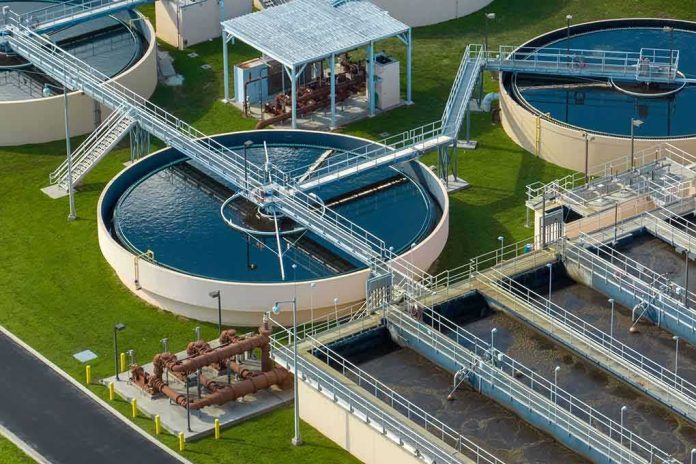
PFAS risk is ultimately local: a water plant intake on a contaminated river, a neighborhood wellfield, an industrial outfall whose emissions persisted long before today’s standards. Converting settlement dollars into safer taps means financing technologies that actually remove PFAS and restructuring service footprints so fewer households rely on compromised wells. Granular activated carbon (GAC) and high-pressure membranes (reverse osmosis and nanofiltration) are the two proven workhorses; both are capital-intensive and carry nontrivial operating costs due to frequent media changeouts and brine management. A slow, predictable payment schedule matches that cost curve better than a lump sum, particularly for utilities that must plan debt-service coverage and rate impacts over decades. That is why these agreements specify a 10–15 year runway—and why local governments often claim the largest share of funds to underwrite capital projects and household connections.
The reserve matters for another reason: environmental liabilities outlive corporate business cycles. By requiring a backstop and spreading responsibility across Chemours, DuPont, and Corteva under the MOU allocation, the state reduces the risk that a corporate restructuring, rating downgrade, or adverse market turn strands a half-built plant upgrade. In an era when environmental provisions can whipsaw earnings, this is not academic; it is practical risk governance, for both the public and the companies’ creditors.
Where the debate really sits: adequacy and pace, not responsibility
On the facts of the deal—who pays, how much, for how long—the record is consistent across state statements, company releases, and independent reporting. The companies acknowledge the $455 million obligation and the 15-year schedule; the state characterizes the broader package at roughly $590 million by including the reserve and related commitments. The friction, such as it is, lies in adequacy and speed. Communities downstream want faster installations and broader reach to private wells; health advocates argue PFAS health guidance is tightening while costs to achieve lower parts-per-trillion targets are rising. Those are policy fights, not evidentiary ones, and the settlement’s design—multi-year payments plus a reserve—implicitly concedes that cleanup is a marathon, not a quarter.
Importantly, this state package does not sit in isolation. The federal consent framework pushes Chemours to invest across multiple states over 15 years, including North Carolina, and imposes additional mitigation spending. That dual pressure—state settlement dollars paired with federal control obligations—creates the regulatory pincer needed to move capital in the right direction without waiting on a single blockbuster verdict. Reuters captured the broader pattern succinctly: PFAS disputes increasingly resolve through layered settlements that aggregate to billions rather than one cathartic trial win.
North Carolina reached a $590M PFAS settlement after contamination affected groundwater and the Cape Fear River, a drinking water source for 500,000+ people. Prevention matters. #PFAS #WaterSafetyhttps://t.co/KxAH5JLdS2
— Smart on Pesticides (@PesticidesSmart) September 12, 2026
What it means going forward: durable accountability by design
Three lessons travel well beyond the Cape Fear basin. First, apportionment frameworks like the 2021 MOU are not just corporate housekeeping; they are the plumbing that keeps public-money pipelines from clogging when ownership histories get complicated. Second, reserve funds are the right default for environmental liabilities with multidecade tails—they turn aspiration into deliverability when markets turn. Third, the sequencing of federal enforcement and state litigation is not redundancy; it is leverage. Federal orders define floors for conduct; state and local settlements furnish the ceilings communities can actually live under.
Will more be needed? Almost certainly. PFAS science is moving fast, regulatory limits are converging downward, and utilities are discovering contamination in systems long assumed clean. But adequacy questions are ultimately answered in budget cycles and construction timelines, not press releases. North Carolina’s settlement gives its utilities and counties a financing spine matched to the work ahead—water by water plant, neighborhood by neighborhood. That is what durable accountability looks like in practice: constrained enough to get signed, structured enough to get built, and backed by parties who can still pay when the last filter vessel is finally swapped out.
Sources:
youtube.com, chemours.com, investors.dupont.com, reuters.com, investors.chemours.com, deq.nc.gov, manufacturingdive.com, theguardian.com