America’s elections are not guarded by soldiers because the law assigns that job to civilians—and the nation’s top uniformed officer has now reiterated that the military has no plans to test that boundary.
The Short Version
- The Joint Force’s chair, Gen. Dan Caine, said there are no plans to deploy federal troops or federalized Guard to polling places in the 2026 midterms.
- Caine also stated there are no plans to seize ballots, machines, or other election materials.
- He rooted the position in longstanding law: election administration and security are state and local responsibilities.
- Federal law sharply restricts armed federal presence at the polls, with only a narrow, warlike exception.
What the military actually said—and why it matters
In a written response to Sen. Elissa Slotkin, Gen. Dan Caine stated plainly: the Joint Force has no plans to send federal military personnel or federalized National Guard members to polling places during the 2026 elections. He added that there are likewise no plans to seize ballots, voting machines, or other election materials. The Associated Press and NBC reviewed the correspondence; the core language is categorical about the absence of plans and clear about the legal foundation—elections are run by state and local officials, not the Pentagon.
The assurance matters because it speaks to the most consequential fear in any modern democracy: intimidation or distortion of the vote by the instruments of national force. When the senior-most officer puts the military’s posture in writing, it does more than guide commanders; it signals to political actors, activists, and voters that a red line—drawn in statute more than a century ago—still holds.
The legal wall: where troops do—and do not—fit in U.S. elections
American law builds a high barrier between armed federal power and the act of voting. Title 18, Section 592 of the U.S. Code makes it a crime to bring “troops or armed men” to places where elections are held, unless such force is necessary to repel armed enemies of the United States. That exception is not a catch‑all for disorder; it addresses literal wartime or invasion scenarios. Legal analysts and election‑law organizations have long summarized the regime succinctly: troops and armed federal agents do not belong at polling places.
That structure reflects the constitutional division of responsibilities: states run elections; local administrators and civilian law enforcement provide security; federal military forces remain outside the process. The design is not ornamental. It is the product of Civil War–era lessons about how easily armed presence can chill participation and corrode legitimacy—and it has endured because it works.
How we got here: a formal ask, a formal answer
Sen. Slotkin pressed the question in mid‑August 2026, requesting written confirmation from Defense Secretary Pete Hegseth and Gen. Caine that the Pentagon would not send troops or federalized Guard to polling places, nor seize election materials. Her letter also referenced draft legislation—the Protect Our Polls Act—aimed at further constraining any federal deployment of uniformed military or armed federal agents to election sites without congressional approval.
Caine’s reply did what such exchanges are supposed to do in a system governed by law: memorialize the department’s stance, tether it to settled statutory authority, and remove ambiguity before Election Day. NBC and the AP reported the operative language from his response; Slotkin’s office posted her request and publicized that an answer had arrived on the key questions.
What the assurance covers—and what it doesn’t
The letter addresses the two flashpoints that most alarm voters and election workers: federal uniforms at the polls and physical seizure of election materials. On both, the answer was “no plans.” It also locates responsibility where it belongs—state and local officials—signaling that any federal role would be indirect and law‑bound. The scope is intentional: it speaks for federal military personnel and federalized National Guard; it does not purport to bind every other federal entity or every conceivable edge case of election‑adjacent federal activity. That restraint aligns with how senior military leaders speak about domestic matters: within authority, under law, no promises outside their lane.
Could plans change in a true emergency? In theory, yes—the statute itself contemplates an invasion‑type exception. But that is a high bar by design. Congress criminalized routine armed presence at the polls precisely so that shifting political winds could not normalize it. The military’s present‑tense assurance therefore rests on more than discretion; it rests on prohibitions with teeth.
The persistent anxiety—and how to evaluate it
Public concern did not arise in a vacuum. Democrats have argued for additional guardrails, citing rhetoric about using troops or armed federal officers in election contexts and pursuing legislation to foreclose that path. Slotkin’s request framed the issue as closing doors before they are tested, not as inventing a new rule. News coverage accurately captured that political backdrop while centering the concrete outcome: the Joint Force says it will not be at the polls and will not seize election materials.
How should a skeptical reader weigh this? Start with the hierarchy of evidence. A signed statement by the nation’s senior military officer, echoing a bright‑line statute that carries criminal penalties, is strong assurance. It is not a binding court order, and it does not disclose internal planning memos—but given the law’s clarity and the military’s institutional aversion to domestic political roles, the combination of statutory wall and formal posture is decisive for what will and will not occur under color of federal arms at polling places.
US Military Leaders Warn Prolonged Iran War Could Weaken Homeland Defense
WASHINGTON: A recent internal Pentagon review has warned Defense Secretary Pete Hegseth that maintaining current military operations against Iran, along with a sustained US troop presence in the Middle East… pic.twitter.com/hHLCqrdT0H— Voice of Germany (@NewsVOG) August 31, 2026
Practical implications for voters, officials, and the force
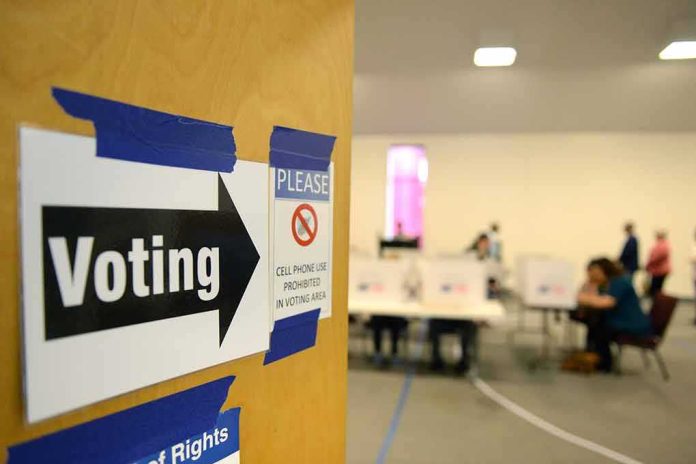
For voters and poll workers, the takeaway is straightforward: expect civilian election administration and routine local policing, not soldiers. If armed federal presence appears at a polling place outside the law’s narrow wartime exception, it would conflict with federal criminal statutes and the Defense Department’s stated position. For state and local officials, the signal is to keep planning within the normal playbook—election security as a civil function with clear escalation channels that do not involve the federal military.
Sources:
feedpress.me, nbcnews.com, apnews.com, nationthailand.com, wandtv.com, statesunited.org, eac.gov, notus.org