When force is used in an immigration arrest on a city street, the real question is not partisan—it’s procedural: did officers follow sound tactics and law to minimize risk to bystanders and suspects, or did flawed choices create the danger they then used force to resolve?
The Short Version
- New York officials condemned an ICE shooting in Marble Hill within hours, before a full evidentiary record was public.
- Police described seven shots fired by plainclothes federal agents during a vehicle stop with a 5-year-old in the back seat; the driver survived.
- DHS framed the operation as a targeted arrest of a “criminal illegal alien” with prior convictions and alleged gang ties.
- The core legal issue—whether the shooting was justified—remains unresolved publicly; the strongest path to clarity is release of video, ballistics, and sworn statements.
What we know: a high-risk arrest devolved into gunfire
The Marble Hill encounter is uncontested in its broad strokes. City officials and multiple outlets reported that at least one ICE agent in plainclothes shot into a vehicle during an arrest attempt, discharging seven rounds, striking 28-year-old Oscar Belgal as he arrived in a residential area; the child in his back seat was uninjured. NYPD leaders characterized the approach as two plainclothes federal officers converging with guns drawn just as the vehicle pulled into a space—an inherently volatile geometry in any traffic-interdiction scenario. DHS confirmed the action was a targeted enforcement operation. The man was hospitalized, conscious and in stable condition, according to contemporaneous reports.
From there, the narratives diverge on the single fact that bears most on the justification analysis: whether the vehicle moved in a way that created an imminent deadly threat to the agents. Federal sources told reporters Belgal attempted to ram officers or their vehicles; New York officials did not validate that account and emphasized the presence of a child and the officers’ plainclothes posture. Absent publicly released video and a scene reconstruction, the claim sits as an assertion, not an established fact.
How justification is determined in vehicle shootings
In U.S. law, the benchmark is objective reasonableness—what a reasonable officer would do, given what they perceived at the time. With vehicles, modern training emphasizes avoiding positions in front of a car, using containment and angular approaches, and refraining from firing to stop a moving vehicle because bullets rarely neutralize a driver before momentum carries the car forward. DHS officials themselves have described these precepts as best practice: don’t approach from the front; don’t shoot to stop a moving vehicle; use deadly force only when there’s an immediate threat to life. That standard does not forbid shooting when a driver is using a car as a weapon; it requires evidence that this is what happened and that officers didn’t manufacture the jeopardy through poor tactics.
That is why the unresolved particulars in Marble Hill matter. Did the agents clearly identify themselves? Where were they positioned relative to the bumper and escape paths? Was there a reasonable opportunity to step aside or break contact? Did the vehicle angle toward them or merely roll forward into a space? Ballistics, scene measurements, and synchronized video answer these questions far better than dueling statements ever can.
Competing frames: criminality versus proportionality
DHS and allied commentators stressed that Belgal was a priority target—undocumented, previously convicted of grand larceny, with multiple prior arrests and alleged ties to the Trinitarios gang. That context can legitimately explain why ICE initiated the arrest and why they deemed the subject risky. It does not, by itself, resolve whether seven shots into a vehicle with a child in the back seat were objectively reasonable in that moment. Courts and use‑of‑force policies separate the predicate for an arrest from the proportionality of force used to accomplish it.
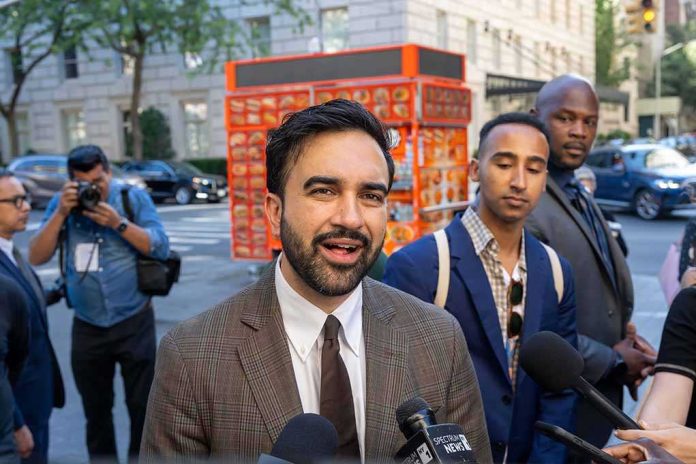
New York leaders, by contrast, focused on visible risk: plainclothes agents, guns drawn, a residential block, a 5‑year‑old in the back seat. Their early statements framed the shooting as reckless and demanded accountability—strong rhetoric issued before the factual record was complete. That posture tracks a broader political and civic concern about immigration enforcement tactics in dense urban spaces, but it also risks hardening a conclusion before the evidence is public.
Mechanics that turn vehicle arrests dangerous
Vehicle interdictions are among the most failure-prone operations in policing. The physics are unforgiving: even a slow-moving car can kill; gunfire seldom halts a vehicle; ricochets and through-and-through rounds threaten passengers and bystanders. Tactically, high-yield mitigations are well known—box-ins conducted at low speed, clear commands from cover, identification through marked gear, using angles that keep officers out of the vehicle’s arc. When agents lead with guns drawn in close quarters at the nose of a car, they compress time and space, raising the probability that any engine rev or unintended roll becomes a perceived deadly threat. That is why investigators scrutinize officer positioning as much as driver behavior in reconstructing necessity.
Here, NYPD’s description—agents in plainclothes converging as a driver pulled into a space; seven rounds fired; a child in the rear seat—raises every red flag use-of-force instructors try to prevent. Whether those risks were unavoidable because of the subject’s actions or created by tactical choices is the question a competent reconstruction must answer.
What would settle the key disputes
There is a straightforward evidentiary roadmap. First, release of body-worn camera or surveillance video synchronized with radio traffic would fix timing, commands, and vehicle movement. Second, a forensic map of shell casings, bullet strikes, and wound path would locate shooters and establish the vehicle’s orientation and speed at each shot. Third, sworn statements from the firing agent and cover officers—taken promptly and preserved—would capture threat perception and identification protocols. Fourth, documentation of the arrest predicate (warrants, target package) would confirm the operation’s basis without conflating it with the force question. These are routine components of a serious, good-faith investigation.
The public interest is not voyeuristic; it is functional. Clear records either vindicate the agents’ choices under established doctrine or reveal training and supervision gaps that policy must fix. In an era when immigration enforcement has seen a measurable rise in shootings tied to vehicle stops, transparency is not an indulgence—it is a safety intervention.
NYPD Releases Video Of ICE Agents Shooting Into Car With 5 year Old In Bronx#news #politics #election #truecrime #newyork #trump pic.twitter.com/OqJMZwyW2F
— F*cked Up News (@MrJustinFREAKIN) October 9, 2026
Broader pattern: why these cases polarize fast
Immigration-enforcement shootings routinely become a proxy fight over ICE itself. Advocates point to a growing catalog of vehicle shootings by federal immigration officers since President Trump’s return to office and to training shortfalls around traffic interdictions; DHS leaders counter that agents face real threats and are trained to minimize force. The institutional dynamic worsens the signal-to-noise ratio: federal agencies control most of the primary records, city leaders respond to community shock in real time, and national commentators graft the latest incident onto preexisting narratives. The result is familiar—loud conclusions first, granular facts later.
Practical takeaways for policy and the public
Two things can be true at once: ICE can have a defensible reason to make an arrest, and agents can still violate policy or law in how they make it. The inverse is also true: a politically incendiary context does not nullify an officer’s right to defend against a driver turning a car into a weapon. Distinguishing those scenarios requires evidence, not adjectives. Cities and DHS both have tools to lower the temperature and the risk: preplanned joint operations with marked local units for vehicle arrests in dense areas; mandatory camera activation and rapid release protocols after serious uses of force; reinforced training and supervision emphasizing geometry, distance, and identification; and independent reviews when bullets are fired into vehicles with passengers.
In Marble Hill, the determinative facts are knowable. Until they are disclosed, the only responsible posture is disciplined skepticism of both rush-to-judgment condemnations and criminality-forward justifications that skip the moment-of-force analysis. Objective reasonableness is not a slogan; it is a reconstructible set of choices under time pressure. Show the public those choices, in sequence, and the conclusions will follow.
Sources:
pjmedia.com, nyc.gov, cnn.com, bronx.news12.com, yahoo.com, nytimes.com, npr.org, criminallegalnews.org, americanimmigrationcouncil.org, pbs.org