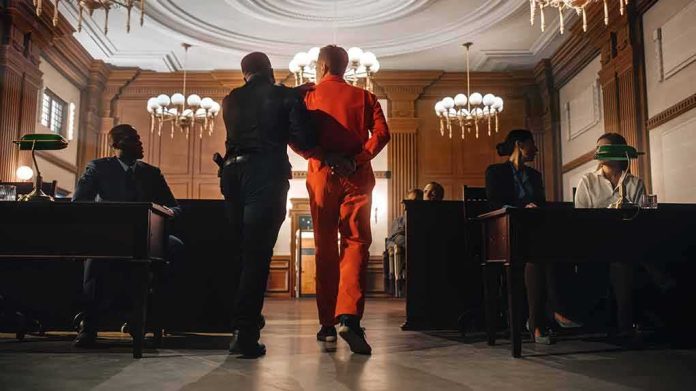
Juries do not reject insanity defenses because they are callous about mental illness; they do it when the record persuades them that intent and awareness were present at the moment violence unfolded. The Burlington verdict in the shooting of three Palestinian students is a case study in how courts separate psychiatric narrative from legal responsibility.
The Short Version
- The jury convicted Jason Eaton of attempted murder, rejecting his insanity defense after weighing competing psychiatric testimony and concrete forensic evidence.
- Prosecutors argued—and a state psychiatrist testified—that Eaton lacked a qualifying mental disease or defect at the time of the shootings.
- Defense experts presented detailed delusional beliefs, but jurors still found intent and legal sanity proved beyond a reasonable doubt.
- The outcome aligns with national patterns: insanity pleas are rare and usually unsuccessful when pitted against corroborated evidence of intent.
What the Jury Decided—and Why That Matters
The verdict turns on two core findings: that Eaton attempted to kill the three students and that he was legally responsible when he did it. Prosecutors anchored intent in mechanism and conduct, not conjecture—ballistics linking a.380 Ruger to four shell casings and a recovered bullet; eyewitness accounts and Eaton’s own post-incident actions; and a rebuttal psychiatrist who concluded he did not meet Vermont’s legal insanity standard. Jurors weighed those specifics against a defense case centered on psychosis—voices through an FM radio, commands from intelligence agencies, and perceived divine authorization—and still concluded the state met its burden. That sequence is not unusual: when tangible evidence coheres around deliberation and awareness, juries typically privilege what was done and how it was done over why a defendant later says he believed it was justified.
Insanity in American criminal law is not a clinical diagnosis; it is a narrow legal category that asks whether, because of a mental disease or defect, the defendant could not appreciate wrongfulness or conform his conduct to the law at the time of the offense. Across jurisdictions, the plea is raised in roughly one percent of felony cases and succeeds far less often than public attention suggests, a base rate that frames how rarely a psychiatric story overcomes corroborated proof of intent.
Mechanism of Proof: Intent, Awareness, and the Forensic Spine
Mechanism begins where the shots were fired. Investigators recovered four.380 caliber casings and a hollow-point bullet that reporting attributes to Eaton’s.380 Ruger, purchased months earlier; police also found multiple firearms and ammunition in his apartment. Ballistics evidence is only as persuasive as its chain-of-custody and match quality, but at trial the state treated the Ruger linkage as settled, and nothing in the defense posture appears to have dislodged that spine. Add immediate conduct: hearing a victim’s plea, calling 911, crossing the street, hiding briefly, then seeking another household to summon police—behavior prosecutors framed as evidence of situational awareness rather than automatism.
Prosecutors also neutralized the most obvious off-ramps for criminal liability. They told jurors the shooting was not legally justified and did not qualify as accidental; crucially, their psychiatrist testified Eaton lacked a qualifying mental disease or defect under Vermont’s standard, an opinion the jury credited over the defense expert’s contrary view. Trials that present dueling experts often tempt observers into a symmetry fallacy. But juries do not vote on symmetry; they assess fit with facts on the ground. Here, conduct before and after the gunfire—and the forensic corroboration—gave the state a coherent narrative of intent that the defense could not puncture.
The Defense Case: A Detailed Psychosis That Failed the Legal Test
The defense did not phone in its case. Counsel presented a forensic psychiatrist who interviewed Eaton multiple times, reviewed records, and played an audio recording in which Eaton described intelligence agencies and a higher power directing the shooting, even reading the victims’ movement as a sign from God. That is not window dressing; it is textbook psychotic content—grandiosity, external command hallucinations, misattributed agency—delivered with specificity. The expert’s bottom line was equally direct: Eaton suffered from a psychotic disorder and lacked adequate ability to appreciate criminality at the time.
Why did that not carry the day? Because the legal test is moment-specific and demanding. Juries look for contemporaneous disorganization that negates awareness of wrongfulness, not simply the presence of bizarre beliefs. When defendants take actions that reflect goal direction, situational adaptation, and evidence-shaping awareness—selecting a weapon, firing multiple times, relocating, and modulating contact with authorities—jurors often infer preserved appreciation of consequences and wrongfulness despite psychosis. The prosecution’s psychiatrist offered a categorical counter-opinion, and the jury appears to have found that opinion more consonant with the observable behavior.
How This Fits the National Pattern on Insanity
The Eaton verdict reads as typical when mapped against decades of data on the insanity defense. Across studies, insanity is raised in about one percent of felony cases and succeeds in a minority of those, often around a quarter, with meaningful variation by jurisdiction and evaluator. That base rate has structural explanations: the defense must tie mental disease to the precise moment of the offense and to the cognitive prong (appreciation of wrongfulness) or volitional prong (capacity to conform conduct), depending on the state’s test. Prosecutors, by contrast, need to show that deliberate conduct and corroborated facts align with criminal intent. When they can add a credible forensic spine—ballistics, scene reconstruction—and a rebuttal psychiatric opinion, the defense bears a steep climb. The Burlington outcome tracks that logic.
Public perception often inverts these realities. High-profile cases inflate the apparent frequency of insanity pleas and create the impression that dueling experts means a coin flip. The opposite is closer to the truth: when extrinsic evidence of intent is strong, psychiatric testimony that does not displace those facts tends to be discounted. That is not hostility to mental illness; it is the law’s insistence on moment-of-offense incapacity as the threshold for exculpation.
VERMONT JURY REJECTS INSANITY DEFENSE, CONVICTS JASON EATON OF ATTEMPTED MURDER IN SHOOTING OF THREE PALESTINIAN STUDENTS
THE VERDICT
A Vermont jury on Monday convicted Jason Eaton, 51, of three counts of attempted second-degree murder in the November 2023 shooting of three… https://t.co/o5mB3BTAke pic.twitter.com/feWfTHgPf0— THE WORLD CORRESPONDENT (@TheWorldCorresp) September 21, 2026
What the Verdict Signals Going Forward
Three implications follow. First, evidence beats narrative. Courts will credit detailed delusional accounts only when they negate criminal responsibility at the precise time of action; otherwise, physical evidence and purposive behavior dominate. Second, defense teams pursuing insanity need contemporaneous anchors—pre-incident treatment records, on-scene disorganization, or third-party observations—that align with incapacity, not simply diagnosis after the fact. Third, prosecutors who pair a clean forensic chain with a credible rebuttal expert can expect juries to reject insanity in most contested shootings, even when the defense’s clinical picture is richly developed.
Sources:
youtube.com, apnews.com, mynbc5.com, vermontpublic.org, bostonglobe.com