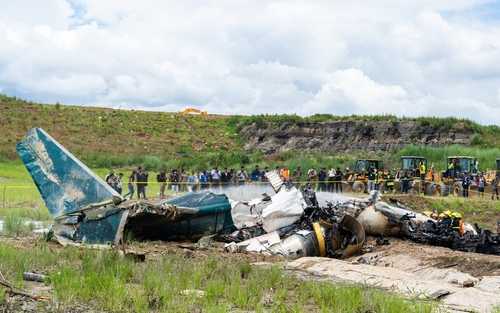
A family’s jet quietly flew on autopilot toward Washington, D.C., then dropped into a deadly spiral after a preventable loss of oxygen left everyone on board unconscious.
Story Snapshot
- A Cessna Citation business jet flew unresponsive for nearly two hours before crashing in rural Virginia, killing four people from the same family and their pilot.
- Federal investigators say the most likely cause was loss of cabin pressure, which led to hypoxia and incapacitated everyone on board while the plane stayed on autopilot.
- The National Transportation Safety Board found the jet had unresolved oxygen system problems and overdue maintenance the owner chose not to fix, despite known safety risks.
- Fighter pilots sent to intercept the jet reported seeing the pilot slumped over, helpless to save his passengers or himself.
How a Family Trip Turned Into a Silent ‘Ghost Flight’
On June 4, 2023, a Cessna 560 Citation V left Elizabethton, Tennessee, heading for Long Island, New York, with a pilot, a father, his young daughter, and her nanny on board. Air traffic controllers soon noticed something wrong. The pilot stopped answering radio calls, yet the jet kept following its planned route and altitude as if nothing had changed. For almost two hours, the aircraft flew on autopilot, crossing over the highly restricted airspace above Washington, D.C., without any sign of life from the cockpit.
Because the jet entered protected skies near the nation’s capital, the North American Aerospace Defense Command scrambled F-16 fighter jets to intercept it. These military pilots flew close and fired flares to get the Cessna pilot’s attention, but saw no response at all. United States officials later said the fighter crews reported the Citation’s pilot appeared “slumped over” and unresponsive, a chilling sign that something inside the cabin had gone terribly wrong long before the crash.
What Investigators Say Went Wrong Inside the Cabin
The National Transportation Safety Board’s final report, released in 2025, concludes the pilot likely became incapacitated during the climb to cruising altitude due to loss of cabin pressurization. With less air pressure at high altitude, the human body can be starved of oxygen, causing hypoxia, a condition that quietly weakens the brain and can quickly knock a person out. The report states the plane then flew itself on autopilot, locked at its last assigned altitude and waypoints, until fuel ran low and the aircraft entered a rapid descending spiral into mountainous terrain near Montebello, Virginia.
Investigators did not find a single clear mechanical failure that explains why the cabin lost pressure, but they did find a troubling pattern in the jet’s upkeep. The Citation had several overdue maintenance inspections, and technicians had recently flagged problems with the pilot’s oxygen mask and the emergency oxygen system. The owner and pilot chose to operate the aircraft anyway, without supplemental oxygen on board, even though the system might not work in a low-oxygen emergency. The National Transportation Safety Board said this decision to fly without fully functional oxygen protection contributed to the fatal crash.
A Pattern of Hypoxia Crashes and Questions About Oversight
This tragedy fits a wider pattern in private aviation, where cabin depressurization and hypoxia have caused several deadly “ghost flights” over the past decades. In one well-known case, a Learjet carrying golfer Payne Stewart kept flying on autopilot after everyone inside likely passed out from lack of oxygen, then crashed when it ran out of fuel. Another accident involved a modern Daher-Socata single-engine jet that slowly depressurized and flew for hours over the ocean after the couple on board lost consciousness.
The Federal Aviation Administration has warned that loss of pressurization and oxygen system failures are among the most dangerous threats to pilots, especially in smaller jets that fly high but may not have airline-level safeguards. These cases raise hard questions that cut across politics. Many Americans worry that safety rules for wealthy private owners are too weak, that maintenance shortcuts go unchecked, and that regulators often react only after lives are lost. This crash, where known oxygen problems were left unresolved, feeds that concern.
Heartbreak for Families and Anger at a System Seen as Failing
Among the four people killed were a father, his young daughter, and her nanny, turning a routine flight into a family nightmare that played out silently above the East Coast. For relatives left behind, including the pilot’s loved ones, federal findings about preventable maintenance issues are not just technical notes. They sound like proof that corners were cut and that the system allowed a flawed aircraft to keep flying until it claimed four lives.
People on both the right and the left increasingly see stories like this as part of a larger failure. Many feel the aviation world, like much of government and big business, bends toward those with money and connections. In that view, owners can ignore safety fixes, regulators move too slowly, and ordinary families pay the price. This crash, with its ignored oxygen defects, unresponsive pilot, fighter jet chase, and final spiral into a mountain, has become one more painful example of how unseen decisions far from public view can shatter the American Dream in a single afternoon.
Sources:
nypost.com, en.wikipedia.org, youtube.com, cnn.com, pbs.org, reuters.com, facebook.com