When global sport meets China’s market power, an athlete’s offhand remark can become a commercial crisis within hours; Kylian Mbappé’s Mao episode is a clear case study in how political symbolism, sponsorship exposure, and reputational risk now interlock in elite sports.
The Short Version
- Mbappé referred to Mao Zedong as a dictator in an interview segment tied to a meme; the comment triggered a rapid backlash in China.
- Several Chinese brands ended partnerships; within days, Mbappé issued a multilingual apology calling his remark “ill-judged.”
- His statement emphasized unintended offense and respect for Chinese people and history, not a political retraction.
- The sequence tracks a familiar cycle: controversy, online outrage, sponsor exits, and a public mea culpa in order to stabilize market access.
What actually happened: the remark, the backlash, the apology
The factual core is straightforward. During a filmed interview segment discussing a viral meme that pasted his face onto Mao Zedong, Mbappé said, in substance, “I think he’s a Chinese dictator.” That characterization, reported by outlets summarizing the show clip, set off a furious reaction in Chinese social media and among corporate partners. In the immediate aftermath, at least two to three Chinese brands suspended or terminated their deals with Mbappé, creating visible commercial fallout for one of football’s most valuable sponsorship portfolios. He then issued a written apology in multiple languages, calling his comment “ill-judged,” stating it was not intended to offend, and underscoring his respect for Chinese people and history. The timing—backlash, brand exits, apology—was tight, and publicly documented.
Two prudential caveats belong here. First, the public has not been given a full, authenticated transcript or unedited broadcast of the interview in question; most coverage relies on a clip summary, which leaves tone and surrounding context somewhat opaque. Second, Mbappé’s apology does not concede a political error or adopt a state-aligned narrative; it frames the harm as unintended and the remark as a reaction to an image of himself. Those points do not change the sequence of events; they do qualify what we can infer about motive.
How the mechanism works: incentives, intermediaries, and speed
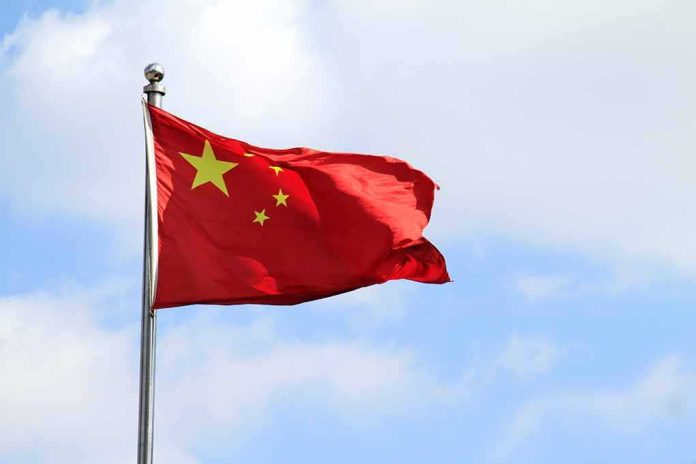
Incidents like this do not escalate spontaneously; they follow a pattern that has matured over the last decade as Chinese consumers, platforms, and corporate gatekeepers gained leverage over global entertainment and sport. The stages are consistent. Stage one is symbolic offense—here, naming Mao a “dictator,” a politically freighted label in Chinese discourse. Stage two is amplification through domestic platforms and state-adjacent media narratives that translate offense into a market signal. Stage three is commercial discipline: advertisers, licensees, and distribution partners either pause cooperation or sever ties. Stage four is contrition calibrated to reopen doors without deepening political entanglement. Mbappé’s case fits the template: sponsor withdrawals in China followed quickly and were publicly announced; the apology arrived promptly afterward.
The accelerants are structural. China’s sports economy offers outsized audience reach and revenue for global stars; brands seek low-friction ambassadors; and leagues value broadcast relationships that hinge on perceived “respect” for local political taboos. In such an environment, even a glancing comment can be translated into a business risk that sponsors are unwilling to carry. The apology is less a moral capitulation than a risk management tool—an attempt to cap uncertainty for every stakeholder tethered to the athlete’s image.
Where the real disagreement lies: intent versus impact, and the meaning of apology
On the facts, there is no credible counter-narrative that Mbappé did not make the remark or that the sponsor withdrawals did not happen; the athlete’s own statement addresses the episode directly. The debate instead concerns intent and the character of the apology. Mbappé’s position is explicit: he reacted to an image of himself, did not mean to insult Chinese people, and regrets causing hurt. This squares with prior comments he reportedly made about “dictator” memes—he criticized the trend as lacking political and human awareness, which suggests distance from the very framing that later ensnared him. The apology therefore reads as contrition for unintended offense rather than a retraction of any historical judgment about Mao.
Critics interpret the same sequence as capitulation to market pressure—a star “bending the knee” to protect endorsements. The timeline offers fuel for that view: brand exits preceded the statement, and the language is carefully respectful. Yet motive is not evidenced beyond inference; there is no public documentation of directives from authorities or demands from sponsors that dictated the content. What is established is the commercial consequence and a remedial statement crafted to stabilize relationships in a critical market. That is a pragmatic reading, not an exoneration—or an indictment.
Historical context: the playbook’s precedents and boundaries
Sports has seen this movie before. In 2019, a seven-word tweet by Houston Rockets executive Daryl Morey expressing support for Hong Kong protesters prompted the Chinese Basketball Association to suspend ties and pushed China’s state broadcaster to drop NBA games; the league and affiliated stars scrambled to contain the loss, issuing statements designed to mollify Chinese partners without alienating Western audiences. The lesson brands and athletes took was uncomplicated: China exposure multiplies both upside and tail risk; political symbolism is not background noise but a first-order business variable. Mbappé’s episode fits the same logic even though the substance differs.
Academic and industry analyses since then have mapped how consumer-nationalist firestorms translate into measurable sales and brand equity shocks, and why apologies—when prompt and framed around respect—can mitigate damage. In markets where audience sentiment and state-aligned messaging can converge, the boundary between reputational management and political deference blurs. That ambiguity is not a glitch; it is a feature of operating at the intersection of commerce and sovereignty.
What it means going forward: practical guidance for athletes, teams, and sponsors
Three implications endure. First, media prep for globally marketable athletes must now include a map of politically sensitive imagery and language for major revenue geographies—terms like “dictator” attached to foundational historical figures in China are not neutral descriptors; they are triggers. Second, contract architecture should anticipate geo-specific crises: morality clauses, cure periods, and communication protocols can prevent reflexive terminations that escalate an incident. Third, if harm is unintended, apologies should foreground empathy for affected communities while avoiding compelled political speech; contrition should be precise, human, and limited to what the athlete actually did or said. Mbappé’s statement broadly tracked this line.
The durable lesson
The modern athlete is not just a competitor; he is a multinational brand whose words transit borders at the speed of the feed. In that role, speech that brushes against another nation’s political sancta can be priced in real time by sponsors and distributors. The Mbappé case does not prove ideological surrender, nor does it absolve careless phrasing; it demonstrates the operating reality of sport in an era when access to the world’s second-largest consumer market comes with a rulebook that no one writes down, yet everyone is expected to know.
Sources:
thegatewaypundit.com, apnews.com, sports.yahoo.com, internazionale.it, independent.co.uk, nytimes.com