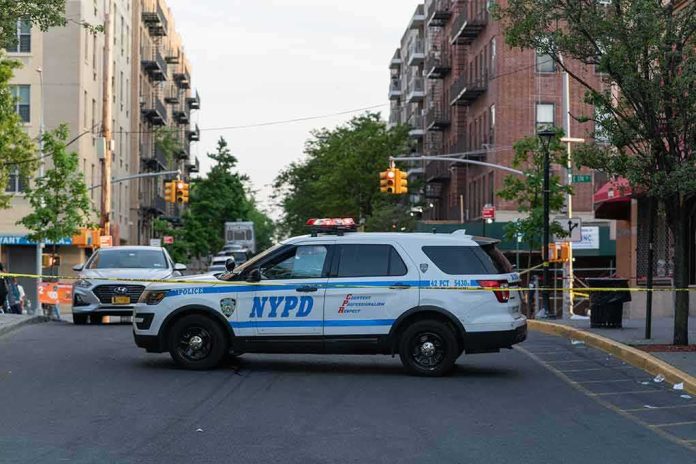
New York City’s decision to phase out horse-drawn carriages is not a symbolic gesture; it is a hard policy turn anchored in law, a fatal incident that clarified the stakes, and a governing judgment that urban streets and working horses no longer mix.
The Short Version
- The City Council passed Romanch’s Law with a decisive majority to end horse-drawn carriages by June 1, 2028.
- The law followed the death of 18-year-old tourist Romanch Mahajan after a runaway carriage incident in Central Park.
- Horses must be humanely retired; transfers to slaughter or other carriage businesses are prohibited.
- A city transition plan for workers and owners is required, though details and guarantees are still being built.
What the law actually does, and why the vote was decisive
Romanch’s Law, formally Introduction 943-A, passed the City Council overwhelmingly and sets a clear end date for the carriage industry: June 1, 2028. Legislating a sunset rather than an abrupt shutdown matters; it gives the city time to marshal placement for horses, retraining and job support for workers, and enforcement architecture for the final years of operation. The vote margin—reported at 40–7—signals a durable political consensus rather than a knife-edge cultural fight. In legislative politics, that kind of majority is a message: the practice is ending, and the city is prepared to manage the transition on its own timetable.
The trigger event is unambiguous. Council leaders grounded the measure in a specific, documented tragedy: the death of 18-year-old Romanch Mahajan, thrown from a runaway carriage in Central Park in June 2026. The law’s title memorializes him; supporters also referenced a history of horse collapses and fatalities to argue that the risks are structural, not episodic.
Animal welfare is central, and the statute reflects it
Beyond the phase-out, Romanch’s Law codifies how horses may—and may not—be disposed of. Transfers to slaughter or to another horse-drawn cab business are barred; “humane disposition” is not a slogan in this text but a legal limit that will govern end-of-workforce decisions. That closes a loophole that has bedeviled other jurisdictions: ending visible operations while quietly offloading animals into parallel commercial use. Here, the City Council chose prohibition with guardrails, not mere discouragement.
Supporters coupled safety with welfare rather than treating them as separate dockets. That is consistent with the history of the issue in New York: a century and a half of cycling between regulation after well-publicized incidents and renewed calls for prohibition when advocates argue that no feasible rule set can reconcile horses with dense, motorized, multimodal streets. The city’s previous stints with temperature caps, shift limits, and routing restrictions made marginal improvements; they did not resolve the core conflict.
What the record shows—and what it doesn’t
The Council advanced a concrete remedy: a ban with a defined transition period and specific humane-disposition rules. However, the public record provided here does not contain a full incident database, injury-rate comparisons with other park transport modes, or a veterinary cohort study of carriage horses over time. Those absences do not undercut the legality of the ban—cities legislate on judgment all the time—but they explain why the debate will not end with the roll call. A city-commissioned incident dataset and independent veterinary assessment would strengthen both implementation choices and public confidence, especially around heat stress, lameness, and post-retirement outcomes.
On the labor side, the legislation requires a transition plan for owners, drivers, and stable workers, but the documents and reporting available here lack concrete income supports, buyout formulas for medallion-like assets, or guaranteed placement pathways. That design choice—setting the policy, then building the program—invites litigation and political attack. It also creates a practical imperative: publish the plan early, specify funding, and make the offerings credible to a workforce of roughly 150–200 people tied to a small-business ecology of stables, farriers, and suppliers.
Opposition frames: livelihoods, due process, and tradition
The most forceful opposition comes from the Transport Workers Union and individual drivers, who present the ban as an assault on working-class livelihoods and an unconstitutional deprivation of licensed business value. They argue the bill offers “no meaningful economic relief,” that medallions and carriages will be rendered worthless, and that workers could face rent and basic-expense crises. They also contest the welfare premise, asserting compliance with stall-size and care regulations and warning that sanctuaries may lack resources to absorb New York’s herd responsibly.
Those are serious concerns, but they are not disproofs of the Council’s core case. On the merits, the legislature has authority to regulate or prohibit industries for safety and welfare reasons; due process challenges typically turn on whether the government provides a rational basis and administers transitions non-arbitrarily. Here, the record includes a fatal incident, years of contested but persistent welfare complaints, and a multi-year phase-out window with a mandated transition plan—elements that commonly satisfy rational-basis review. The legal fight, if mounted, will likely focus less on the city’s power to ban and more on compensation mechanics, implementation deadlines, and interim enforcement.
How we got here: the long arc from regulation to prohibition
New York has cycled through attempts to tame, not end, the carriage trade: operating-area limits, temperature thresholds, shift rules, and training requirements. The pendulum even swung back in the 1990s to broaden street access. That history matters because it undercuts the idea that the city reached for a ban as a first resort. Instead, policymakers appear to have concluded—after decades of trial—that the urban context itself is incompatible with the practice at acceptable risk and welfare levels. The ASPCA’s very founding in 1866 was entwined with carriage-horse abuse; this is a policy seam as old as the park itself.
Politically, the vote assembled constituencies beyond animal-rights groups: safety-minded councilmembers wary of repeat tragedies; fiscal stewards who prefer predictable legal exposure over chronic incident risk; and planners who see modern park mobility—pedestrians, cyclists, e-bikes, pedicabs—as already at capacity. That coalition explains why the ban commands a supermajority. It also explains why high-profile cultural defenses of the carriage ride, including from President Trump, did not change the legislative calculus: policymakers treated it as a governance problem, not a branding exercise.
New York votes to ban Central Park horse carriages after decades of debate.
If the mayor signs it, the ban will go into effect in June of 2028 – a lead-up meant to help the approximately 150 active carriage drives find new employmenthttps://t.co/GAFfCfXOeC pic.twitter.com/XkCOf62a5K
— AFP News Agency (@AFP) October 23, 2026
Execution will decide whether the promise holds
Two implementation fronts determine if Romanch’s Law fulfills its claims. First, the horses: the city must contract adequate sanctuary capacity, set veterinary admission and transport protocols, and audit placements over time. The statute’s prohibitions on slaughter and reuse are only as strong as their verification regimes; funding, inspections, and transparent reporting will make or break the welfare outcome. Second, the people: a credible transition program should combine targeted cash supports, training for adjacent sectors (transit, hospitality, logistics), recognition of asset loss where warranted, and a clear application path for independent contractors as well as W-2 employees. Delivering those pieces early will blunt litigation risk and reduce human hardship.
What this means for other cities
New York’s move will resonate in every city still licensing carriage rides. The Council did not rely on exotic legal theory; it used a majoritarian vote, a long record of contested welfare concerns, and a fatality that clarified public risk. Cities that have hovered between stricter regulation and prohibition now have a template: phase-out with humane-disposition clauses and a worker transition mandate. Whether they adopt it will depend on their incident histories, political coalitions, and capacity to fund retirement and retraining programs at scale. But the direction of travel is clear: where dense, multimodal streets are the norm, the margin for tolerating large-animal hazards is closing.
Sources:
foxnews.com, council.nyc.gov, cbsnews.com, cnn.com, nytimes.com, ny1.com, newsnationnow.com, usatoday.com, amny.com