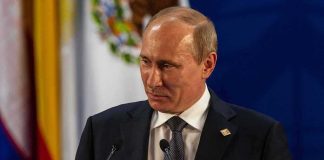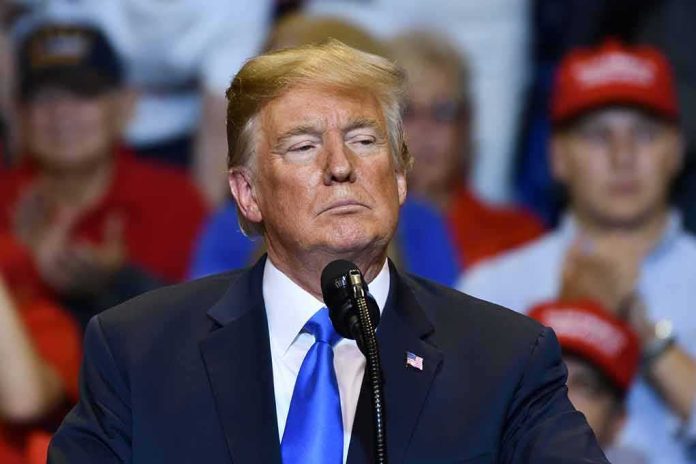
A sitting vice president spent weeks working a diplomatic back channel to end a shooting war, only to be told by the president, in a public social-media post, to drop it and go chase corruption in Democratic cities instead — a reversal that says less about Iran policy than about how this administration manages political fallout.
Key Points
- On November 12, 2026, Trump publicly directed Vice President JD Vance to abandon his Iran negotiating role and instead focus on “Massive Corruption and Crime” in Democrat-run cities and states.
- Trump declared the United States no longer needs an Iran deal, citing frozen Iranian assets and control of the Strait of Hormuz as sufficient leverage.
- The pivot came days after Vance publicly blamed the Iran war for the GOP’s midterm losses, creating visible daylight between the two men.
- Trump tied the domestic-corruption push to a fiscal claim — that investigating Democratic jurisdictions could help balance the federal budget — without citing specific audits or cases.
- The redirection leaves unresolved questions about Vance’s actual investigative authority and about what, if anything, replaces negotiated nuclear verification with Iran.
What Trump Actually Ordered
The directive came in Trump’s own words, posted to Truth Social: he had “asked Vice President Vance to focus his complete and total attention on the Massive Corruption and Crime taking place in Democrat run Cities and States throughout the U.S.” It was not a quiet staffing adjustment buried in a briefing memo; it was a public, unambiguous reassignment of one of the vice president’s signature portfolios, delivered in the same blunt register Trump uses for everything from trade threats to cabinet shake-ups. Reporting from the New York Times and Axios confirmed the mechanics: Vance, who had been the administration’s point man on Iran diplomacy, was being pulled off that file and pointed at blue-state governance instead.
Trump paired the reassignment with a flat rejection of further Iran diplomacy. “We don’t need a deal with Iran,” he wrote. “Those days have long since passed. We’ve got their money, Hundreds of Billions of Dollars, and we’ve got their Strait!” The Washington Post’s account filled in the strategic logic: Trump intends to keep the naval blockade in place and maintain economic pressure rather than trade either for a negotiated settlement. That is a coherent strategic preference — pressure over bargaining — even if it leaves open exactly how frozen assets and a blockade substitute for the inspection regime a negotiated agreement would normally provide.
Why Vance, and Why Now
The timing is not incidental. Days earlier, Vance had written publicly that the Iran war cost Republicans the midterms, declaring “the reason we lost is the war” and arguing that an earlier recommendation to end the conflict had been “sound advice.” Multiple outlets, including the Associated Press and Reuters, described Vance as the administration’s internal face of restraint — the official who had pushed hardest for a negotiated exit. Just over a week before that, on November 2 and 3, Vance had told reporters the U.S. and Iran had made real progress and that the two sides had had “a number of good conversations” toward a verifiable settlement. Trump’s November 12 directive effectively overruled that optimism in public, without explaining what changed in the intervening days.
Trump’s own public remarks complicate any simple reading of punishment versus policy. In a 60 Minutes interview, he said Vance “was right” to raise concerns about the war’s political cost, while adding that Vance “should have made one other statement” — a mild rebuke wrapped in validation. That ambivalence matters for anyone trying to read the Vance reassignment as pure discipline: Trump is not disowning Vance’s assessment of the war’s unpopularity so much as redirecting the conversation away from it, toward a subject — Democratic corruption — on which he controls the narrative.
The Budget Argument Nobody Has Quantified
Trump’s domestic-corruption pivot carries more than a political accusation; it carries a fiscal claim. “Our Budget could be quickly BALANCED with the correction of this large-scale criminal activity,” he wrote, adding that “CORRUPTION is in the Democrat Leadership’s blood.” It is a striking assertion — hundreds of billions in recoverable funds, sufficient to meaningfully move the federal ledger — and it arrives without an accompanying audit, inspector-general finding, or named case file. Coverage in the Straits Times and Cleveland.com reproduced the named jurisdictions Trump has flagged, among them Minnesota, California, and Illinois, but neither outlet nor any other in the record points to indictments or court findings establishing corruption at the scale the budget claim implies. That gap between rhetorical scale and documented evidence is the single weakest link in the entire redirection.
It is also worth noting what the claim does not specify: no agency has been named as the lead investigator, no prosecutorial mandate has been published, and no timeline has been offered for when findings — if any — would surface. A vice president “focusing attention” on corruption is a posture, not an investigation with subpoena power or docket numbers. Whether that posture hardens into an actual interagency task force, or whether it fades the way many high-volume political announcements do once the news cycle moves on, is the open question that will determine whether this was a governing decision or a messaging one.
The Strategic Logic — and Its Limits — on Iran
Trump’s leverage argument on Iran rests on two concrete assets: frozen Iranian funds and effective control over shipping through the Strait of Hormuz. Both are real levers. Neither, on its own, answers the question a negotiated nuclear agreement is specifically designed to answer — whether Iran’s enrichment capacity is being monitored and constrained by inspectors on the ground. The 2015 nuclear deal paired restricted enrichment with expanded International Atomic Energy Agency monitoring, trading sanctions relief for verified compliance; its collapse after the 2018 U.S. withdrawal demonstrated how quickly technical constraints unravel once the underlying political commitment lapses. Trump has defended that 2018 withdrawal repeatedly, telling interviewers he would “do it again” because, in his view, it remains “the only answer” to prevent Iranian nuclearization — even as his own administration’s renewed military confrontation with Iran suggests the problem it was meant to solve has not gone away.
Fox News reporting on Vance’s parallel humanitarian outreach to Iranian officials — and the skepticism it drew from administration-aligned commentators — underscores that the diplomatic track Trump just shut down had not been fully abandoned by everyone inside the building. Competing instincts, restraint versus pressure, remain alive inside this administration; November 12 simply made clear which instinct currently has the president’s backing.
Trump Says He’s Pulling Vance Off Iran Talks to Focus on Fraud Campaign https://t.co/uzBrwGzL3s
In a serious world this would be a punchline for a bad joke. Fraudster # 1 who pardoned dozens of high profile fraudsters, overrides Iran war negotiations to assign vp Vance to go…— Owlwriter16 aka Owen Levy (@Owlwriter16) November 13, 2026
What to Watch Next
Three things will tell observers whether this was substance or spectacle. First, whether any formal interagency mandate, Justice Department memorandum, or task-force charter ever materializes to give Vance’s corruption focus actual investigative teeth. Second, whether the administration publishes any accounting — audits, case numbers, recovery estimates — connecting the “hundreds of billions” claim to real federal savings. Third, whether the blockade-and-pressure approach toward Iran produces a stable standoff or forces renewed military escalation that makes “we don’t need a deal” harder to sustain politically. Until those answers arrive, the redirection stands as exactly what it appeared to be on November 12: a presidential decision, stated plainly and without equivocation, to change the subject.
Sources:
pjmedia.com, thenewstribune.com, nytimes.com, straitstimes.com, cleveland.com, newsobserver.com, axios.com, washingtonpost.com, telegraph.co.uk