
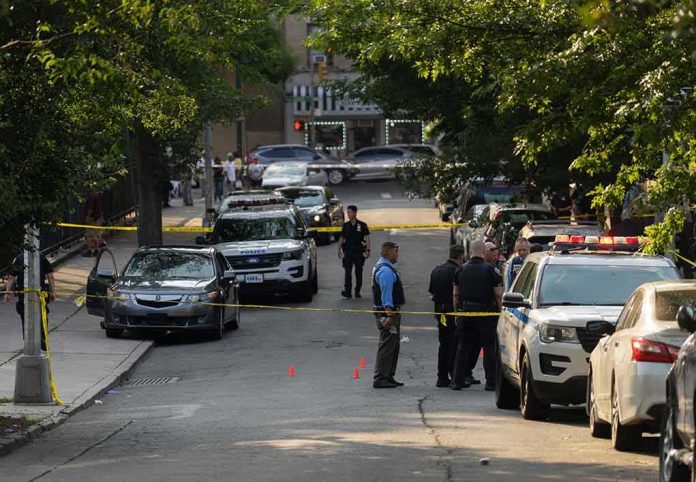
Federal officials say the contractor shot dead inside a Philadelphia home was an unlawful visitor tied to an international home-repair fraud ring, turning a neighborhood dispute into a case with national stakes.
Story Snapshot
- Homeland Security says the slain contractor was in the U.S. illegally from the United Kingdom.
- Investigators allege ties to a transnational “Traveling Conman Fraud Group” targeting homeowners.
- A $70,000 contractor bill was found at the scene after the fatal shooting.
- The 75-year-old homeowner, George Barr, is charged with murder and held without bail.
What Investigators Confirm About the People Involved
Philadelphia police say 75-year-old homeowner George Barr shot and killed 20-year-old contractor Salis Hanrahan on July 8 inside Barr’s Roxborough home. City prosecutors charged Barr with murder, and a judge denied him bail, signaling the court views the case as serious and the facts as contested. The Department of Homeland Security (DHS) told local media that Hanrahan was a citizen of the United Kingdom who was in the country without legal permission at the time of the shooting.
DHS also said Hanrahan had been denied permission to enter through the Electronic System for Travel Authorization due to an alleged link to a known fraud group. Federal investigators described that group as a transnational operation that targets homeowners. The group moves from place to place and sells overpriced, low-quality construction services, according to reports citing the Department of Justice and the Federal Bureau of Investigation. DHS further said neither Immigration and Customs Enforcement nor Border Patrol had encountered Hanrahan before.
What Happened Inside the House and What Was Found
Detectives found a $70,000 contractor bill in the home after the shooting, which points to a large project or major cost dispute. Police have not yet released a full timeline of who said what before the gunfire. Investigators have also not released a contract, photos of work, or inspection findings that would prove fraud or poor work. The large bill, by itself, does not show fraud. It does show money pressure that can spark conflict between homeowners and crews.
The homeowner’s murder charge sits beside the federal fraud claims, and those tracks will likely move on different timelines. The local case will test whether the shooting was criminal or somehow justified under state law. The federal side centers on immigration status and alleged ties to a group. Those claims could drive future enforcement moves, but they do not decide the facts of the shooting. Each process requires its own evidence to stand.
What Is Known, What Is Alleged, and What Is Missing
Local outlets report federal investigators “allege” Hanrahan was linked to the “Traveling Conman Fraud Group,” but no public court filing or Department of Justice press release names him as a defendant in a case tied to that group. Reporters also have not cited any sworn victim statements, case numbers, or digital records that tie Hanrahan to specific jobs or payments. That evidentiary gap matters. It keeps the affiliation claim in the “alleged” box until more records are released.
🚨 DHS Releases New Details in Fatal Philadelphia Contractor Shooting
Federal investigators have released new information about Salis Hanrahan, the 20-year-old contractor who was fatally shot on July 8 by a Philadelphia homeowner.
According to the Department of Homeland… pic.twitter.com/UEmy4CRgb0
— PhillyCrimeUpdate (@PhillyCrimeUpd) July 14, 2026
The Department of Homeland Security’s statement that Electronic System for Travel Authorization approval was denied because of the alleged link adds weight, yet it does not reveal the underlying proof. DHS also said immigration officers had not encountered Hanrahan before, which leaves open how investigators reached the affiliation finding before the shooting. Until documents, warrants, or indictments surface, the strongest on-record facts are the illegal status confirmation, the denied travel authorization, and the active murder charge.
Why This Case Hits Shared Nerves on Both Sides
Home-repair scams are common and costly, and national legal guides warn that transnational crews often overcharge and deliver poor work, then move on to the next town. The American Bar Association lists inflated costs and shoddy work among top fraud schemes in construction, which is why homeowners feel at risk and demand stronger action. At the same time, people also fear wrongful labels and rushed claims that outpace proof. Both worries can be true in a single case.
For many readers, this story feeds a broader concern: the system fails at both safety and fairness. Neighbors want clear vetting of who enters the country and who works in their homes. Taxpayers want the Department of Justice and the Department of Homeland Security to present solid, public evidence when they allege organized crime. Families also want local justice that weighs facts, not headlines, when a shooting happens. Trust grows when agencies release records and let the evidence lead.
What To Watch Next
Watch for three things. First, a public filing that names Hanrahan in a federal case tied to the alleged fraud group, or a warrant return that lists devices, emails, or bank records. Second, a forensic review of the $70,000 bill and any contract terms that shows prices, scope, and work quality. Third, developments in the murder case, including statements, ballistics, and any video. These steps will either firm up the federal claims or narrow them, while the court weighs the shooting on its own record.
Sources:
washingtontimes.com, facebook.com, justice.gov, en.wikipedia.org