Disney’s newest front gate controversy is not really about speed, security, or even technology; it is about whether a family can say yes when the system is already scanning faces.
Quick Take
- A class action lawsuit alleges Disney used facial recognition at Disneyland entrances without adequate disclosure [1][2][3].
- The complaint centers on informed consent, not just damages, and seeks written consent before any such collection [1][2][3].
- Disney says guests can use marked opt-out lanes and that numerical values are deleted within 30 days except for legal or fraud-prevention needs [2].
- The dispute has become a test of whether convenience can outrun privacy when children are part of the crowd [1][2].
What the Lawsuit Says Happened at the Park Entrance
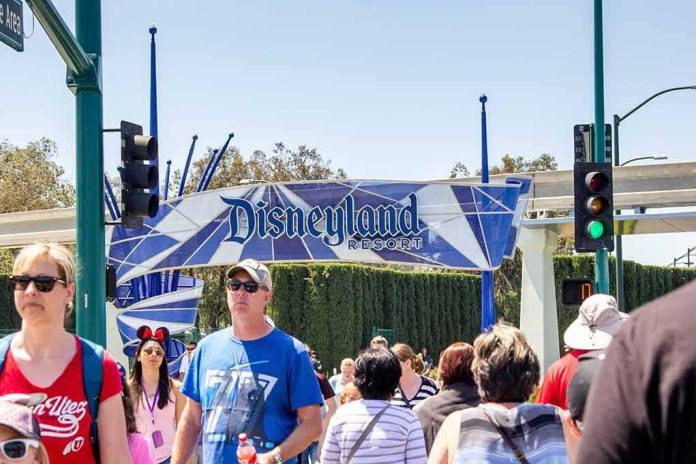
The lawsuit filed in federal court in California alleges that Disney collected biometric data from guests at Disneyland and Disney California Adventure without adequately telling them what was happening [1][2][3]. Reporting says the complaint names Summer Christine Duffield and alleges she visited the park with her minor children on 10 May [2]. The core accusation is simple and potent: families cannot meaningfully consent to collection they do not clearly see.
That allegation matters because the reported system was not described as a vague security tool. The coverage says the technology scans faces, converts them into numerical identifiers, and matches those identifiers with ticket data [1][2]. If that description holds, the issue is not whether Disney can improve throughput at the gate. The issue is whether a theme park can quietly turn an ordinary admission line into a biometric checkpoint and still call the process transparent.
Why Consent Became the Real Battlefield
Disney’s public position, as summarized in the reporting, is that guests can avoid biometric processing by using lanes marked for manual ticket validation [2]. That distinction sounds clean on paper. In practice, opt-out systems often collapse under a simple question: how obvious is the alternative, and how easy is it to use when you are managing children, bags, heat, and a line of impatient strangers? A choice hidden in logistics is not the same as a choice freely made.
The plaintiffs are not asking only for money. They want the company to require written consent before facial recognition is deployed [1][2][3]. That request goes to the heart of conservative common sense: if a business wants sensitive personal data, it should ask plainly and get a clear answer. Parents do not need legal jargon when a camera is pointed at their children’s faces. They need notice, plain language, and an actual off-ramp.
Disney’s Defense And The Limits Of Its Public Explanation
Disney also says it deletes numerical values within 30 days, except when retention is needed for legal or fraud-prevention purposes [1][2]. That is the kind of explanation companies offer when they want to reassure the public that data use is bounded. It may help, but it does not answer the sharper concern in this case: if a guest’s face was captured, how clearly was that capture disclosed at the entrance, and how obvious was the alternative lane?
Disneyland targeted in class-action lawsuit claiming new program is violating guests’ privacy | Nina Joudeh, New York Post
Disney has been hit with a class-action lawsuit over accusations it has quietly gathered guests’ biometric data using hotly debated facial recognition… pic.twitter.com/PpIMp5puzG
— Owen Gregorian (@OwenGregorian) May 20, 2026
The company has also directly disputed the claims, with Disneyland spokesperson Jessica Jakary saying the allegations lack merit [2]. That denial matters, but it does not settle the argument. At this stage, the public has reporting, not a full evidentiary record. The absence of the complaint itself, entrance signage photos, and technical documentation leaves both sides arguing over the same narrow ridge: what guests were told, what they understood, and what the system actually did.
Why This Fight Resonates Beyond One Theme Park
This case fits a larger national pattern where biometric systems enter ordinary consumer spaces and the notice arrives late, if at all. Americans are increasingly skeptical of any technology that quietly records identity while promising convenience. That skepticism is not anti-modern; it is pro-accountability. A theme park can streamline entry without demanding blind trust. If Disney’s rollout was truly clear and optional, the company should be able to show it, not merely say it.
What makes this dispute especially sticky is the presence of children. Reporting says the complaint warns that consumers “almost always include children” [1][2]. That fact does not prove wrongdoing, but it raises the moral stakes immediately. Parents understand that children cannot evaluate biometric tradeoffs the way corporate lawyers can. If the facts eventually show clear notice and a real opt-out, Disney’s position strengthens. If not, the lawsuit may become a lasting lesson in how not to introduce sensitive technology at the family gate.
Sources:
[1] Web – $5M Class Action Lawsuit Filed Against The Walt Disney Co. Over …
[2] Web – Disneyland faces $5m lawsuit over facial recognition tech | blooloop
[3] Web – Disney facing $5M lawsuit over use of facial recognition tech on park …