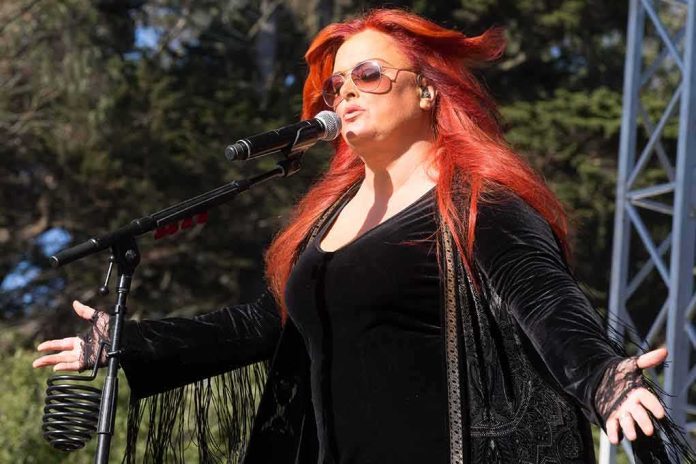
The central truth in Wynonna Judd’s public narrative is not tabloid intrigue but continuity: a celebrated artist has, over years and in multiple forums, said plainly that she grew up amid abuse and dysfunction—and chose to confront it in daylight rather than let it calcify in silence.
At a Glance
- Wynonna Judd has said on record that she experienced sexual abuse in childhood and grew up amid violence and instability.
- Her disclosures emerged alongside, and in response to, family accounts—most visibly Ashley Judd’s memoir—then continued in interviews and documentaries.
- A later family rupture intersected with criminal allegations against Wynonna’s then-husband D.R. Roach, underscoring a longstanding pattern of harm around the household.
- The Judds’ story exemplifies how abuse disclosures surface through memoirs and media, where personal testimony becomes both catharsis and public record.
What Wynonna Judd has publicly said
Wynonna Judd has affirmed in multiple venues that she was sexually abused as a child and that her upbringing was violent and chaotic. In 2011, during a cycle of interviews linked to Ashley Judd’s memoir, Wynonna said directly that she, too, had been sexually abused and had written about it in her own memoir, Coming Home to Myself. That admission, made on a mainstream platform and reported by national outlets at the time, sits at the core of her public reckoning with childhood trauma. The same media round made clear this was not a solitary confession: Naomi Judd and Wynonna appeared together and acknowledged their own histories of sexual abuse when responding to Ashley’s account, placing three converging testimonies in the public square.
These disclosures were not an isolated burst. In subsequent years, Wynonna has revisited the terrain—describing frequent moves, adult men cycling through the home, and a home life marked by control and volatility—deepening the through-line of a childhood shaped by fear and secrecy rather than safety. The recurring theme across those recollections is protective silence giving way to open acknowledgment; her emphasis has been on ending the family habit of keeping damaging experiences unspoken.
How the story surfaced and why it endured
The Judd family’s disclosures first cohered around Ashley Judd’s 2011 memoir, which cataloged neglect and abuse and spurred televised conversations with Naomi and Wynonna. Ashley has said many memories returned during therapy years earlier, which catalyzed the decision to write the book and, in turn, compelled a broader family response. On The View and in contemporaneous coverage, Naomi and Wynonna affirmed they, too, had been abused; Wynonna, seated beside her mother, said they were speaking publicly because discussing the “problem” only in the abstract had not helped.
Wynonna’s own articulation—“I will no longer keep secrets in this family,” a sentiment she has echoed in long-form interviews—speaks to a deliberate pivot from the private containment strategies common in families that endure trauma to a practice of frank testimony. That choice positioned her not just as a survivor recounting past events, but as an adult attempting to arrest intergenerational patterns.
The household pattern: later events that reinforced earlier claims
The claim that Wynonna’s childhood environment was unsafe does not rest solely on her earliest disclosures. Years after those accounts, the family contended with a separate but related shock: her then-husband D.R. Roach was arrested in 2007 on child sex assault charges, an event widely reported at the time. In later interviews, Wynonna’s daughter, Grace Kelley, alleged she had been abused by Roach years earlier when she was 10, placing the alleged harm inside the family’s orbit and amplifying the portrait of risk and instability around Wynonna’s household in the 1990s and 2000s.
To be precise about categories: an arrest is not a conviction, and allegations are not adjudications. But taken together with Wynonna’s own childhood disclosures, the arrest and subsequent family allegations formed a contiguous pattern—the kind that survivors often identify as the lived reality of abusive systems. For readers trying to reconcile timelines and testimony, the consistent element is proximity to coercive men and a family strategy historically inclined to secrecy until it wasn’t.
Mechanism and memory: how abuse gets reported and understood
The way these disclosures emerged tracks with what researchers and media historians see across abuse narratives involving public figures. Traumatic experiences frequently surface in memoirs, televised interviews, or documentary series; these formats privilege first-person testimony as the evidentiary spine, and their power is precisely that they translate private pain into a public account survivors can own. Ashley’s description of memories resurfacing during therapy aligns with clinical realities of trauma retrieval, which often arrive in fragments and sequences rather than tidy case files. That does not diminish their validity; it describes the mechanism by which survivors become able to narrate them.
This ecosystem—memoir, interview, docuseries—has tradeoffs. It lifts voices that were once suppressed, but it also encourages episodic coverage: discrete revelations and viral clips rather than comprehensive timelines. For the Judds, the benefit was clarity in their own words. The cost was an audience primed for spectacle. The reason Wynonna’s statements stand up over time is that they have been consistent across outlets and contexts; when facts matter, consistency over years outruns any single headline.
Wynonna Judd Reveals the Secret Her Family Hid From Her for 30 Years
“I walk in the door to see mom weeping and Ashley sitting next to her. Ashley blurted it out. She said, ‘Michael is not your biological father.’ I was pretty pissed. Pretty pissed. Ashley knew since she was 11.… pic.twitter.com/av6Jin0LM9
— Shawn Ryan (@ShawnRyan762) October 5, 2026
Consequences for identity, artistry, and the cycle of harm
For artists, childhood injury is not just autobiography; it shapes voice and vocation. Wynonna has long described music as both refuge and release valve—a way to metabolize the powerlessness of a violent home into agency on stage. The later chapters of her life, including public turmoil with a spouse and the painful estrangement of a daughter in addiction, read as the reverberations of a system she has tried—sometimes successfully, sometimes not—to interrupt. Her decision to name abuse and refuse secrecy is a strategy aimed at the only durable repair available: telling the truth to strip it of its quiet power.
How to read celebrity abuse narratives responsibly
The Judd family’s history offers a useful template for readers: anchor your understanding in on-the-record statements by the principals; distinguish between adjudicated facts, arrests, and allegations; and recognize that memoir and interview are not court filings, but they are the formats through which many survivors finally speak. When multiple family members, across years, attest to overlapping patterns of abuse and dysfunction—and when later events rhyme with earlier claims—the reasonable conclusion is that the core story is accurate, even as some details remain private or painful.
Sources:
youtube.com, usmagazine.com, tasteofcountry.com, nickiswift.com, people.com, nbcphiladelphia.com, nydailynews.com