When a state under sanctions masses more than a dozen oil tankers at its primary export terminal, the question is not merely whether they sail—it is whether the signaling, deception, and coercion wrapped around that staging can move markets, test a blockade, and recalibrate risk for every actor that depends on Gulf energy flows.
The Short Version
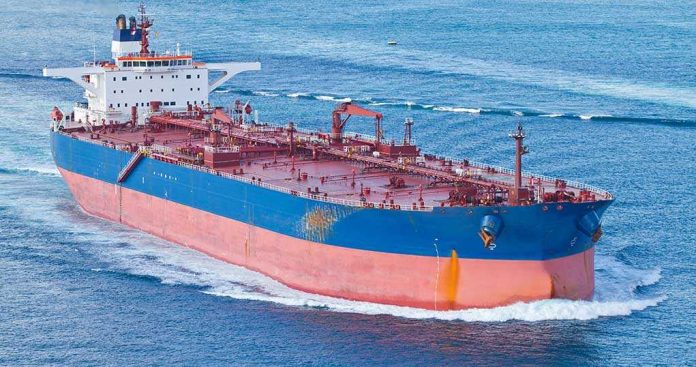
- Multiple outlets reported 14+ Iranian tankers concentrated at Kharg Island, Iran’s main crude gateway, consistent with preparations for a coordinated push toward the Sea of Oman.
- Kharg Island accounts for the lion’s share of Iran’s seaborne crude; if a breakout were attempted, it would start there.
- Commercial trackers confirmed at least one ship-to-ship (STS) crude transfer—evidence of operational activity beyond idle anchorage.
- Countervailing analysis says most tankers remained stationary and no official convoy was announced; some “movements” proved to be AIS spoofs.
What the reported gambit actually tests
Concentrating tankers at Kharg Island is the maritime equivalent of rolling artillery to the front: even if no shot is fired, the posture changes calculations. Kharg handles roughly 85–90 percent of Iran’s crude exports, so building mass there is operationally meaningful; any attempt to move oil out under pressure must cohere at that node first. Satellite-fed monitoring firms and open-source trackers reported more than 14 tankers prepared with crews aboard and Iranian flags raised, with the intended vector toward the Sea of Oman—the exit lane for any voyage past the Strait of Hormuz. The logic is clear: even a partial movement would test whether U.S. interdiction extends beyond terminal choke points into the broader Gulf.
Beyond staging, at least one STS crude transfer was documented—an essential data point because transfers convert static intent into flow, however modest. In sanctions environments, STS operations—moving cargo from one hull to another at sea—often serve both logistics and obfuscation. A single confirmed transfer does not prove a convoy, but it upgrades the posture from theater to activity.
How maritime deception and coercive signaling entwine
Iran’s petroleum trade under pressure has long relied on a “shadow fleet” whose playbook includes AIS manipulation or silence, layered STS hops, altered vessel identities, and paperwork alchemy. U.S. sanctions advisories explicitly cite these practices as signatures of evasion, and commercial studies corroborate how extensively Iran–Asia flows have leaned on STS legs in recent years. In this operating picture, ambiguity is a tool, not a byproduct. Turn enough transponders dark and even seasoned analysts must stitch together radar, optical, and draft-change clues to separate motion from mirage. That ambiguity was on display here: one purported AIS-based tanker movement through Hormuz was later called a non-existent vessel by TankerTrackers—an instructive case of spoofing eroding confidence in real-time narratives.
Messaging rode alongside the maritime moves. Outlets aligned with the Islamic Revolutionary Guard Corps (IRGC) framed a tanker convoy as a deliberate challenge and warned that any strike on an Iranian hull would place Gulf energy infrastructure in the retaliatory calculus—a threat aimed as much at insurers and regional operators as at navies. Coercive signaling of this kind is designed to widen the decision space: interdict a ship and risk regional escalation; stand off and risk a sanctions breach snowballing. Either way, risk premia and insurance underwriters take note.
The counter-case: preparation is not proof of a breakout
The most credible counterweight is specific and sober: Kpler’s Homayoun Falakshahi assessed it was too early to conclude Iran had taken serious action to break the blockade. By their read, most of roughly 20 tankers near Kharg were loaded yet stationary; one appeared to move, but a fleet run was not in evidence. Analysts also cautioned that the observed STS could have been triggered by a technical issue, not a coordinated evasion scheme. Separate reporting underscored that Tehran had not officially announced a flotilla, weakening the claim of an authorized convoy with rules of engagement and escorts. In parallel, Windward’s vessel-by-vessel look counted 16 hulls anchored and immobile over a week-long span—again consistent with a stall as much as with imminent sortie.
These are not vague quibbles; they challenge the core leap from staging to “convoy underway.” They also remind us that sanctions-era oil movements generate a high base rate of deceptive indicators even when nothing breaks the surface. In short: a massed fleet at Kharg and STS activity point to pressure and intent, but intent is not execution.
Mechanics of a convoy attempt through the Gulf
An Iranian breakout, if mounted, would favor density and ambiguity. Density—sailing in a loose formation—complicates interdiction by creating many targets at once; ambiguity—AIS silence, nighttime departures, and layered STS handoffs—stretches surveillance and injects doubt over which hull carries which molecules. Expect staging near Kharg, possible bunker barges topping off drafts, and an initial leg hugging Iranian waters to reduce boarding risk until the bottleneck of Hormuz. If hulls reach the Sea of Oman, rendezvous zones near Fujairah or farther east could enable STS to neutral flags before ocean crossing. Each step imposes choices on the enforcer: shadow and warn, board selectively, or compel turn-backs—each with diplomatic costs.
The counter to such a tactic is not simply firepower but attribution. Boarding teams, aerial ISR, and synthetic-aperture radar tighten the evidentiary chain; insurers and terminals can then be pressured with documented ties to sanctioned crude. That is why proprietary commercial datasets matter: they provide the granularity—timestamps, coordinates, draft curves—that transforms suspicion into leverage. The public, however, rarely sees that chain in full, which is why convoy claims can outpace verification.
Strategic consequences whether or not the fleet sailed
If the massing was primarily theater, it still served Tehran by probing the edges of enforcement and forcing Washington and Gulf capitals to game out interdiction thresholds. If even a fraction of cargoes moved beyond Hormuz, Iran would have tested not only naval resolve but also the sanctioning coalition’s tolerance for market disruption. IRGC-linked threats against regional energy sites were not idle rhetoric in this calculus—they were hedges designed to make underwriters and facility operators lobby for de-escalation. For oil-importing Asia, the stakes revolve around how reliably barrels can be sourced without inheriting sanction risk; for OPEC+ planners, the question is whether shadow flows re-expand, dulling policy tools. For navies, the problem is persistence: every ambiguous sail-away chips at deterrence if left unanswered; every interdiction risks a ladder of response Tehran has pre-advertised.
In the end, the durable insight is this: sanctions enforcement at sea is not a binary of pass or fail. It is a contest of pace, visibility, and cost. The Kharg Island episode—fleet massing, a confirmed STS transfer, hard-edged rhetoric, and credible analytic skepticism—fits a familiar pattern in which Iran uses the tools of the gray zone to see what the traffic will bear. The prudent reading treats it as a contested indicator of possible export activity—serious enough to warrant attention, not conclusive enough to declare a blockade run complete.
NEW STRIKES: Iran reportedly targets US bases in Bahrain civilian industry site hit by something, plans to CHALLENGE blockade with massive tanker convoy. Wants USA to go away https://t.co/DhkYzBtgTI @YouTube Interesting cuz how will they protect the convoy. Listen in!
— 'DrBen' AsiaReport, travel guide, sat.maps, books. (@AsiaReportcom) November 23, 2026
What to watch next
Three proof points would move this from inference to confirmation. First, vessel-by-vessel identification tied to dated satellite imagery: names or IMO numbers at Kharg, load windows, and subsequent tracks. Second, a transparent chain on any STS series—draft changes, rendezvous coordinates, and receiving hulls calling at discharge ports. Third, authoritative acknowledgement: an Iranian organ naming an operation, or U.S. or allied navies releasing declassified tracks and interdiction logs. Short of that, watch the insurance market: rising war-risk premiums and exclusions on Gulf passages are often the earliest, clearest vote that rhetoric is trending toward risk.
Sources:
redstate.com, members.jpost.com, euronews.com, en.ilsole24ore.com, benzinga.com, oilpricelive.com, vinnews.com, thelevelreport.com, maritime-executive.com