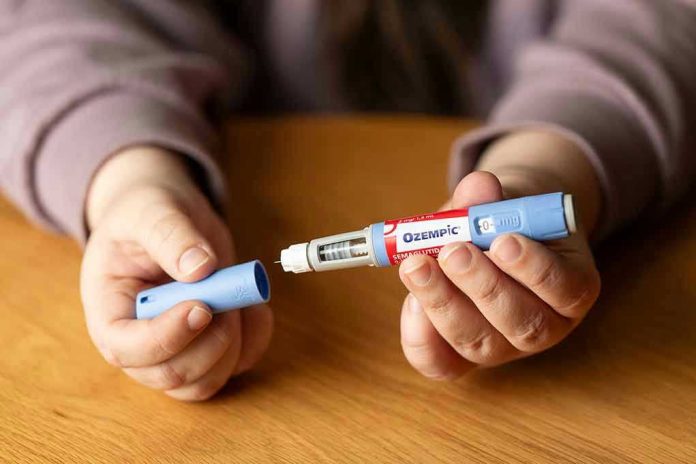
The hottest weight-loss drugs on the planet may be quietly pouring gasoline on eating disorders in the very patients doctors are desperate to help.
Story Snapshot
- GLP-1 drugs can calm cravings and blood sugar, but their appetite-killing power can also mimic or trigger eating disorders in vulnerable people.
- Specialty clinics are already reporting relapses in patients on these medications and urging physicians not to prescribe them to anyone with an eating-disorder history.[2][4]
- Researchers warn that rapid weight loss, food aversion, and malnutrition risks demand real screening and close monitoring, not casual online prescribing.[3][5]
- America now faces a choice: treat GLP-1s like miracle pills, or treat them like powerful tools that require the same caution we expect with any mind-altering drug.
Why Appetite-Suppressing Drugs Collide So Hard With Eating Disorders
Doctors did not design glucagon-like peptide-1 drugs to melt off pounds for television commercials; they were built to help people with type 2 diabetes control blood sugar. By mimicking a natural hormone that signals fullness, these medications slow digestion, dampen hunger, and can cause striking weight loss. That same mechanism is exactly what makes eating-disorder experts nervous: when food suddenly feels optional, people already wired to restrict, binge, or obsess about weight can spin out fast.[4] Appetite silence is not neutral for someone whose illness is built around controlling food.
Clinicians at dedicated eating-disorder centers now say this is not a hypothetical problem. One major treatment system reports that they are already seeing relapses in patients who start GLP-1 prescriptions, and they explicitly warn that the drugs can trigger or worsen eating disorders, especially in adolescents whose brains and identities are still under construction.[2] Another national advocacy group cautions that GLP-1 medications can intensify restrictive patterns, food avoidance, and weight obsession for those in recovery, turning a fragile peace with food back into a battlefield.
What The Research Actually Shows, Beyond Hype And Hashtags
A peer-reviewed medical review cuts through the marketing and offers a blunt warning: these medications are not for everyone.[5] The authors describe patients whose appetite drops so hard that their eating starts to resemble avoidant or restrictive food intake disorder, with severe food or fluid limitation, rapid weight loss, and medical complications like dehydration and kidney stress.[5] They argue that clinicians should proactively screen for disordered eating and then maintain continuous monitoring for red flags such as unusually fast weight change, dwindling food appeal, or mood problems tied to malnutrition.[5]
Academic and hospital-based physicians are raising similar alarms. A University of Cincinnati report on GLP-1 drugs quotes study authors who recommend that doctors screen specifically for eating disorders and then track weight closely whenever they consider prescribing these medications.[3] Penn Medicine experts note that there is no formal protocol requiring such screening, despite mixed evidence about mood side effects and mounting concern about anxiety and depression in some users. That gap leaves a familiar American pattern: powerful drugs racing ahead of the playbook for how to use them responsibly.[5]
Why Conservative Common Sense Says “Trust, But Verify” With GLP-1s
From a common-sense, conservative perspective, the issue is not whether GLP-1 drugs are evil or miraculous; it is whether we treat them with the respect we give to other potent, brain-active medications. Eating Recovery Center guidance tells providers not to prescribe GLP-1s to patients with a history of eating disorders and to screen every candidate for disordered eating before writing a script.[2] That looks less like panic and more like basic stewardship: know your patient’s vulnerabilities before you hand them a drug that can make food feel irrelevant.[2][4]
A National Institutes of Health (NIH)-funded study has found that an emerging class of GLP-1 weight-loss drugs suppress eating for pleasure, or hedonic feeding, in mice by modulating a reward circuit deep within the brain.https://t.co/DowBxCt19K
— Hep Magazine (@hepatitismag) May 19, 2026
Meanwhile, the federal government is fighting a different fire. The United States Food and Drug Administration warns that unapproved or compounded GLP-1 products, often sold online or through pop-up clinics, may be dosed incorrectly, mislabeled, or outright unsafe.[6] Combine that gray-market chaos with zero mandatory screening for eating disorders, and you get exactly the sort of unregulated experiment Americans should reject: profit-driven telehealth mills handing out appetite-suppressing injections to strangers they barely know.[5][6] Responsible medicine demands tougher gatekeeping than a five-minute questionnaire and a credit card.
How To Use These Drugs Without Losing Sight Of The Person
The most honest experts admit that the story is not one-sided. Some early data suggest GLP-1s might reduce binge-eating symptoms for certain patients, which is why a few psychiatrists and obesity specialists still view them as potential tools when everything else has failed.[4] But those same clinicians emphasize that any use near an eating disorder must happen inside a tight safety net: structured screening, nutrition counseling, mental-health oversight, and frequent follow-up to catch trouble early rather than after a hospitalization.[3][5]
For families, the practical playbook is straightforward and tough-minded. Ask bluntly whether your loved one has ever had a complicated relationship with food, cycles of crash dieting, or secret binges. Watch for warning signs after starting a GLP-1: skipping meals, pride in extreme weight drops, obsessive scale checks, or fear of eating in front of others.[2][4] If those behaviors emerge, the priority is not vanity weight loss; it is protecting a life. National and nonprofit hotlines stand ready around the clock for anyone who suspects that an eating disorder is taking hold again.[7]
Sources:
[2] Web – GLP-1s & Eating Disorders: What We Are Telling Providers
[3] Web – Weight loss drugs like Wegovy may trigger eating disorders in some …
[4] Web – Ozempic’s Connection to Eating Disorders – SunCloud Health
[5] Web – Highway to the danger zone? A cautionary account that GLP-1 …
[6] Web – FDA’s Concerns with Unapproved GLP-1 Drugs Used for Weight Loss
[7] Web – Eating Disorder Hotlines for 24/7 Crisis Help