Taiwan’s Han Kuang exercise matters because it is no longer just a symbolic show of resolve; it is a working rehearsal for how the island would keep fighting, governing, and communicating under attack.
Key Points
- The annual Han Kuang drill is designed to test Taiwan’s military readiness against invasion and blockade scenarios.
- President William Lai Ching-te’s public participation is part operational rehearsal, part strategic signaling.
- The exercise now extends beyond battlefield maneuvers into command continuity, reserve mobilization, civilian communications, and industrial dispersal.
- The central question is not whether the drill is real, but how much of Taiwan’s true wartime capacity can be stress-tested in public.
Han Kuang Is Taiwan’s Core Readiness Ritual
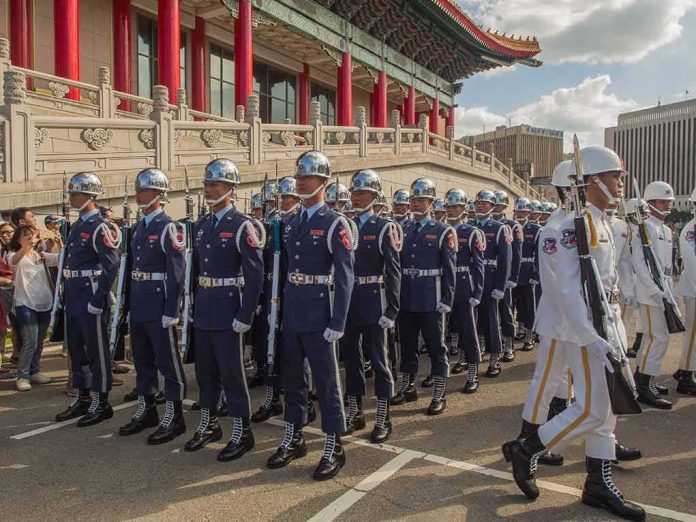
Han Kuang is Taiwan’s annual military benchmark: the island’s largest exercise, held every summer since 1984, built to simulate a response to a Chinese invasion or other major conflict. Reuters reported that the 10-day drill began on Wednesday and is intended to bolster preparations should China ever try to take Taiwan by force. That basic framing has remained stable for decades, but the content has changed. What began as a primarily military rehearsal now folds in government continuity, logistics resilience, reserve call-ups, and civilian communications under disruption.
That evolution matters because modern deterrence is no longer only about whether tanks and missiles can fire on time. It is about whether the state can absorb shock, disperse assets, maintain command, and keep civilians and industry functioning long enough to deny an attacker a quick victory. Reuters said the exercises were meant to test commanders’ ability to fight on the fly when enemy movements defy expectations, while also slowing mobile internet speeds for the first time to see how civilians would cope when bandwidth becomes scarce. In other words, Han Kuang has become a stress test for a whole society, not just a battlefield.
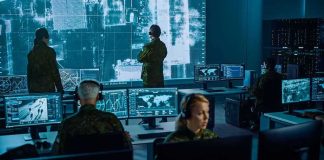
In Taiwan drill, armoured carrier takes president to command centre during annual war games could have been a headline about choreography, but the details are more revealing: President Lai Ching-te rode in an armored personnel carrier to a command center as part of drills meant to show how government would continue working in wartime. The point was continuity under pressure. A democracy facing a coercive threat cannot afford to treat leadership survival, command succession, and interagency coordination as abstract concepts.
What Lai’s Public Participation Actually Signals
President William Lai Ching-te’s presence at the exercises is not incidental pageantry. In Kaohsiung, he oversaw coastal strike drills, boarded a fast attack missile boat, and watched low-flying attack drones simulate a defense against a Chinese assault. Focus Taiwan separately reported coastal-defense activity in northern Taiwan, including Patriot and Sky Bow missile units moving to tactical positions. Those are not decorative gestures. They are visible demonstrations of dispersal, readiness, and coordination across services and terrain.
Lai’s own remarks sharpen the point. Reuters quoted him saying the purpose of Han Kuang is to use live troops, live terrain, and live equipment to test command coordination, combat responsiveness, and homeland defense capabilities. That formulation reflects how Taiwan’s military thinks about deterrence today: the exercise is meant to prove that the armed forces can absorb surprise, move fast, and keep the government functioning. It also sends a message to Beijing that Taiwan is preparing for a range of scenarios, from blockade pressure to direct attack.
Public drill coverage can tempt observers to reduce the event to theater. That would be too crude. Visible exercises are always doing two things at once: training the force and signaling resolve. The signal is deliberate, but it does not cancel the training value. In Taiwan’s case, the signaling itself is part of deterrence, because ambiguity about preparedness invites coercion. Han Kuang is meant to remove that ambiguity.
The Real Operational Shift Is Broader Than Beach Landings
The most important change in recent Han Kuang iterations is breadth. Reuters reported that the exercise will simulate wartime relocation of a major arsenal, mobilize civilian factories, and run escort drills off Taiwan’s Pacific coast. Another Reuters report said Taiwan would test relocating weapons production lines and converting civilian factories for military use so combat could continue if Chinese attacks hit supply hubs. That is a more sophisticated concept of war than the old image of beach defenses suggests. Taiwan is thinking in terms of endurance, not just initial contact.
That shift also explains why bridge closures, coastal strike drills, and communications tests matter as much as live fire. Reuters said the government would deliberately slow mobile internet speeds during the drill, a first, to test civilian communications under scarcity. Other reporting described air-raid drills, reserve mobilization, and simulated network outages as part of the broader exercise ecosystem. These are the unglamorous mechanics of national survival. If communications fail, if factories cannot disperse, or if reserve forces cannot be summoned quickly, frontline heroics will not compensate.
The annual structure is itself meaningful. Le Monde said Han Kuang has been held every summer since 1984, and AP described it as Taiwan’s largest annual military exercise. Longevity gives the exercise institutional weight. It is not a one-off political stunt, and it is not designed for a single news cycle. It is the accumulated grammar of Taiwan’s defense planning, revised each year to match changes in China’s capabilities and Taiwan’s own doctrine.
President Lai Ching-te joined a coastal strike drill in southern Taiwan on Saturday, as the annual Han Kuang exercise entered its fourth day. pic.twitter.com/Ava8ZwkC6v
— TaiwanPlus News (@taiwanplusnews) August 8, 2026
Why the Counter-Argument Does Not Hold
The only serious counterpoint in the record is not that Han Kuang is fake; it is that observers cannot see everything. That is true, and it is standard for military exercises. The public record does not include full evaluation rubrics, command logs, or after-action reports, so no outside reader can precisely measure how well each unit performed. But that limitation is not a rebuttal to the drill’s purpose. It is simply the nature of military readiness testing.
More importantly, the visible evidence aligns too cleanly with the stated objectives to dismiss the exercise as mere symbolism. Reuters reported continuous-scenario training to sharpen response in a realistic combat environment, while Taipei Times and Focus Taiwan described reservist call-ups, missile deployments, coastal defense activity, and other live operational movements. That is exactly what a serious readiness drill looks like: forces moving, command posts exercising, civilian systems being stressed, and decision-makers being forced to operate under uncertainty.
What cannot be proven from the public reporting is not whether Han Kuang exists or whether it is consequential; it is whether each component produced measurable improvement, and by how much. That distinction matters. The exercise is real. Its effectiveness, in the strict audit sense, remains opaque outside the defense establishment. Yet the available reporting is enough to conclude that Taiwan is using Han Kuang as a substantive rehearsal for wartime survival, not as a ceremonial parade.
What Han Kuang Tells Us About Taiwan’s Defense Posture
Han Kuang reveals a state adapting to a more demanding strategic reality. Taiwan is not merely practicing how to fight; it is practicing how to remain governable if fighting begins. That includes the president’s movement to command facilities, the relocation of military assets, the testing of communications under degraded conditions, and the mobilization of civilians and industry into the defense picture. The exercise is designed around the most dangerous possibility: that Beijing could attempt to combine military pressure, blockade logic, and information disruption into a single coercive campaign.
That is why the annual drill draws so much attention. It sits at the intersection of military readiness and strategic messaging, and in Taiwan’s case those two functions are inseparable. A democracy under threat must show that it can absorb the first blow without losing coherence. Han Kuang is Taiwan’s public answer to that problem, and the answer is increasingly comprehensive: disperse, communicate, continue governing, keep industry moving, and make any attacker pay for every phase of the operation.
The drill’s deeper significance is that it reflects a sober understanding of modern conflict. Survival will not hinge on a single battle or a single defensive line. It will hinge on whether Taiwan can keep its command structure intact, sustain supply, mobilize society, and deny China the easy victory that coercion requires. Han Kuang is built to rehearse exactly that.
Sources:
youtube.com, reuters.com, taipeitimes.com, france24.com, lemonde.fr