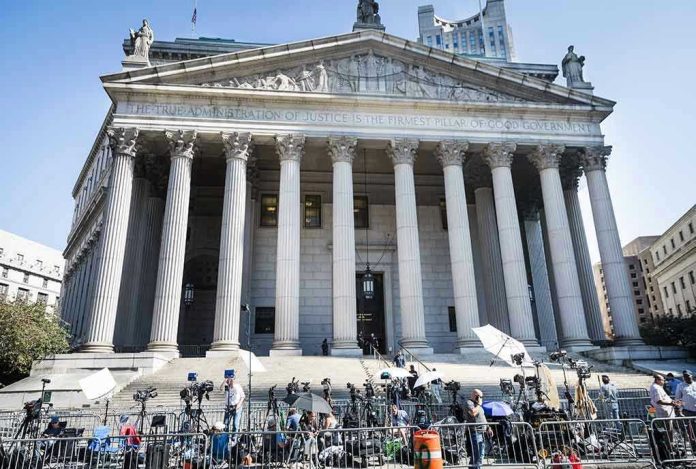
As antifa-linked activists turn their anger on the judges who sent Prairieland ICE attackers to prison for life, many Americans see one more sign that the system is spinning out of control.
Story Snapshot
- Federal prosecutors won a landmark terrorism case against antifa-linked extremists over a violent attack on a Texas immigration detention center.
- The ringleader, Benjamin Song, shot a police officer in the neck and was sentenced to 100 years in prison for attempted murder and terrorism-related crimes.
- Supporters call the group the “Prairieland 19” and now target the Trump-appointed judges as symbols of a rigged, elite-controlled justice system.
- Legal experts warn that using terrorism laws against domestic protesters, while activists threaten judges in return, deepens public mistrust across the political spectrum.
What Happened At The Prairieland ICE Facility
On July 4, 2025, a group of anti-immigration detention protesters gathered outside the Prairieland immigration detention center in Alvarado, Texas. What began as a loud demonstration with fireworks and property damage turned into a violent clash when local police arrived. Federal prosecutors say members of a North Texas “antifa cell” planned to riot, use explosives, and attack officers guarding the facility. During the chaos, Alvarado Police Lieutenant Thomas Gross was shot in the neck and badly wounded.
Evidence presented at trial showed that most of the group looked to Benjamin Hanil Song as their leader. Prosecutors said Song had bought several firearms, including an AR-15-style rifle with a rapid-fire trigger, and had distributed weapons to co-defendants ahead of the action. Body camera footage captured an officer arriving and issuing commands, followed by Song shouting “Get to the rifles” before firing the shot that hit Lieutenant Gross. The officer survived and later returned to duty.
How The Case Became A Test Of Terrorism Law
A federal jury in Fort Worth convicted nine North Texas antifa-linked defendants of rioting, using weapons and explosives, providing material support to terrorists, obstruction, and attempted murder related to the Prairieland attack. Song alone was found guilty of attempted murder of two correctional officers and the Alvarado police officer, plus discharging a firearm during a violent crime. The Justice Department celebrated the verdict as its first terrorism win against antifa, using long-standing “material support” statutes to treat the attack as terrorism even though no specific domestic terrorism crime exists in federal law.
Because Congress has never passed a standalone domestic terrorism law, federal prosecutors often rely on charges like material support to terrorists and then ask for “terrorism enhancements” at sentencing. In Prairieland, the government argued that the group’s support for a violent attack on government officers fit that model and justified extreme penalties. Critics note this same legal approach has been used against other politically charged defendants, from far-right extremists to January 6 rioters, raising questions about when harsh terrorism tools are applied and when they are not.
The Sentences And Growing Backlash
In June 2026, eight Prairieland defendants were sentenced to a combined 450 years in prison, with Song receiving a 100-year term for attempted murder of a law enforcement officer and related terrorism-linked offenses. Other members of the group received sentences ranging from about 30 years to 70 years. Supporters now refer to the broader set of defendants as the “Prairieland 19” and argue they were punished more harshly than many people convicted of murder or large-scale financial crimes.
Legal commentators from across the political world have called the sentences “extremely harsh” and questioned whether they are driven partly by politics. Georgetown Law professor Paul Butler, a former federal prosecutor, compared Song’s 100-year sentence to much lower penalties in high-profile January 6 cases and warned it could signal a new era of crackdowns on protest. Progressive outlets frame the case as Trump’s Justice Department using terrorism laws to send a message to anti-capitalist and anti-fascist activists. Conservative commentators, meanwhile, cheer the outcome as proof that violent “antifa terrorists” will finally face real consequences.
Antifa, Protest Rights, And Threats Against Judges
Defense attorneys in the Prairieland case argued that their clients were part of an Emma Goldman Reading Society, not a formal antifa organization, and that prosecutors misread zines, tattoo art, and mutual aid work as proof of a terror cell. They stressed that there is no clear legal definition of antifa and warned that vague labels can turn wide ranges of dissent into “terrorism.” At the same time, Trump-era directives pushed federal agencies to prioritize cases against domestic groups seen as hostile to capitalism and law enforcement, increasing fears on the left that politics shapes who gets branded a terrorist.
As word of the sentences spread, some supporters of the Prairieland defendants began targeting the judges who oversaw the trials and sentencing, including Trump-appointed district judges in the Northern District of Texas. Social media posts from radical accounts now portray these judges as tools of a corrupt “deep state” and call for direct action against them, blurring the line between criticism and threats. This escalation confirms the fears of many Americans on both sides who see a justice system that feels politicized, brittle, and unable to keep ordinary people safe while also respecting basic rights.
Why This Fight Matters To Everyday Americans
For conservatives, the Prairieland case confirms that violent attacks on police and federal officers must bring tough sentences, especially when tied to movements that openly talk about overthrowing the government. Many on the right see the verdicts as overdue accountability after years of what they view as soft treatment of left-wing unrest and “woke” violence. They worry that if this kind of attack is not treated as terrorism, law enforcement officers and immigration facilities will be left exposed and demoralized.
For liberals, the same case looks like a warning sign that the government now uses terrorism laws and huge sentences to crush protest and label anti-fascist activism as criminal extremism. They point out that no standalone domestic terrorism statute exists and fear that vague “material support” charges can be stretched to cover many forms of dissent. When supporters answer harsh sentences with online campaigns that flirt with threatening judges, it reinforces a broader sense that the system is breaking down, letting anger and ideology drive both prosecution and resistance instead of equal justice.
Sources:
thegatewaypundit.com, justice.gov, en.wikipedia.org, youtube.com, facebook.com, keranews.org, extremism.gwu.edu, legal-forum.uchicago.edu