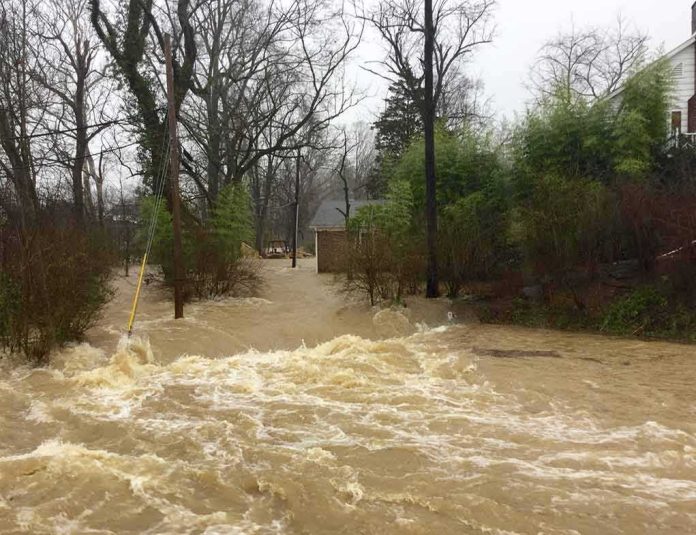
Kentucky’s flood emergency turned deadly fast, and the scale of the disaster is still growing.
Quick Take
- Governor Andy Beshear declared a state of emergency after widespread flooding hit Kentucky on Saturday.[1]
- Officials said at least 25 people had died, and the death toll was expected to rise.[1]
- State and local crews carried out hundreds of water rescues as roads, homes, and neighborhoods flooded.[1]
- Flash flood emergencies and evacuation warnings covered several counties as heavy rain kept falling.[9][17]
State Leaders Say the Crisis Is Not Over
Governor Andy Beshear said Kentucky remained in search-and-rescue mode after floodwaters tore through the state.[1] He said at least 25 people had died, including four children, and warned that more victims may still be found.[1] He also said more than 1,400 people had been rescued by air and by water since Thursday, which shows how quickly this storm overwhelmed normal response efforts.[1]
The governor’s warning fits the hard truth of flash flooding: once roads vanish and water rises into homes, people can be trapped in minutes. Kentucky emergency officials have long told residents not to drive through flooded roads and to move to higher ground as soon as water starts rising.[24] That advice became urgent as mudslides, power outages, and washed-out roads cut off parts of the state.[1]
Floodwaters Swamped Roads, Homes, and Entire Communities
Weather reports described catastrophic flooding across multiple counties, with emergency warnings issued for places including Jackson and Madison counties.[17] Reports said some areas saw life-threatening flooding as repeated rounds of rain fell on already soaked ground.[17] In one city, Richmond officials declared a local state of emergency because of flooding, showing how quickly the crisis spread from rural roads to town centers.[7]
Officials also said the storm’s impact reached deep into daily life. Beshear said mudslides marooned people on steep slopes, and more than 18,000 customers were still without power on Saturday.[1] That kind of damage does not just block traffic. It slows rescue work, shuts down communication, and leaves families cut off from help when they need it most.[1]
Rescue Crews Worked Across the State as Rain Kept Falling
Forecasters said the storm produced dangerous rainfall totals and fast-moving floodwater in eastern Kentucky.[9] Live coverage described flood emergencies, water rescues, and rapidly rising creeks and streams in multiple counties.[15] The same coverage also warned that once water reaches a home, it tends to keep rising rather than retreating quickly, which is why early evacuation matters so much.[9]
🌧️ Flash flooding likely central KY and N TN
Training storms from central Kentucky into northern Tennessee will continue this evening into early overnight. Rainfall rates over 2 in/hr and totals up to 2-4 inches may cause flash flooding.
Rainfall: 2+ in/hr
Totals: 2-4 inches… pic.twitter.com/b2ijKU4vQc— StormBrief (@StormBrief) June 28, 2026
That message matters because Kentucky has seen this pattern before. The state’s own flood response pages and emergency guidance stress that flash flooding can strike with little warning and can turn a simple road into a deadly trap.[24] For many families, the issue is no longer theory. It is whether they can get out before the water cuts them off, and whether local officials have enough time and equipment to reach them.[24]
Why This Flood Deserves Attention Beyond the Headlines
The latest reports show more than a weather event. They show how fast a heavy rain system can become a public safety disaster in a state with hills, narrow roads, and flood-prone valleys.[9][17] The scale of the rescue operation, the rising death toll, and the spread of local emergency declarations all point to the same problem: when nature hits hard, government cannot protect people unless it warns early and moves fast.[1][7]
That reality also raises a larger concern for readers who value preparedness, local control, and practical leadership. Flooding will keep testing Kentucky because the terrain and weather patterns make these events repeat often.[24] The best defense is not slogans or paperwork. It is clear warnings, fast evacuation orders, and respect for basic common sense: do not ignore floodwater, do not drive into it, and do not wait until roads disappear.[24]
Sources:
[1] Web – WATCH: Streets disappear beneath floodwaters as residents find …
[7] Web – Kentucky – Severe, Storms, Flooding, Landslides, And Mudslides
[9] Web – Turn Around, Don’t Drown! Never drive through flooded roadways …
[15] Web – Flash flooding emergencies prompt evacuations in Kentucky …
[17] Web – Find Your Flood Zone – Kentucky Energy and Environment Cabinet
[24] Web – Flood Readiness and Safety – Kentucky Emergency Management