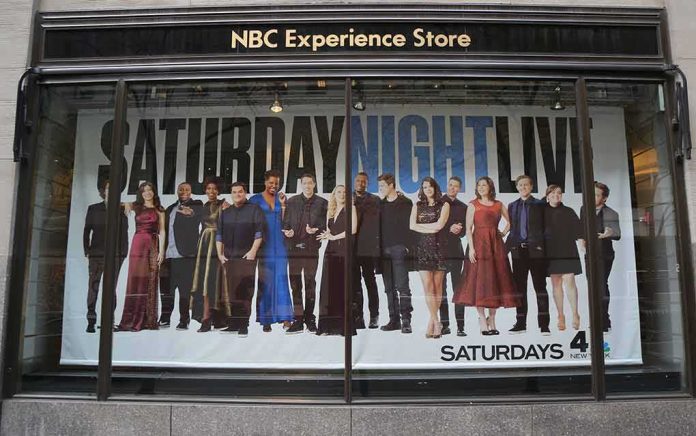
When a live sketch institution hands the microphone to a host known for provocation, the material isn’t just the host’s—it becomes the cast’s, the crew’s, and the brand’s. That is the through-line of Kenan Thompson’s on-record view: if Shane Gillis were to return to host Saturday Night Live, there would need to be a real conversation about how one person’s choices ripple across everyone else’s work.
The Short Version
- Kenan Thompson said a Gillis return would require “a real chat” about the last time’s fallout.
- He identified Gillis’s monologue line about women at the gym as the problem point.
- Thompson stressed collective consequences—one person’s choices can overshadow an ensemble.
- His stance is personal judgment, not a formal SNL policy or booking condition.
What Thompson actually said—and why it matters
At the Axios Media Trends Live summit, Thompson—SNL’s longest-tenured cast member and its de facto cultural historian—was unequivocal about process if Shane Gillis were ever invited back. “If he were to come back, then yeah, I think we would have a conversation of like, how do you think that went?” He framed it as “some sort of real chat,” and explained the purpose clearly: to prevent a repeat of a monologue controversy that bled into colleagues’ reputations and effort. He singled out the October 10 monologue line about women “dressing like whores” at the gym as the catalyst and summarized the episode’s aftermath bluntly—backlash overshadowed the rest of the show.
Two boundaries are important. First, Thompson did not present this as institutional policy. He explicitly said he does not control whether Gillis is rebooked. Second, he didn’t caricature Gillis; he distinguished conduct from character, noting he doesn’t know Gillis “to be a mean person.” The thrust wasn’t banishment or punishment—it was stewardship: a veteran trying to keep a live, collaborative production from being reduced to one combustible moment.
How SNL’s mechanism amplifies a single moment
Saturday Night Live runs on two intertwined engines: risk and ensemble. The show’s monologue is a high-wire act by design, a weekly bet that candor and timing can tap the cultural mood. But ensemble is the counterweight; from cold open to final sketch, dozens of people make the broadcast hang together. When a host’s opening volley triggers an outrage cycle, that steel-cable balance snaps. Social platforms clip seven incendiary seconds, the press recirculates the cleanest pull quote, and suddenly hours of table reads, rewrites, blocking, and performances by others are invisible behind a single line. Thompson’s phrase—“don’t overly wave pull the rest of us”—is vernacular for a practical truth in live television: individual liberty isn’t free when everyone else pays in attention, morale, and Monday headlines.
This is not an argument against edge; it’s a demand that the edge be defensible within a workplace where reputational spillover is real. When the clip outruns the context, the brand and its people are the collateral.
The Gillis monologue in context
Gillis’s October 10 monologue included the now-infamous gym line—couched in a setup about changing norms and followed by an “I’m sorry” tag that read as an in-character shrug as much as contrition. The line was clipped, shared, and condemned across platforms, and the reaction became the story. Variety’s coverage captured Thompson’s core complaint: that the backlash swallowed the rest of the episode’s work by cast and writers. Axios’s reporting aligns: Thompson wants any future host who triggers a blowback of that magnitude to engage in a frank postmortem before trying it again on SNL’s stage.
None of that is about censoring an art form. It’s about consequences and roles. The host is a guest artist with a featured slot. The cast and crew are the standing company. Thompson is arguing for the basic reciprocity that keeps that relationship functional when the guest’s choices explode beyond the room.
A recurring SNL problem, not a one-off feud
Across five decades, SNL has repeatedly wrestled with the asymmetry between a host’s headline value and the ensemble’s ongoing social contract. Andrew Dice Clay’s 1990 hosting stint remains the canonical case: internal dissent, a musical guest withdrawal, and protests over material widely judged sexist and homophobic—clear proof that a host’s brand can turn a week at 30 Rock into a collective reputational event rather than a private creative gamble. Other flashpoints—from Elon Musk’s divisive booking to moments that forced post-episode apologies—reveal the same structural tension: provocation is part of the show’s DNA, but it doesn’t insulate colleagues from the heat when a single choice dominates the narrative.
Placed in that lineage, Thompson’s “real chat” is not a novel demand. It’s the informal governance mechanism veteran ensembles use when the formal ones—standards-and-practices, rehearsals, dress-run adjustments—don’t catch what ultimately detonates on-air. The ask is proportional: not vetting every joke to death, but insisting on accountability when a choice eclipses the ensemble.
Creative license, harm, and where the disagreement really lies
The tension here is not whether comedians should push boundaries; many of SNL’s defining moments did exactly that. The disagreement is over where to draw a line between hard-edged and needlessly demeaning, and who bears the downside when that line is crossed in a way that the broader culture rejects. Thompson’s framing is pragmatic, not doctrinal: use the freedom, but own the aftermath—especially if colleagues are drafted into the fallout. That framing also acknowledges a modern distribution reality: social media rewards extremity and strips context, so the craft obligation shifts. Precision matters more, not less, when the most inflammatory seven seconds are destined to become the artifact.
It also explains why Thompson separates the person from the action. Labeling Gillis as “not a mean person” leaves space for intent, while still insisting on responsibility for effect—an ethic most veteran comics understand. In a live, collaborative environment, effect is the currency that counts.
What a “real chat” would aim to accomplish
In practice, such a conversation would do three things. First, reality-test the bit: what, specifically, is the comic premise, and is the laugh earned by observation rather than by contempt? Second, operationalize the risk: if the line is likely to dominate, can the monologue be re-aimed without neutering it, or is there a different angle that keeps the edge while avoiding the predictable outrage trench? Third, set collective expectations: if the host proceeds and it blows up, the postmortem is not a surprise, and colleagues aren’t left answering for a joke they neither wrote nor delivered. That’s not bureaucratic creep; it’s professional adulthood in a high-stakes live show.
Crucially, Thompson does not pretend to set booking policy. He said plainly that inviting Gillis back is not his decision. His leverage is cultural, not contractual—the authority that accrues to the person who has been there longest, who understands how the week is built, and who has seen how a hot monologue can burn the rest of the hour.
SNL's Kenan Thompson says Shane Gillis needs to be sat down & reprimanded for his joke on SNL about women dressing like whores at the gym.
Thompson said SNL viewers should go back and rewatch the episode and celebrate how great the female guests were.
What a pathetic response.… pic.twitter.com/LhPbEwRy9U
— The Liberty Report🇺🇸 (@TheLibertReport) October 22, 2026
Why this standard is likely to endure
Nothing about the digital attention economy suggests the next provocation will behave differently. Clips will still outrun shows; a single sentence can still define a week’s work. In that environment, “real chat” is not an overreach. It’s the minimum viable process for protecting an ensemble art form that depends on both sharpness and shared trust. The ask is modest: keep the edge, but carry your own weight when the blade cuts the people standing next to you.
Sources:
washingtontimes.com, consequence.net, variety.com, people.com