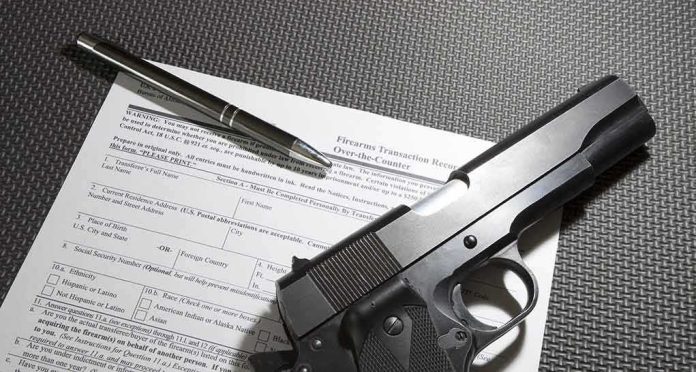
Maryland just turned a niche technical feature inside a handgun into the legal lever for what critics now call a de facto ban on America’s favorite pistol brand.
Story Snapshot
- Governor Wes Moore signed SB 334, banning “machine gun convertible pistols” starting in 2027
- Supporters say it narrowly targets pistols easily converted into illegal “DIY machine guns”
- The National Rifle Association (NRA) says that definition sweeps in most Glock-style handguns
- A fresh court fight will test how far states can go in regulating “dangerous features” on common handguns
How a Tiny Backplate Became the Center of a Big Gun Fight
Maryland’s new law, Senate Bill 334, does not mention Glock in its text, yet everyone on both sides understands what is really at stake: the basic design used in many of the most popular handguns in America.[1][2] The statute bans “machine gun convertible pistols,” defined as semiautomatic pistols with a cruciform trigger bar that can be turned into a machine gun by swapping in a special backplate “switch.”[2] That sounds technical because it is technical, and lawmakers are using that technicality as the entire point.
Beginning January 1, 2027, Maryland residents will not be allowed to manufacture, sell, offer for sale, purchase, receive, or transfer any pistol that fits this “machine gun convertible” definition.[1][2] The law explicitly excludes hammer-fired semiautomatic pistols and striker-fired pistols that do not use the cruciform trigger bar design.[2] Supporters describe this as a focused rule: you can still own typical handguns, they argue, just not ones that accept illegal switches with minimal effort.[1][5]
Supporters Frame It as a Targeted Strike on DIY Machine Guns
Gun-control advocates call SB 334 a “critical public safety measure” aimed at stopping pistols that can be quickly turned into fully automatic weapons capable of firing up to roughly 1,200 rounds a minute.[1] They emphasize that so-called “DIY machine guns” have shown up in street crime when criminals add small illegal switches to common pistols.[1] Their message is simple: if a manufacturer designs a handgun in a way that makes it trivial to add a machine-gun switch, that design should not be sold in Maryland.[1][6]
Everytown for Gun Safety and allied groups highlight that the law does not confiscate existing guns and does not, on its face, ban all semiautomatic pistols.[1] They stress that Maryland is holding manufacturers to a “basic safety standard”: if you want to sell here, do not make a gun that easily accepts a machine gun conversion device.[1] From this perspective, the target is not the ordinary gun owner, but the design choices that blur the line between a legal handgun and an illegal machine gun.[1][6]
Critics See a De Facto Glock Ban and a Direct Challenge to Heller
The National Rifle Association, the Firearms Policy Coalition, and the Second Amendment Foundation read the exact same statutory definition very differently.[2] They argue that once you specify a cruciform trigger bar and a simple converter backplate, you are not just talking about obscure gang tools; you are talking about nearly every Glock and Glock-style pistol on the market.[2] Their lawsuit bluntly labels this a “Glock ban” and says Maryland has outlawed many of the most common handguns in America.[2]
From a constitutional standpoint, critics point straight to the Supreme Court’s Heller decision, where the Court said government cannot ban firearms in common use for lawful purposes and specifically struck down a broad handgun ban.[2] Their argument is rooted in common sense as many gun owners see it: when the most popular self-defense pistol design gets outlawed by technical description, that looks less like a safety tweak and more like the very sort of handgun ban Heller rejected.[2] Whether courts accept that framing will decide the fate of this law.
Technical Definitions Versus Brand Names in the Culture War
Maryland’s move fits a pattern familiar to anyone who has watched “assault weapon” debates for decades. Lawmakers and gun-control groups describe narrow technical limits—particular features, internal parts, or conversion capabilities—while opponents translate those limits into brand names and model families that ordinary people recognize.[1][2] The public hears “Glock ban” because that is how the technical language plays out in the real market, even if the statute never uses the word Glock.[2][4]
🚨 BREAKING: Maryland @GovWesMoore has just signed a bill into law that would ban the most popular pistol brand in America — @GLOCKInc!
The NRA is immediately filing a lawsuit challenging this unconstitutional law and will not relent until rights are restored to Marylanders. pic.twitter.com/9fsrcgUT2b
— NRA (@NRA) May 26, 2026
For conservatives who value both public safety and individual rights, the core question is whether it is honest governance to regulate popular firearms through ever-more-technical design rules that most citizens do not understand. When the law says “cruciform trigger bar,” but the effect is to choke off sales of the handgun many people keep in their nightstand, trust erodes. Legislating by obscure engineering terms risks hiding major policy choices inside minor-sounding details, and that is exactly what rubs many gun owners the wrong way.[2][4]
Sources:
[1] Web – Maryland’s Democrat Governor Just Signed a Law Banning the Most …
[2] Web – Maryland’s 2026 Firearm Law Update: Senate Bill 334 … | FrizWoods
[4] YouTube – Maryland lawmakers approve bill banning sales of “machine gun …
[5] Web – Glock pistol ban: MD House GOP calls on Wes Moore to veto bill
[6] Web – VICTORY FOR GUN SAFETY: Maryland Becomes Second State in …