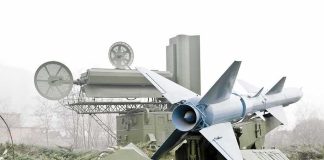
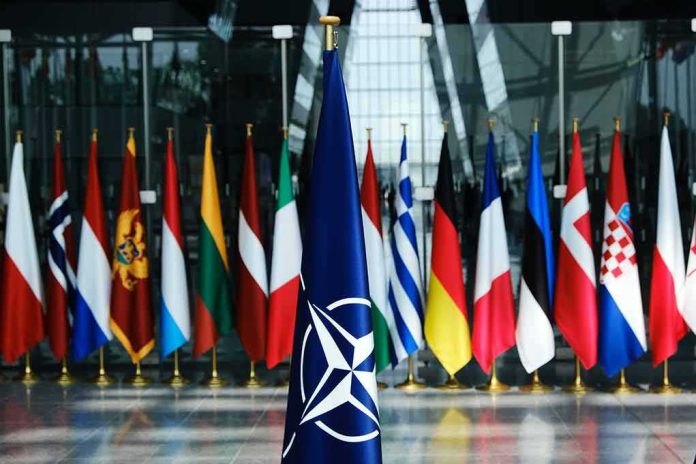
Airspace violations are not abstractions on a radar plot; when cruise missiles and drones cross a NATO border, they convert alliance commitments, command-and-control procedures, and air-defense investments into immediate, measurable action.
At a Glance
- Poland reported repeated violations of its airspace by Russian-manufactured systems in 2025 and 2026, including a night of 19 drone incursions and a later episode involving three objects tracked deep inside Polish territory.
- Polish and allied aircraft engaged intruding drones in 2025; NATO leaders labeled the 2026 event a grave breach and tied the pattern to Russia’s war against Ukraine.
- Poland’s political leadership called the 2026 episode a deliberate provocation, while NATO’s public posture emphasized solidarity as intent assessments proceeded.
- The incidents fit a multi-year trend of Russian missiles and drones brushing or violating NATO airspace, increasing operational demands on allied integrated air and missile defense.
What Happened: Two Discrete Incidents, A Consistent Pattern
On the night of 10–11 September 2025, Poland’s government reported an “unprecedented” series of intrusions: 19 airspace breaches by drones manufactured in Russia. Deputy Prime Minister and Foreign Minister Radosław Sikorski said Polish and NATO air forces assessed the drones had not simply strayed off course and were instead deliberately directed. Polish aircraft, with support from the Netherlands, Italy, and Germany, engaged and shot down the drones, providing an operational record beyond later debris recovery debates. The alliance treated the event as a collective concern; NATO briefed and consulted at senior level the same day, underscoring that allied command-and-control was already synchronized for eastern-flank defense.
Thirteen months later, on November 20, 2026, Poland tracked three objects entering its airspace from the direction of Ukraine during a large Russian strike package against Ukrainian targets. Defence Minister Władysław Kosiniak-Kamysz publicly identified one as a Kh-101 cruise missile, a second as probably a missile, and a third as likely a jet-powered drone; all were detected well inside Poland, roughly 30–60 miles from the border in some accounts. Prime Minister Donald Tusk called it an intentional provocation by Russia. In the days that followed, Polish prosecutors stated that all three objects were Russian Kh-101s—tightening the identification while leaving Poland’s overall assessment of a Russian-origin violation unchanged. NATO Secretary General Mark Rutte called the episode a “grave violation” of Polish airspace.
How It Works: Detection, Classification, and Engagement
NATO members on the eastern flank knit national sensor grids—ground-based air-surveillance radars, airborne early warning, and passive detection—into an integrated air picture. Classification begins with kinematics: speed, altitude, and flight profile differentiate a subsonic cruise missile like the Kh-101 from a jet-powered reconnaissance drone. Electronic support measures, infrared signatures, and track correlation with known strike windows add confidence. In 2025, that process culminated in intercepts executed by Poland with allied augmentation. The fact of allied shooters on station illustrates an important mechanism: NATO’s air tasking cycle and quick reaction alert posture scale when a member’s airspace is threatened, even absent a formal treaty invocation.
Discrepancies between early and later object labels are common in air defense. Initial public descriptions reflect best-fit identification under time pressure; forensic certainty arrives only after debris analysis, if recovery is possible. In the November 2026 case, prosecutors ultimately attributed all three tracks to Kh-101s—an outcome consistent with Russia’s repeated use of that standoff system against Ukrainian infrastructure. That revision does not alter the core fact that Polish sovereign airspace was penetrated and that integrated NATO mechanisms were engaged.
Where the Judgments Diverge: Intent vs. Attribution
There are two separate analytic questions: what the objects were and whether their incursion was intentional. Poland’s leadership asserted deliberate Russian testing or provocation in both episodes, aligning that claim with observed track behavior and wider campaign context. NATO’s public voice, by design, often separates solidarity and consequences from intent assessments; Secretary General Rutte condemned the 2026 breach in categorical terms while noting that allies were still working to determine intent. That division of labor—national political characterization alongside alliance caution—reflects escalation management as much as evidentiary sequence. It is also consistent with NATO practice during prior cross-border spillover events since 2022.
Attribution, by contrast, was treated more firmly. In 2025, Poland described Russian-manufactured drones crossing its border and engaged them with allied assistance. In 2026, prosecutors stated all three intruders were Russian Kh-101 cruise missiles, while NATO publicly linked the violation to the ongoing Russian campaign against Ukraine. The distinction matters for alliance decision-making: intent guides deterrence signals; attribution informs both defensive posture and diplomatic consequences.
Operational Consequences: Readiness, Interceptors, and Cost Imbalance
Even short-duration intrusions stretch crews, magazines, and maintenance cycles. Quick reaction alert fighters, ground-based interceptors, and electronic warfare assets must be vectored against low-flying, radar-evading profiles. The 2025 episode—in which Poland and three allied air forces engaged multiple drones—exposed a familiar asymmetry: defenders often spend high-value missile shots or expensive flight hours to neutralize relatively cheap attackers. That cost curve pressures stockpiles and accelerates investment in layered defenses that blend airborne shooters with cheaper effectors: infrared short-range missiles, mobile guns, electronic attack, and counter–UAS systems that can attrit swarms without bankrupting magazines.
Command relationships also matter. Poland’s incidents demonstrate how national sovereignty and NATO’s integrated air and missile defense interlock: national chains of command retain authority over their airspace, but shared radar data, standing alert orders, and preplanned cross-border support allow Dutch, Italian, German, and other allied aircraft to plug in quickly. The North Atlantic Council’s rapid consultations in 2025 and the Secretary General’s swift condemnation in 2026 reinforced the political side of that military integration.
Strategic Context: A Trend, Not an Outlier
These Polish episodes are part of a broader, multi-year pattern of Russian missiles and drones clipping or violating NATO airspace as the Ukraine war grinds on. Analyses cataloged a steady cadence—four incidents in 2022, five in 2023, six in 2024—ranging from brief fighter incursions and a downed Russian recon drone in Romania to cruise missiles temporarily disappearing from allied radar and later being found on NATO soil. In March 2024, a Russian cruise missile crossed Polish airspace during strikes on Ukraine; NATO has repeatedly framed such events as dangerous and unacceptable, placing responsibility on Russia while calibrating the alliance’s response to avoid inadvertent escalation.
Within that trendline, Poland has at times considered or initiated alliance consultations under Article 4 of the North Atlantic Treaty—formal discussions when a member judges its security threatened—even as daily air defense coordination proceeds without that step. The mechanism exists precisely for these gray-zone pressures: to turn episodic violations into alliance deliberation without presupposing collective defense measures.
What It Means Going Forward
For Poland and its neighbors, the practical agenda is clear: keep sensors fused, keep alert lines manned, and diversify interceptors so the defender’s cost per shot trends down while coverage improves. For NATO, the requirement is to sustain political unity while refining rules of engagement and cross-border support arrangements that can handle mixed salvos of cruise missiles and drones without delay. These two Polish cases show that both tracks—military integration and political cohesion—are in force. They also show why they must be constantly rehearsed: the next violation will arrive on the defender’s timeline, not the attacker’s.
Sources:
facebook.com, dw.com, reuters.com, cbsnews.com, pbs.org, butlereagle.com, kyivindependent.com, rte.ie, nato.int, nato-veterans.org