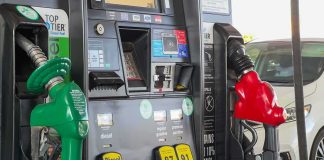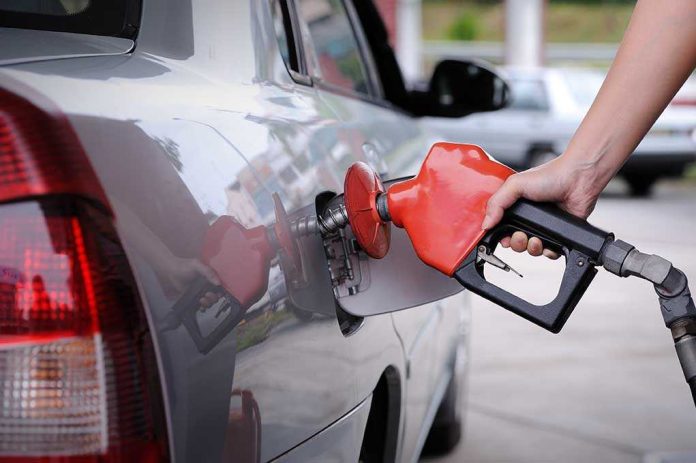
Sanctions can make fuel lines visible and budgets bleed; they are far less reliable at forcing an ideologically entrenched leadership to change course. Iran’s current gasoline squeeze illustrates the asymmetry perfectly.
At a Glance
- Fuel queues and supply stress are real in Iran; they stem from constrained imports, refining losses, and tightened U.S. enforcement.
- Washington’s strategy targets Iran’s petroleum revenue and logistics networks to raise costs and curb military financing.
- Tehran’s leadership signals defiance, betting on adaptation, evasion, and narrative control rather than policy concessions.
- Across decades and data, sanctions reliably damage macro indicators; they only inconsistently deliver political capitulation.
Why fuel lines appear before political concessions
Iran’s domestic energy system has long run on a fragile equilibrium: heavy subsidies that inflate demand, underinvested refineries, and a recurring need to bridge gaps with imports. When external shocks hit—be it chokepoint disruptions around the Strait of Hormuz or a tighter ring around shipping and payments—the effects surface first at the pump and in the currency market, not in the Supreme Leader’s talking points. The latest round of enforcement and maritime constraints has pinched flows and raised frictions across trading, insurance, and port access; visible consequences include lengthy lines at Tehran filling stations and rationing chatter, consequences the Associated Press and syndications captured in on-the-ground reporting. The politics move more slowly.
Mechanically, this is straightforward. Iran exports crude and condensate through networks that are perpetually reconfigured to evade detection; as the United States designates more facilitators and vessels, counterparties face higher legal and financial risk, insurance premiums jump, and voyage economics deteriorate. Simultaneously, the regional war and effective curbs around Hormuz magnify logistical stress and remove refining capacity from the market, tightening the pool of available products and components Iran itself sometimes needs to import. Each turn of that screw manifests as scarcity and queues.
Washington’s theory of pressure: deprive revenue, raise costs, shrink war finance
U.S. policy is explicit. Treasury and State have targeted the commercial architecture that monetizes Iranian barrels—front companies, brokers, tankers, and ship-to-ship transfer nodes—not just to dent export volumes, but to make every remaining barrel yield less net cash while complicating procurement of parts and services that keep Iran’s energy system running. In a war environment, the theory of coercion hardens: limit the regime’s ability to fund weapons rebuilding and regional proxies by restricting the cash spigot. This campaign interacts with global conditions; when transit through Hormuz is constrained and regional refineries are offline, the marginal pain inflicted on Iran’s domestic fuel balance grows sharper.
There is a second-order channel as well: macro transmission. Sanctions have repeatedly depressed oil export revenues, weakened the rial, and pushed inflation higher—an established pattern across empirical studies using structural VARs and difference-in-differences tools. Those macro hits, in turn, undermine the state’s capacity to sustain subsidies and finance emergency imports, amplifying local scarcity.
Tehran’s counter-strategy: adapt, substitute, and rally
Iran’s leaders answer coercion with defiance in public—and with workarounds in practice. The defiance is consistent and categorical: senior figures, from the president to the Supreme Leader, reject the premise that sanctions will force surrender and frame pressure as illegitimate bullying. That rhetoric is not mere theater; it creates political space for policies that push costs onto households while casting blame outward. The workarounds are familiar: deepening ties to sanction-tolerant buyers, bartering, discounting, expanding “shadow fleet” shipping, and rationing at home. Studies that follow the arc of past campaigns find that the short-run impact on production and exports can be severe, but that effectiveness decays as targets rewire trade and finance over several years.
Adaptation does not erase pain. It redistributes it. Subsidy regimes distort demand; maintenance cycles slip; refinery modernization lags. The Carnegie analysis is blunt about the structural piece: mismanagement and policy choices have left the energy system brittle, making external shocks bite harder and last longer. Absent deep reforms, scarcity will recur even if exports recover episodically through evasion. In that sense, sanctions exploit preexisting weakness rather than create it from whole cloth.
What the fuel lines do—and do not—tell us
Queues at filling stations are evidence of supply strain; they are not proof that Tehran is about to concede on core security or nuclear policy. The sanctions literature, and Iran’s own history, counsel against linear readings. Oil exports and non-oil trade do fall under pressure; the rial depreciates; inflation accelerates; output growth suffers. But leadership concession is mediated by regime cohesion, revenue diversification through gray channels, and the regime’s tolerance for domestic hardship. On those dimensions, Iran has repeatedly opted to endure, to substitute markets toward China and other buyers, and to squeeze consumption with rationing when necessary, rather than to capitulate.
Washington understands this. It has therefore moved beyond headline embargoes to granular enforcement—naming vessels, brokers, and front entities—to keep the cost of evasion elevated. The strategy’s success should be measured not by immediate capitulation, but by whether Iran’s net external take is curtailed, military procurement timelines slip, and domestic trade-offs become politically expensive over time. On those metrics, the evidence of stress—especially when layered atop regional transit constraints and lost refining capacity—is credible.
The role of chokepoints and refining losses
The closure or effective curtailment of the Strait of Hormuz is not a footnote; it is the fulcrum of regional energy physics. Even partial restrictions trap volumes and force circuitous routing. When more than a fifth of regional refining capacity goes offline and transit is curtailed, the available pool of gasoline, diesel, and inputs like reformate tightens for everyone—including Iran—regardless of sovereign reserves on paper. Sanctions amplify those physical constraints by narrowing which counterparties will touch Iranian-linked cargoes at all. The result is not just higher prices, but sporadic physical absence of molecules where and when they’re needed, which is what a two-hour line at a Tehran station actually signals.
This interaction—physical chokepoint plus financial sanctions—explains why fuel crises can worsen quickly and ease only gradually. Even if a single policy lever is relaxed, insurance, credit, and counterparty confidence recover more slowly than they break.
🚨 Long lines for gasoline have appeared in Tehran, signaling growing fuel shortages and heightened public concern, as US sanctions continue to pressure the Iranian economy.
📩 Subscribe: https://t.co/2ZeNJWagCf#Iran #Sanctions #Fuel pic.twitter.com/X00thHB5w9
— Atlas360 (@AtlasNewsen) August 25, 2026
What to watch next: durability, not drama
Three tests will tell you whether pressure is shifting from visible scarcity to strategic leverage. First, revenue capture: do designations continue to raise the discount on Iranian barrels and limit settlement channels, or do gray-market buyers normalize terms over time? Second, domestic adjustment: does Tehran deepen rationing and subsidy reform to stabilize supply, or does it drain reserves to import products at punitive prices—a choice that trades near-term calm for medium-term fragility? Third, alliance structure: does Iran lock in longer-term oil-for-goods or financial clearing arrangements with sanction-tolerant partners, cushioning revenue volatility and blunting enforcement decay?
Sanctions have already achieved what they almost always achieve: economic pain, policy trade-offs, and a public narrative contest. Whether they achieve what they more rarely deliver—policy concession from a hardened regime—will depend on the cumulative effect of revenue denial, logistics friction, and the regime’s appetite for imposing hardship at home. Fuel lines are the symptom. The outcome will be decided by how both sides manage time.
Sources:
english.elpais.com, ofac.treasury.gov, reuters.com, ncr-iran.org, home.treasury.gov, abc4.com, wsj.com, aljazeera.com, stern.nyu.edu, iranian-studies.stanford.edu, dmjr-journals.com, link.springer.com, journals.sagepub.com, etd.ceu.edu, carnegieendowment.org, thenationaldesk.com