
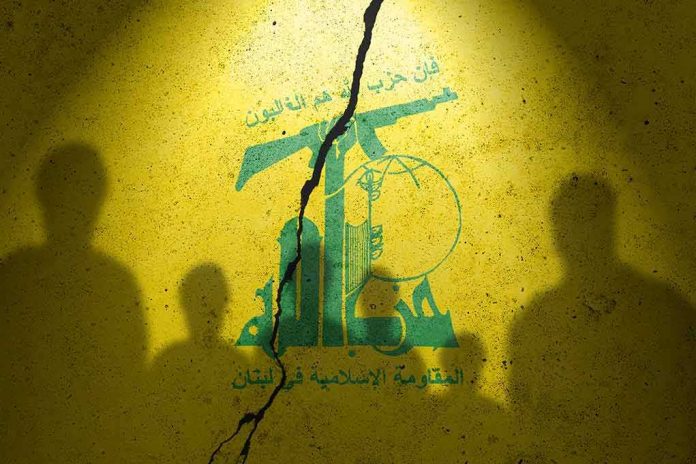
Hezbollah’s refusal to accept any ceasefire that leaves Israeli troops in Lebanon has pushed a fragile U.S.-Iran peace deal to the breaking point — and nearly derailed talks aimed at ending months of deadly conflict in the Middle East.
Story Highlights
- The U.S. and Iran agreed to a two-week ceasefire on April 8, 2026, brokered by Pakistan — but the deal left Lebanon’s status dangerously unclear from day one.
- Israel and the U.S. say Lebanon was never part of the ceasefire; Iran, Pakistan, and Hezbollah say it was — a gap that has repeatedly pushed the deal toward collapse.
- Hezbollah demanded a full Israeli troop withdrawal from Lebanon, threatening that without it, “no party will adhere” to the ceasefire.
- Planned U.S.-Iran talks in Switzerland were postponed in June after fresh fighting in Lebanon broke out less than two days after a broader deal was signed.
A Ceasefire Built on a Fault Line
On April 8, 2026, the United States and Iran agreed to a two-week ceasefire, mediated by Pakistan, to pause a war that began February 28 with U.S.-Israeli strikes that killed Iran’s supreme leader. President Trump called the Iranian 10-point peace proposal a “workable basis” for talks. But from the very first hours, the deal had a serious crack running through it: what to do about Lebanon and Hezbollah.
Trump and Israeli Prime Minister Benjamin Netanyahu both said Lebanon was not part of the ceasefire. Iran, Pakistan, and Hezbollah said it was. That disagreement was not a minor footnote — it became the central threat to the entire agreement. Iran’s 10-point proposal, which formed the basis of the deal, explicitly called for a halt to all regional hostilities, including Israel’s war in Lebanon.
Hezbollah Draws Its Red Lines
Hezbollah laid out two hard demands to accept any ceasefire: Israel must fully withdraw from Lebanese territory, and both sides must observe a “quiet for quiet” truce. The group warned that Israeli troops staying inside Lebanon would justify continued armed resistance. Netanyahu refused, insisting Hezbollah must be dismantled and that Israeli forces would not fully withdraw. The two sides were not just arguing over terms — they held completely different definitions of what ending the war means.
The Institute for the Study of War (ISW) and the Critical Threats Project reported on June 5 that Hezbollah and Iranian leaders were rejecting any ceasefire framework that did not meet their demand for total Israeli withdrawal. Analysts at ISW also assessed that Iran was likely using the Lebanon issue as a bargaining chip — stalling nuclear talks by insisting the Lebanon conflict must be resolved first, which would reduce U.S. leverage in future negotiations.
Iran Closes the Strait — Talks Nearly Collapse
When Israel expanded its strikes in Lebanon after the April ceasefire was announced, Iran responded by reclosing the Strait of Hormuz — the narrow waterway through which roughly 20 percent of the world’s oil flows. The White House scrambled to keep talks alive, urging Iran to reopen the strait and preserve the peace process. Iran’s parliament speaker accused the U.S. of violating three parts of the deal, including the failure to stop Israeli operations in Lebanon.
Israel and Hezbollah Agree to Ceasefire After New Surge in Violence
June 19, 2026 – #Israel and #Hezbollah have agreed to a ceasefire that will take effect Friday at 4:00 p.m. local time, according to a senior U.S. official cited by Reuters. The agreement, negotiated with…
— Seals Consulting (@Consulting4502) June 19, 2026
The ceasefire wobbled but held — until June. A broader U.S.-Iran memorandum of understanding was signed mid-June, calling for a full halt to hostilities, reopening of the Strait of Hormuz, and 60 days of nuclear talks. Within two days, deadly exchanges between Israel and Hezbollah in Lebanon erupted again. Scheduled U.S.-Iran follow-up talks in Switzerland were postponed with no new date set. U.S. and Qatari mediators then brokered a separate Israel-Hezbollah ceasefire on June 19 to stop the bleeding.
What This Means for the Bigger Picture
The Center for Strategic and International Studies (CSIS) put it plainly: the U.S., Israel, and Iran agreed to “a ceasefire and only a ceasefire.” Iran’s nuclear program, its missile stockpiles, sanctions relief, and its support for proxy groups like Hezbollah all remain unresolved. Iran even claimed — likely falsely, according to CSIS — that the U.S. accepted its right to enrich uranium as part of the deal. The ceasefire is less a peace agreement than a pause button on a conflict that could restart at any moment.
For American families who felt the pain of spiking energy prices when the Strait of Hormuz was closed, this instability is not abstract. Iran’s Islamic Revolutionary Guard Corps-linked media made clear that Iran’s compliance with Strait of Hormuz terms depends on Israel stopping operations in Lebanon — giving Tehran ongoing leverage over global oil shipping. The Trump administration has kept pressure on Iran while working to hold the deal together, but the Lebanon question remains the live wire that could set the whole region ablaze again.
Sources:
[1] Web – Deadly Hezbollah Strike Complicates Iran Ceasefire Diplomacy
[2] YouTube – Israel-Hezbollah Ceasefire COLLAPSES? Iran Ally Draws RED LINE, …
[3] Web – Iran Update Evening Special Report, June 5, 2026 | Critical Threats
[4] Web – Iran accuses U.S. of violating ceasefire as Israeli attacks on …
[5] Web – Ceasefire is threatened as Israel expands Lebanon strikes and Iran …
[6] Web – U.S. and Iran agree to 2-week ceasefire
[7] Web – Iran Update Special Report, April 6, 2026 | ISW
[8] Web – 2026 Iran war ceasefire – Wikipedia
[9] Web – Iran Update Special Report, June 18, 2026
[10] YouTube – US-Iran Agree To Two-Week Ceasefire; Oil Slumps | Horizons Middle East …
[11] Web – June 16: Iran’s military command threatens retaliation if …
[12] Web – Israel, Hezbollah agree ceasefire as US-Iran deal under strain
[13] Web – Iran Update Evening Special Report, April 8, 2026 | Critical Threats
[14] Web – Escalating to War between Israel, Hezbollah, and Iran
[15] Web – Iran Update Special Report, June 15, 2026
[16] Web – Tehran
[17] YouTube – Iran accuses U.S. of ‘gross violation’ of the ceasefire
[18] Web – Twelve-Day War ceasefire – Wikipedia
[19] Web – Fragile ceasefire appears to hold between Iran and Israel | AP News
[20] Web – The Fragile U.S.-Iran Ceasefire: Issues to Watch – CSIS
[21] Web – US strikes were ‘gross violation’ of ceasefire, Iran says – BBC
[22] Web – The Art of the Ceasefire | The New Yorker
[23] Web – As Iran, Israel and Hizbollah exchange blows, the delicate ceasefire …
[24] Web – Israel and Iran have traded strikes against each other – Facebook
[25] Web – The Iran Conflict: Jonathan Schanzer on Ceasefire Talks and …