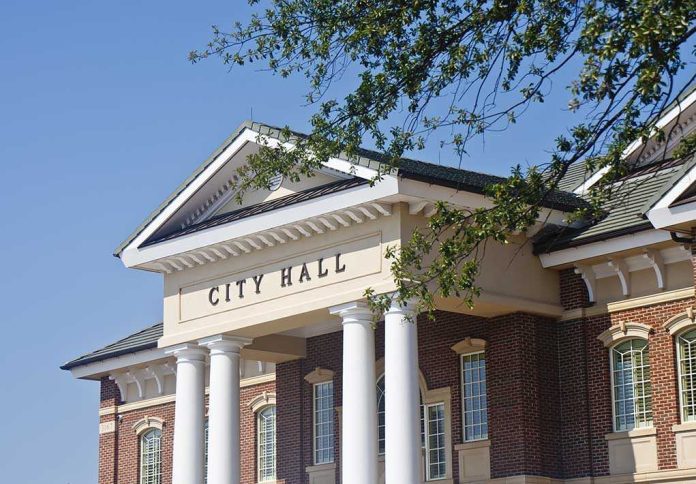
Public buildings are not blank canvases for any lawful pastime; in German municipal law they are “widmungsgebunden” — bound to a defined public purpose — and that purpose, not the absence of an explicit ban, decides what belongs inside city hall.
The Short Version
- German municipalities control access to public venues through purpose-based rules, equal-access principles, and public-order constraints — not through exhaustive lists of prohibitions.
- Mannheim councillor Julien Ferrat floated “swinger parties” at city hall, arguing there is no rule explicitly forbidding them and pitching tourism upside; the city replied it has no application, no date, no room request, and “considerable doubts.”
- The core legal question is whether a sexualized, ticketed event fits the city hall’s designated public purpose, not whether it’s generally legal.
- Court practice in analogous venue disputes shows cities may deny uses inconsistent with a venue’s purpose while still respecting equal treatment among comparable applicants.
What the dispute is really about: the purpose of public property
The headline sizzle — a councillor touting a “swingers’ paradise” at Mannheim’s Rathaus — masks a workaday administrative law problem: who gets to use a public building, and for what. In Germany, municipal spaces are dedicated to a purpose through a legal act of “Widmung” (designation). That designation, together with house rules, safety law, and neutral booking criteria, governs admissible uses. A claim that “nothing explicitly forbids X” is therefore weak medicine; if X does not serve the venue’s public purpose, or collides with neutrality, workplace standards, or public order, the city can say no. German municipal practice and commentary make this point crisply: the absence of an express ban does not create a right to convert the town hall into any lawful event space.
Julien Ferrat’s public pitch leans on that absence-of-ban logic. He said there are no house rules or by-laws that explicitly forbid swinger parties in Mannheim’s town hall and cast the idea as a tourism and local-business booster. He has also claimed about 50 people have expressed interest and styled the event as a participatory, citizen-proximity gesture — even suggesting he would hold it elsewhere if the city declines. Those are visible, on-the-record assertions; what they are not is a legal theory that creates a municipal duty to provide rooms for a sexualized, private function.
Where the city stands: missing paperwork and purpose-based skepticism
Mannheim’s administration has responded with the language of process and purpose: there is no formal application on file, no date, no room identified, and no explanation tying the event to the councillor’s public mandate. Based on the sparse information, a spokeswoman said there are “considerable doubts” about the admissibility and feasibility of such an event in the Rathaus; absent clarification and paperwork, the city assumes the party “cannot be held” at city hall. Those statements are specific, attributable, and consistent across outlets. They do not adjudicate the ultimate legal question, but they do fix the present posture: no administratively cognizable request, and a default position of non-admission pending a concrete, reviewable plan.
This is not foot-dragging for its own sake. The city cannot test safety, neutrality, staff exposure, insurance, cleaning, and after-hours supervision obligations — all routine concerns in public buildings — without a proper filing. Nor can it evaluate whether a sexualized, ticketed party would violate internal conduct standards for workplaces or conflict with the democratic, participatory, and ceremonial functions that define a Rathaus’s purpose. Process is the precondition to purpose analysis.
How German venue law tends to resolve hard cases
When venue fights reach German courts, two principles control. First, municipalities must apply their access rules evenhandedly among comparable applicants; selective exclusion on ideological grounds triggers legal trouble, as seen in repeated litigation over access to municipal halls for controversial political parties. Second, equal treatment does not erase the venue’s purpose: a city can impose or deny access when a use is inconsistent with the designation, cannot be made safe, or presents a concrete risk of unlawful conduct. The practical lesson is straightforward: the right question is “Does this proposed use fit the venue’s purpose under neutral criteria?” not “Is the proposed use lawful somewhere, in general?”
That template maps neatly onto Mannheim. A swinger party is not per se unlawful in Germany. The issue is whether city hall — a working administrative building with symbolic civic functions — is an appropriate locus for a private, sexualized gathering marketed as tourism. On the evidence available, the city has ample room under purpose and house-right doctrines to withhold access unless the organiser can show a neutral fit within established booking categories and compliance with safety and conduct requirements. The councillor’s emphasis on economic upside and “no explicit ban” does not answer that threshold fit test.
Assessing the claims on both sides
Ferrat’s strongest points are publicity and a fallback plan. He has generated interest — or at least attention — and says the party will proceed in private rooms if the Rathaus declines. He also frames the idea as civic engagement. But those are political and promotional claims. They are not corroborated by filings, bookings, or economic analysis, and the cited “around 50 interested” is unverified by named attendees or registration data in the record assembled here. In other words, the proponent’s case rests essentially on his own statements.
The city’s counter-case is narrower but firmer: officials have repeatedly, on the record, said there is no application, no specifics, and “considerable doubts” about admissibility. That is documentary, procedural ground — the kind that tends to prevail early in administrative controversies. If an application ever arrives, the legal pivot will be the hall’s purpose and neutral use policy; until then, there is nothing to approve or deny. Given those asymmetries, the procedurally anchored city position carries more weight at this stage than an absence-of-ban argument.
German City Councilor Sparks Outrage With Proposal for Swingers’ Party at Mannheim City Hall: https://t.co/Yqpd2fLehW pic.twitter.com/XC0lEVIB7n
— Jilbert Timbol (@JilbertTimbol) August 24, 2026
What would have to change for city hall access to be plausible
A serious attempt to book municipal rooms for an adult-themed event would need four pillars. First, a complete application specifying date, time, spaces, staffing, cleaning, and security. Second, a neutral category under the venue’s booking rules into which the event plausibly fits — for example, a private reception after hours — along with evidence that comparable private, non-governmental functions have been accommodated on equal terms. Third, compliance undertakings that address workplace exposure, access control, and public-order concerns without burdening city staff. Fourth, a financing and liability plan that insulates the city from reputational and legal fallout. None of those elements are visible in the present record.
Why the “tourism” pitch is not dispositive
Economic benefit is not the master key to public buildings. Cities routinely reject revenue-positive proposals that conflict with a venue’s purpose or impose material externalities. A Rathaus is not a convention center. Even if a convincing tourism case existed — and no independent analysis, hotel data, or endorsements are presented in the sources here — purpose and neutrality would still govern. That is why the better path for any adult-themed tourism play runs through private venues zoned and staffed for that function, not through the city’s administrative seat.
Bottom line
In German municipal law, purpose beats provocation. Unless and until the organiser tenders a complete application and demonstrates a neutral fit with the Rathaus’s designated use, Mannheim’s stance — skeptical, process-bound, and purpose-driven — is on solid ground. The absence of an explicit ban does not create a right of entry, and publicity about “swingers’ paradise” is not a substitute for the hard administrative work of making an unconventional idea legally admissible in a public building.
Sources:
gbnews.com, yahoo.com, stuttgarter-zeitung.de, swr.de, ground.news, zvw.de