
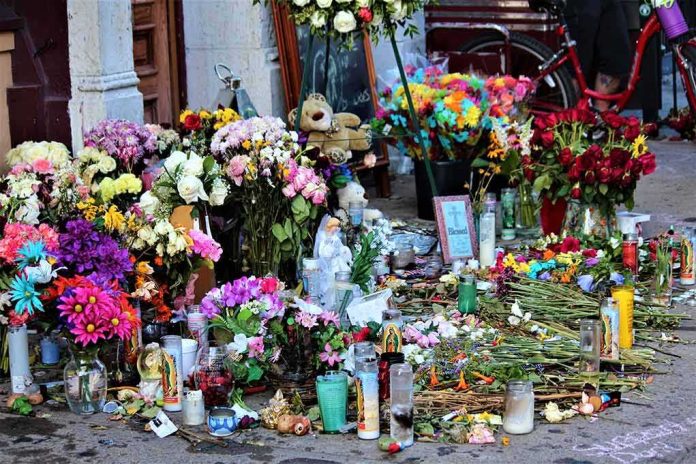
Foiled mass violence is rarely an accident; it is the product of ideology hardened into intent, logistics assembled to enable it, and—crucially—intervention that interrupts the final step. The Cook County grand jury’s terrorism and weapons indictment in the Aurora, Illinois, Hindu temple case sits squarely in that pattern.
At a Glance
- Authorities say a 19-year-old traveled to the Sri Venkateswara Swami Balaji Temple with a rifle, body armor, and roughly 300 rounds; the rifle allegedly jammed before any shots were fired.
- A Cook County grand jury returned a multi-count indictment including terrorism, attempted terrorism, terrorist threats, armed violence, and weapons offenses.
- Police report seizing a rifle, loaded magazines, hundreds of rounds, tactical gear, body armor, and extremist imagery, plus an eight-page document attributed to the suspect advocating mass violence against people of Indian origin.
- A Taco Bell coworker’s tip reportedly triggered the intervention that led to the arrest and the subsequent search.
What prosecutors say happened and why it matters
According to law enforcement accounts reported by major Chicago outlets, the suspect drove to the Sri Venkateswara Swami Balaji Temple in Aurora on October 11 with a rifle, body armor, and approximately 300 rounds of ammunition. Prosecutors allege he attempted to open fire but the rifle malfunctioned; no shots were discharged and no one was injured. He then left the scene. In the days that followed, a grand jury in Cook County returned a sweeping indictment: multiple counts of terrorism and attempted terrorism, ten counts of making terrorist threats, armed violence, and a suite of weapons charges. The breadth of the charging instrument signals prosecutors intend to litigate both motive and means, not merely possession of contraband hardware.
The evidentiary posture, as described by police and prosecutors, is classic pre-attack progression. Investigators say a search of the defendant’s residence yielded a rifle, multiple loaded magazines, hundreds of additional rounds, tactical equipment, and a vest with body armor. They also describe extremist-associated imagery and an eight-page text titled “Why I Fought: A.K.A. (Aurora Shooter’s Manifesto)” that uses dehumanizing language about people of South Asian and Indian descent and articulates an intent to kill. The reported target—a Hindu temple deeply embedded in a South Asian community—aligns with the animus in the writings, a nexus that prosecutors routinely use to establish bias motivation and specific intent.
The legal frame: preparation, attempt, and terrorism under Illinois law
Illinois prosecutions that halt planned mass attacks before bloodshed have to do two things simultaneously: prove intent and prove a substantial step toward the act, not just dangerous thoughts plus lawful or unlawful gear. That line—between preparation and attempt—has been litigated in Illinois. In People v. Oduwole, the appellate court reversed a conviction for attempting to make a terrorist threat where prosecutors relied primarily on writings and firearms purchases, finding the state had not shown a targeted victim to be instilled with fear or a substantial step consistent with the statutory elements. The lesson for prosecutors is that ideology and capability are insufficient unless tethered to conduct that crosses into attempt, such as traveling to the target with the weapon configured to be used, or communications that operationalize the threat.
This case, as described, presents facts prosecutors will argue clear that bar: an identified target facility, a claimed arrival with the weapon and ammunition, and an alleged effort to fire that was defeated by a malfunction. That narrative, if credited by a jury, satisfies the “substantial step” component that Oduwole lacked. The indictment’s inclusion of both attempted terrorism and terrorism-threat counts suggests the state intends to prove two related but distinct theories—an inchoate offense based on the act at the temple, and threat counts likely tied to statements that preceded or followed the attempt.
Mechanism of prevention: the bystander report
The intervention pathway matters because it is the actionable lesson for communities. Reports attribute the case break to a coworker at a Taco Bell who heard the suspect discuss the temple incident and alerted authorities, prompting the arrest and search that followed. In modern domestic counterterrorism and targeted-violence prevention, this is the most common off-ramp: a non-law-enforcement observer hears leakage—statements or behaviors that telegraph intent—and engages authorities. That mechanism is neither glamorous nor high-tech; it is effective. The FBI, local police, and behavioral threat assessment practitioners emphasize this “see something, say something” vector because it repeatedly prevents last-step violence, as it did here according to police accounts.
Hardware discovery then ties the tip to concrete capacity. The recovery of a rifle, loaded magazines, hundreds of rounds, tactical gear, and body armor is exactly the kit list investigators expect when someone is preparing for a rapid, high-volume shooting. The addition of identified white-supremacist-associated imagery and a document advocating mass murder of Indians provides the ideological overlay that moves the narrative from generic criminality to terrorism as charged by the state.
Community context: why a Hindu temple became a target
Hindu and Sikh communities in the United States have reported heightened harassment, vandalism, and—periodically—targeted violence; formal incident counts remain lower than for some other groups, but the trajectory and salience are real. Public reporting in recent years has chronicled desecrations of temples and a rise in bias incidents aimed at South Asian communities, which community leaders connect to online hate amplification and the politicization of immigration and national identity. That backdrop helps explain why a prosecutor would frame an alleged plan to attack a Hindu temple not merely as generic violence but as ideologically animated conduct intended to terrorize a defined community.
Legally, “terrorism” in state codes is narrower than colloquial usage; the state must prove that the alleged acts were meant to intimidate or coerce a significant portion of the civilian population or influence government conduct. Writings that articulate a goal of mass killing of a protected community, combined with selection of a house of worship, have routinely been used to meet those elements in bias-motivated terrorism prosecutions. The grand jury’s willingness to endorse multiple terrorism counts indicates the charging authority saw sufficient probable cause along those lines; guilt, of course, will be decided at trial.
How this case fits the modern pattern of foiled attacks
Across dozens of interdicted plots over the last two decades, one pattern repeats: ideation in extremist spaces, target selection symbolically linked to the grievance, weapons acquisition and staging, leakage to a friend or coworker, and a law enforcement arrest before shots or blasts. Illinois has seen federal prosecutions of attempted bombings that followed this arc—undercover stings in some, third-party reports in others—each underscoring two realities: capability accrues incrementally, and disruption is most reliable in the pre-operational window when someone talks. The Aurora temple case, as publicly described, fits this architecture almost to the blueprint.
That pattern focus is not academic. It is practical prevention doctrine for faith institutions, local leaders, and employers. Houses of worship can invest in layered security—surveillance coverage of parking lots where many attacks begin, greeters trained to notice armored attire or rifle bags, and rapid 911 protocols during high-attendance events. Workplaces can normalize reporting of ideation leakage without fear of reprisal. These are low-cost, high-yield steps that, again and again, have moved communities from vulnerability to resilience.
A 19-year-old man accused of planning a mass shooting at a Hindu temple in Aurora faces new charges of terrorism and armed violence, according to a grand jury indictment obtained by The Associated Press pic.twitter.com/h6ejDBsdms
— Shaw Local (@shawlocalnews) November 18, 2026
What to watch as the case proceeds
From a legal vantage point, three elements will shape the outcome: first, proof that the defendant took a substantial step from preparation to attempt at the specific temple; second, corroboration of the alleged statements and the coworker’s account underpinning the threat counts; and third, linkage between the writings and the intent elements of terrorism under Illinois law. Defense counsel has indicated the client will plead not guilty, which means those questions will be tested in court. Regardless of the verdict on any single count, the broader stakes remain consistent: the combination of timely bystander intervention and competent investigative follow-through is the most dependable way to stop ideologically driven violence before the first shot is fired.
Sources:
washingtontimes.com, apnews.com, cbsnews.com, patch.com, dailyherald.com, chicagotribune.com, wgntv.com, fox32chicago.com, religionnews.com, illinoiscourts.gov, justice.gov, newlinesmag.com, casemine.com