What looks like a “bizarre clip” is better understood as a case study in how modern campaigns court niche communities through creators who already command trust—especially in Spanish-dominant audiences that traditional political media often underserve.
At a Glance
- Joe Biden appeared in a video with Spanish-language TikTok creator Carlos Eduardo Espina during an influencer gathering at Biden’s Wilmington home.
- The encounter reflects a broader shift: campaigns now rely on political influencers to legitimize and amplify messages on platforms like TikTok and Instagram.
- Disclosure, provenance, and sponsorship norms for creator-led political content remain patchy and inconsistently regulated.
- Spanish-dominant audiences are central to this strategy—and simultaneously targeted by high volumes of low-quality or misleading content online.
What Happened: A Spanish-Language Influencer Moment, by Design
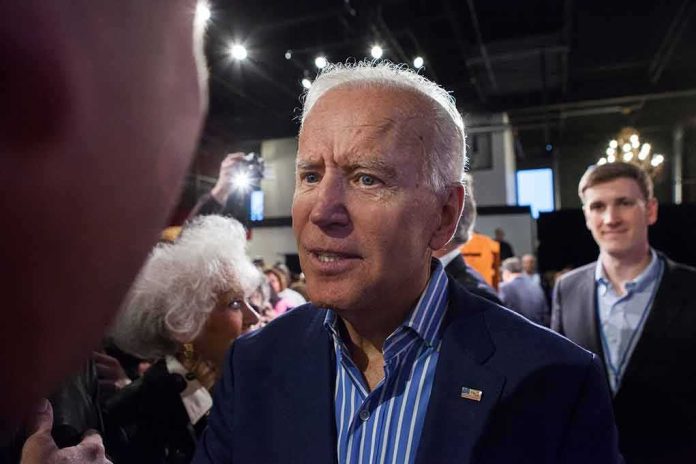
Joe Biden shared a short video interaction with Carlos Eduardo Espina, a Spanish-speaking TikTok creator known for immigration-focused content and civic messaging. Reporting described the clip emerging from a weekend convening of liberal creators at Biden’s Wilmington, Delaware, home, where guests discussed his memoir and broader political themes. The detail that matters is not the novelty of a former president guest-starring in a vertical video, but the audience calculus behind it: Espina’s following gives any cameo a prequalified reach into Spanish-dominant and bilingual communities that conventional political ads struggle to penetrate.
Espina is not an incidental figure in Democratic-aligned digital outreach. In mid-2024, he appeared at the White House alongside Biden to highlight executive actions affecting certain undocumented spouses and children of U.S. citizens—an on-record indicator of his role as a bridge to Latino audiences on immigration and participation issues. The Wilmington clip, then, fits a longer arc: campaigns and political principals increasingly enter creators’ feeds rather than asking those audiences to meet them on cable or in a stump speech.
How Creator-First Political Communication Works
Influencer strategy is not mere celebrity adjacency; it is relational media. Academic work on “political relational influencers” documents how creators help legitimize and amplify political messages precisely because their audiences perceive them as peers or trusted guides, not as formal surrogates. On short-form platforms such as TikTok and Instagram, creators function as interpreters—translating policy into narratives, vernacular, and formats that feel native to their communities.
That relational trust is the strategic asset. Controlled tests and field research indicate that creator messages can increase people’s sense that collective action is possible and that their engagement matters—key precursors to turnout and sustained participation. When a principal like Biden appears on a creator’s channel, the intent is not just exposure. It is endorsement of the relationship between the creator and their audience, a tacit signal: this is a legitimate conduit for political information.
Why Spanish-Dominant Audiences Are a Priority—and a Risk Surface
Latino and Spanish-dominant voters are diverse across age, origin, and geography; they are also heavily present on mobile-first platforms. As those platforms grew, so did the flow of misleading political content tailored to—or simply translated for—Spanish-speaking users. Multiple research and journalism projects have documented the intensity of targeted misinformation efforts in these communities, including during recent election cycles.
For a campaign, that dual reality—high social reach, high risk of distortion—makes direct, credible intermediaries valuable. Creators like Espina address immigration law, voter registration, and civic processes in Spanish. That service function is a communication moat: it provides a stream of timely, audience-specific information that can counter confusion and rumor with recognizable faces and repeat touchpoints. But the same affordances that empower pro-social content also enable opportunistic bad actors; the Wilmington clip sits against that backdrop of contested attention.
The Gray Areas: Provenance, Sponsorship, and Disclosure
Political creator content is regulated unevenly. There is no sweeping federal rule that forces disclosure of all compensated political posts; narrower rules—campaign-finance, foreign national restrictions, platform policies—apply in specific circumstances, and some states have layered on their own requirements. The Federal Trade Commission’s Endorsement Guides, while not election-specific, make the principle clear: if there is a material connection between an endorser and a marketer that could affect how consumers evaluate the endorsement, it should be disclosed clearly and conspicuously.
That standard leaves room for ambiguity in creator-political interactions that blend organic enthusiasm, access privileges, and occasional compensation. Was a given clip coordinated, paid, or simply captured during an open-press-style moment? The norms for labeling such content lag behind practice, especially on short video where disclosures can be easy to miss and hard to structure into platform-native humor or spontaneity. Research mapping the political influencer industry underscores this gap and the public’s sensitivity to covertly funded persuasion.
Campaigns Use Creators Because It Works—With Caveats
Measured against paid broadcast or even official campaign accounts, creators can deliver distinct audiences who are otherwise expensive to reach and skeptical of institution-branded messaging. Studies comparing exposure to creators with exposure to candidate-sponsored ads suggest creators are not only visible but consequential in shaping political talk and mobilization—though their effects vary with audience disposition and content fit.
Yet effectiveness comes with vulnerabilities. Audience agreement with a message can blunt skepticism about manipulated media; recognition of altered or synthetic video is not purely a technical skill but a motivated one, mediated by political identity and device context. This means influencer ecosystems are both high-yield and high-risk: they can amplify civics and policy literacy—or accelerate misperception—faster than traditional gatekept media. Any campaign pursuing a creator-led approach needs parallel investments in verification, rapid response, and ethical guardrails.
The Practical Takeaway: Treat Creator Encounters as Strategic Infrastructure
Strip away the “bizarre” framing and the Wilmington moment is straightforward: a political principal stepping into a creator’s lane to borrow the audience trust that creator has earned. For Spanish-speaking communities that routinely face both information scarcity and information disorder, the logic is especially clear. The open questions are not whether such outreach will continue—it will—but whether campaigns and creators converge on durable norms for labeling, provenance, and accountability that preserve the relational trust the strategy depends on.
Sources:
thegatewaypundit.com, cip.uw.edu, kitv.com, abc7chicago.com, ijoc.org, tandfonline.com, cdt.org, link.springer.com, seattletimes.com