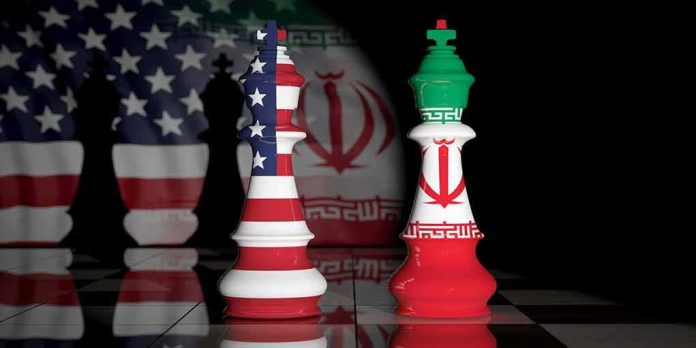
When inspectors cannot see, intelligence must. Washington’s new $20 million Rewards for Justice bounty for information on Iran’s nuclear program is less a headline-grabbing gimmick than a structural adaptation to a world in which international monitoring in Iran has atrophied and human sources again become the decisive instrument of nonproliferation policy.
The Short Version
- The State Department’s Rewards for Justice program now offers up to $20 million and possible relocation for credible information on Iran’s nuclear program, targeting facilities, equipment, personnel, and movements.
- IAEA verification inside Iran has been severely degraded; inspectors cannot reliably reconstruct key nuclear activities or material balances, creating intelligence gaps this offer is designed to close.
- The move formalizes a shift from routine safeguards to human intelligence collection—an approach with deep legal roots and precedents in counterproliferation.
- The policy aim is straightforward: improve visibility to help prevent Iran from acquiring a nuclear weapon while separating capability and concealment from an actual bomb decision.
What Washington is asking for—and why it matters
The State Department’s Rewards for Justice (RFJ) notice is unusually specific: up to $20 million, with possible relocation, for information about Iran’s nuclear program, including facilities, equipment, associated personnel in the scientific community, and movements of any of the above. This is not a vague call for tips; it is a defined intelligence target set—locations, people, logistics—calibrated for human sources who can pierce secrecy that satellites and signals collection cannot. RFJ has long paid for actionable intelligence on terrorism, hostile cyber activity, and proliferation finance; adding a tailored nuclear requirement signals that closing the Iranian visibility gap has become an operational priority, not a talking point.
That priority exists because international verification has withered. Over the past two years, IAEA reporting has documented a serious curtailment of access and monitoring in Iran, erosion of continuity of knowledge, and unresolved questions about nuclear material and activities. In plain terms: the Agency cannot verify key elements of what Iran has done or is doing. Independent analysis of IAEA reporting underscores the same point—near-total loss of monitoring at certain sites and uncertainties about enriched uranium stockpiles and activities that inspectors can no longer check in real time. In that environment, governments fall back on national means and, critically, on human sources whose access is not gated by negotiated inspection rights.
How we got here: from safeguards access to intelligence collection
For decades, debates over Iran’s program have turned on three distinct questions: capability, undeclared activity, and a political decision to weaponize. Advanced enrichment capability does not prove a bomb decision; historic evidence of weapons-related work does not reveal today’s intent; and the absence of visible violations does not certify the absence of risk when visibility itself is impaired. The JCPOA years temporarily expanded inspector access and instrumentation, but when Iran curtailed implementation and rolled back transparency, the IAEA’s ability to verify and monitor eroded accordingly. Subsequent safeguards reports make clear the Agency cannot discharge its responsibilities fully inside Iran—meaning governments cannot outsource assurance to Vienna and must rebuild it through national collection.
RFJ fits that pivot. The program is a standing legal instrument—rooted in U.S. statute and long used to solicit original information that protects national security, including against illicit nuclear activity. Its public, transactional design serves two purposes. First, it advertises safe channels for those with proximity—scientists, engineers, logistics managers, security contractors—to pass details that can be cross-checked against other streams. Second, it introduces friction inside opaque systems: when people with access know there is a market for their knowledge and a credible exit, compartmentation gets more expensive, deception harder to sustain.
What kind of information changes policy
In nuclear intelligence, not all secrets are equal. The offer’s emphasis on facilities, equipment, personnel, and movements maps to the variables that convert capability into risk. Facility coordinates and tunnel profiles illuminate how deep and how hardened a site is—facts that determine whether satellites can see, whether seismic or radiological sensors can detect, and, if necessary, whether disablement is feasible. Equipment lists and serial numbers reveal procurement pathways and potential violation points. Personnel rosters and duty cycles show who holds tacit knowledge, who rotates where, and which units are operational versus demonstrative. Movement patterns—feedstock shipments, centrifuge cascades, calibration gear—signal timelines and bottlenecks. One high-fidelity human report, properly taskable, can anchor a mosaic that remote collection alone cannot stitch.
This is not theoretical. Past revelations—from clandestine enrichment site exposures to document troves seized by foreign services—have repeatedly recalibrated outside assessments of Iranian capabilities and organization, sometimes upward. Today’s offer is explicitly built for that kind of leverage point: verifiable, specific facts that either bound the risk or expose a gap that policy must close.
Competing narratives and what the evidence actually supports
Tehran and some diplomatic backers often emphasize that there is no definitive public evidence of diversion to an active weapons program; in parallel, IAEA Board communications from Iran’s mission have asserted the peaceful nature of its activities. Both propositions can be partially true and strategically insufficient when inspector access is constrained. The most authoritative texts are the Agency’s own technical reports and the record of what inspectors can and cannot certify. On that score, the facts are unambiguous: JCPOA-related verification and monitoring have been “seriously affected” since Iran ceased implementing its nuclear-related commitments, and the Agency has been unable to verify the status of certain facilities and materials for safeguards purposes.
That is the fulcrum. Policymakers are not wagering that a bomb decision has already been made; they are acting on the reality that the independent mechanisms meant to tell them, one way or the other, are hobbled. When verification degrades, prudence shifts from reassurance to risk reduction—hence the premium on human sources who can restore ground truth where cameras and seals no longer sit.
Risks, ethics, and efficacy
Public bounties for national security intelligence draw predictable criticisms: that they are performative, that they may incentivize fabrication, that they politicize technical questions. The track record is more nuanced. RFJ is not an open inbox; it is a triage system linked to professional vetting, multi-int stream corroboration, and, when warranted, operational follow-up. Fabrications usually fail when tested against collection you control. More consequential is the ethical terrain. Encouraging insiders to defect or expose clandestine work can put them and their families at risk; relocation and protection are not rhetorical flourishes, they are preconditions for responsible use of human sources. The public nature of this offer also serves deterrence and signaling functions: if concealment is part of the strategy, the United States is pricing it.
Will $20 million buy decisive clarity? Sometimes the right witness is not for sale; sometimes the decisive fact is mechanical, not human. But the question misframes the problem. The objective is not to bid for a single smoking gun, it is to accumulate enough verifiable specifics to bound worst-case timelines, cue technical collection, and reinforce or revise policy choices—sanctions, diplomacy, defenses—based on what is real rather than what is guessed.
US offers $20m reward for information about Iran's nuclear programme,
The State Department's Rewards for Justice is also offering to potentially relocate the person who provides such details.#Iran https://t.co/6Mlw8CVAYn
— प्रमोद कुमार ( Journalist ) 🕉 (@News_Politics24) November 7, 2026
What to watch next
Three indicators will reveal whether this shift is working. First, the tempo and specificity of official designations and interdictions tied to nuclear procurement networks—successful human reporting often shows up downrange in precise financial and export-control actions. Second, the texture of future IAEA reports; even without restored access, more granular public annexes about activities at specific sites can reflect better state-supplied leads. Third, the quality of open-source corroboration—commercial satellite imagery, for example—cuing off discrete claims about construction, movement, or new infrastructure at known complexes like Natanz and Fordow. Taken together, they will show whether human sources are once again doing what they do best in hard targets: supplying the irreplaceable, local, time-sensitive facts that make nonproliferation something more than a slogan.
Sources:
thegatewaypundit.com, rewardsforjustice.net, isis-online.org, khan.co.kr, uscode.house.gov, congress.gov, iaea.org