Ballots solve what politics provokes: courts and election administrators can lawfully accommodate two legitimate candidates with the same name, but no legal ruling can launder the strategic intent that often motivates such candidacies—so integrity in these cases rests on design, disclosure, and voter judgment rather than on disqualification.
At a Glance
- Alaska’s high court allowed Daniel J. Sullivan to appear alongside incumbent Sen. Dan S. Sullivan; the dispute shifted from eligibility to how to label the names to reduce confusion.
- Accusations that Democrats recruited the second Sullivan remain contested; the Peltola campaign and the DSCC deny involvement.
- Empirical risk is real—similar names can exploit ballot design effects—but practical mitigations like “Incumbent” labels and middle initials help.
- Voter interviews suggest limited confusion in Alaska, underscoring how clear labeling and voter familiarity can blunt “decoy” tactics.
What the Alaska case actually decided—and what it did not
The decisive legal event in Alaska was narrow and procedural: the Alaska Supreme Court affirmed that Daniel J. Sullivan, a legally distinct person who qualified under state law, could appear on the ballot against incumbent Sen. Dan S. Sullivan. The justices left only one question to administrators—how to display the challenger’s name to minimize confusion. That is a design problem, not a legitimacy problem. When courts face same-name disputes, they almost never outlaw a candidacy based on name alone; they instead direct election officials to use cues such as middle initials, party registration, or the word “Incumbent” to help voters distinguish candidates.
This is the important boundary line. Eligibility turns on statutory criteria—citizenship, residency, filing compliance—not on conjecture about political motive. As a result, even a candidacy some regard as strategically engineered will typically stand if the person is real and properly filed. Alaska followed that orthodoxy here, affirming inclusion and delegating presentation to the Division of Elections.
Alleged recruitment vs. documented denials
Because courts rarely police political intent, the real controversy migrated to the realm of campaign conduct. Reporting and commentary have aired allegations that Democrats encouraged or recruited Daniel J. Sullivan to divert votes from the Republican incumbent; in response, the Alaskans for Mary campaign and the Democratic Senatorial Campaign Committee issued categorical denials, and Mary Peltola herself said she knew nothing beyond her own candidacy and that of the incumbent. Without a public charging document or adjudicated record, those claims and denials remain exactly that—claims and denials—while investigative activity proceeds out of public view in parallel. In practice, voters are left to weigh behavior against statements until a formal finding emerges.
What can we say with confidence in this uncertainty? First, Daniel J. Sullivan is not a phantom; he filed, appeared in the state’s official election pamphlet, and presented an issue-oriented rationale that the incumbent had lost touch with constituents—language consistent with a challenger narrative rather than a stunt on its face. Second, the legal system did not find his candidacy invalid; it authorized inclusion and focused on labeling to mitigate risk.
Mechanics: how elections blunt same-name confusion
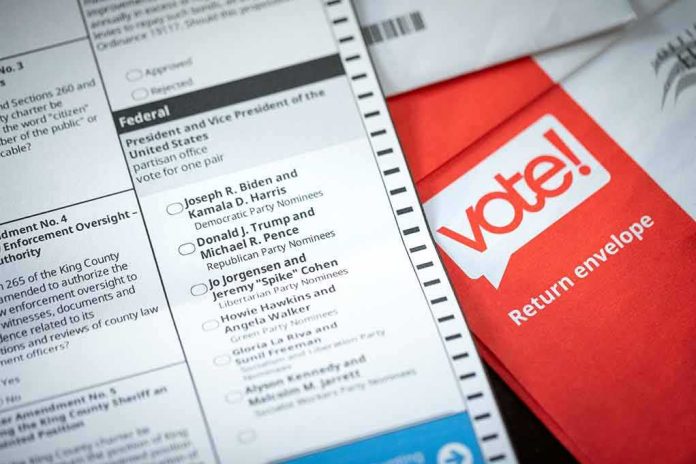
Administrators have a tested playbook for similar-name candidates. They add disambiguators—middle initials, incumbency status, and sometimes party registration—then rotate ballot order so no candidate consistently benefits from first position. Alaska uses randomized rotation, which can, in theory, place the two Sullivans adjacent on some ballots; that proximity elevates the risk of mis-selection, especially for hurried or low-information voters, which is precisely why the “Incumbent” tag and other cues matter. The evidence from election administration research is clear: small design choices—type, spacing, labels, instructions—affect error rates and undervotes; clarity reduces both.
The Alaska dispute therefore sits at the junction of law and design. Law says both can run; design says make them distinguishable; campaigns test the boundary in between. When done well, voters can navigate the choice accurately; when done poorly, ambiguity punishes attentiveness and rewards gamesmanship.
History and pattern: why this keeps happening
Same-name maneuvers aren’t new. From a second George W. Norris surfacing in Nebraska’s 1930 primary to twin Joe Russos in midcentury Massachusetts lore, operatives have long recognized the low-cost leverage of ballot identity. Modern accounts catalog similar efforts—sometimes encouraged, sometimes organic—and the legal backdrop is consistent: unless a statute expressly prohibits similar-name candidacies or unveils fraud, the candidacy stands, and officials compensate with clearer labels. Some states even codify design fixes, authorizing up to three clarifying words after a surname when names are “so similar as to be confusing,” a recognition that the remedy is ergonomic, not punitive.
The normative debate—should such tactics be condemned even when lawful?—will continue. Election-law scholars generally regard intentional confusion as unsavory, yet acknowledge that American election law is a disclosure regime more than a paternalistic filter. We regulate the interface (the ballot) and the information environment; we rarely prohibit candidacies for being strategically convenient to someone else.
What Alaskans themselves perceived
Notwithstanding the uproar, interviews with Alaska voters suggest that clear labeling did a great deal of work. Many reported little or no confusion, citing the “Incumbent” label, the distinctive middle initial, and their own familiarity with the incumbent Senator. Several described the controversy as outside media noise rather than a genuine local dilemma; others allowed that some voters might still be tripped up but said the ballot was plain enough for them to vote as intended. These sentiments don’t prove that no one was misled—elections are large—and they don’t resolve the recruitment allegation. They do show that human factors can outperform tactical design when voters are engaged and the ballot is transparent.
Practical implications: how to protect voter intent
If you take the Alaska case seriously as a design challenge, several guardrails follow. First, mandate robust disambiguation whenever first and last names match: middle initials, incumbency status, party registration for primaries that allow it, and, where permitted, a short occupational or geographic descriptor. Alaska’s administrators were instructed to decide presentation precisely for this reason. Second, communicate early: sample ballots, voter pamphlets with headshots and biographies, and public service messages that explain identical-name scenarios help turn a gotcha into a shrug. Third, preserve randomized rotation but audit adjacency effects—if adjacency raises error risk, vary spacing or insert visual separators to keep choices distinct without advantaging anyone.
Finally, treat allegations of engineered confusion seriously but through existing institutions: investigate, disclose, and sanction only where statutes support it. Short of illegality, the countermeasure is sunlight—documented outreach, transparent funding, and media scrutiny that explains the mechanics without amplifying the gambit.
The bottom line
The Alaska ruling did not bless a tactic; it applied bedrock election law: qualified people can run. Integrity in same-name contests is secured not by speculating about motive but by building a ballot that makes error unlikely and by informing voters well enough that a tactic loses its power. On those metrics, Alaska’s experience shows both the vulnerability and the cure. Clear labels travel farther than clever tricks—and courts will back administrators who use them.
Sources:
elections.alaska.gov, adn.com, fec.gov, apnews.com, thehill.com, kfsk.org, abc13.com, abcnews.com, wtae.com, electionlab.mit.edu, revisor.mn.gov