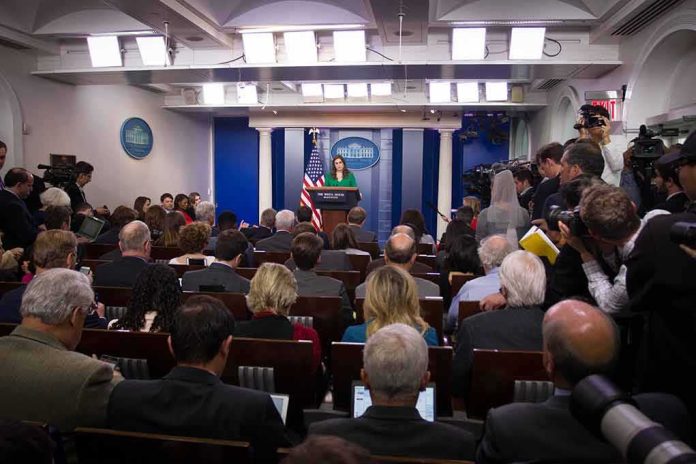
When the White House opens its doors to credentialed journalists, it also binds itself to constitutional guardrails; Jim Acosta’s 2018 ban crystallized that boundary by converting an access dispute into a due-process case the government swiftly lost.
The Short Version
- A federal judge ordered the White House to restore CNN correspondent Jim Acosta’s “hard pass,” finding the revocation violated his Fifth Amendment due-process rights.
- The ruling turned on process—notice and a chance to respond—not a final First Amendment merits judgment, but it reasserted limits on arbitrary exclusion.
- Press-access fights sit on a well-worn legal track shaped by Sherrill v. Knight: once the government creates a press facility, it cannot deny access arbitrarily or for content-based reasons.
- The administration’s public rationale—disruption and conduct rules—could not substitute for fair procedures, and the pass was restored by court order.
What the Acosta Case Actually Decided
Across the 2018 flare-up, two separate questions intertwined: could the White House revoke a reporter’s credential for how he behaved in a press conference, and what process must precede that decision? On the record available, the court answered the second one decisively. U.S. District Judge Timothy J. Kelly granted CNN’s request for emergency relief, ordering Acosta’s hard pass reinstated because the White House had not provided adequate notice or an opportunity to respond—violating due process under the Fifth Amendment. The judge’s reasoning was narrow and procedural, not a final, sweeping First Amendment pronouncement on the government’s power to police conduct. Still, the practical consequence was unmistakable: the pass came back, fast, by court order.
That distinction matters. A temporary restraining order is built for speed and harm prevention; it is not a final merits ruling after discovery. Yet in access cases, TROs set the real-world terms. Here, the court said, in effect, that even if the government ultimately could sanction serious misconduct under a valid policy, it must first follow fair procedures. The White House Correspondents’ Association underscored the stakes, filing an amicus brief supporting CNN’s request for emergency relief.
How White House Credentialing Works—and Why Due Process Governs It
Press access to the Executive Mansion is not an entitlement for every citizen; it is a structured program for bona fide journalists, vetted by the Secret Service, historically administered through “hard passes” permitting unescorted entry to the grounds. Once such a program exists and is open to a broad swath of the press, courts have treated it as subject to constitutional constraints drawn most prominently from Sherrill v. Knight, a 1977 D.C. Circuit decision. Sherrill held that when the government establishes such press facilities, it cannot deny access arbitrarily or for content-based reasons and must give reasons and a chance to respond—due-process principles repurposed for the press-credential context. The Acosta dispute fell squarely within that jurisprudential lane, which is why the court’s immediate focus was notice and hearing rather than editorial deference.
Put differently, security screening and reasonable time-place-manner rules are the government’s to set; viewpoint-based exclusions and ad hoc punishment, without process, are not. That is why a credible, written policy with standards and an appeal mechanism is more than bureaucratic housekeeping—it is the constitutional scaffolding that keeps discipline from becoming retaliation.
The Competing Narratives—and What the Evidence Supports
The White House publicly said it suspended Acosta for disruptive conduct and alleged physical contact with a staffer, framing the episode as enforcement of orderly procedures during a press conference. Government lawyers argued that the suspension did not violate the Constitution because it preserved the ability to run an orderly news event. Those rationales, however, did not answer the court’s procedural critique: Acosta received no adequate notice of the purported infraction and no meaningful opportunity to contest it before losing access. On that ground, the court ordered the credential restored while further litigation loomed.
Many outlets summarized the outcome as a press-freedom victory, which is directionally true but imprecise. The strongest judicial language on the record addressed due process; the court did not conclusively decide whether the White House’s conduct rules or their application to Acosta violated the First Amendment. That nuance kept the door open for the administration to promulgate written rules and apply them prospectively—so long as the rules were reasonable, viewpoint-neutral, and paired with fair process. Indeed, after restoration, the White House announced stricter conduct guidelines and asserted discretion to suspend or revoke for rule violations.
Mechanism: From Confrontation to Court Order
The operational path from a contentious exchange to a federal TRO is instructive. First, the press office or Secret Service deactivates a hard pass; as multiple contemporaneous accounts confirm, that step bars a reporter from the entire White House campus, not just a briefing slot. Second, the reporter (or outlet) sues, seeking emergency relief to prevent irreparable harm to coverage and professional standing. Third, the court evaluates likelihood of success on the legal claim and balance of harms. In Acosta’s case, the strongest hook was procedural: without notice and a chance to respond, the government’s action looked arbitrary under the Sherrill line and the Fifth Amendment; immediate harm to newsgathering was obvious; and a TRO restored the status quo ante while the case proceeded.
This cadence is why process is the fulcrum. If the government can articulate neutral, written criteria, identify the specific violation, and provide an opportunity to contest, courts are more willing to credit discipline tied to legitimate administration. When those steps are skipped, the constitutional presumption flips against the government, quickly.
Sorry, but you're wrong on the law. Once the government opens press facilities and credentials journalists for the grounds, briefings, and pool coverage, it cannot yank that access because it dislikes the coverage. That’s the core holding of Sherrill v. Knight (D.C. Cir. 1977):…
— Marc A. Scaringi (@MarcScaringi) September 19, 2026
Why This Precedent Endures
The Acosta episode is a durable teaching case for three reasons. First, it demonstrates that access programs—once opened broadly—operate within constitutional channels, regardless of which administration runs them. Second, it clarifies that process can be outcome-determinative; journalists often win not because courts referee decorum, but because the government failed to build and follow a fair system. Third, it shows how institutions respond: after losing on process, the White House introduced written conduct rules and asserted the right to enforce them, implicitly conceding the need for structure over ad hoc exclusion.
For newsrooms, the playbook is straightforward. Document interactions meticulously; press for written reasons; demand the policy basis; and, if access is pulled without process, move swiftly for emergency relief anchored in due process and the Sherrill framework. For the government, the governance lesson is equally clear: publish standards in advance, constrain discretion, keep records, and provide rapid, meaningful opportunities to respond. Do those things, and legitimate order-maintenance will usually stand. Skip them, and even a narrow case can become a high-profile loss with long half-life.
Sources:
youtube.com, cbc.ca, rsf.org, cbsnews.com, constitutioncenter.org, natlawreview.com, whca.press, abcnews.com, heraldnet.com