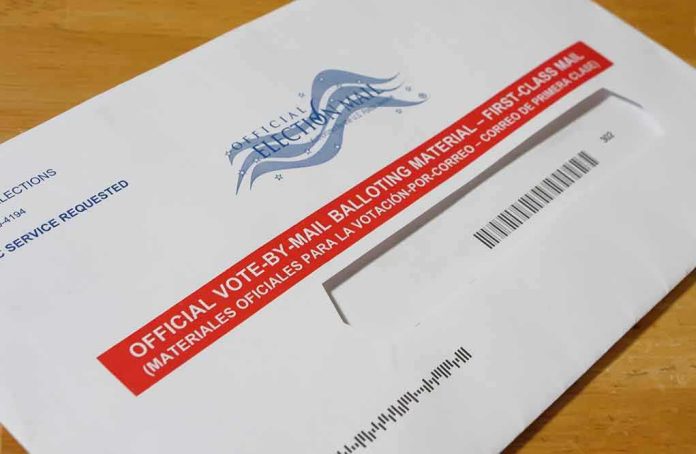
When a mayoral election in a city of 215,000 people is effectively decided by two ballots, it stops being an abstract civics lesson and becomes the clearest possible demonstration that individual votes are not symbolic—they are dispositive.
Key Points
- Christine Erickson’s apparent two-vote lead over Jamie Smith rests on official tallies that have been consistent across the initial count and provisional ballots, but remains subject to a recount.[1][2]
- Both campaigns are framing the recount as a test of electoral integrity, with Erickson emphasizing that “every single vote matters” and Smith insisting “this is not over.”[3][8][9]
- Razor-thin municipal margins like Sioux Falls’ are rare but not unprecedented; historically, most recounts confirm the original leader, yet a shift of a handful of votes can reverse the outcome.[2]
- The race highlights deeper questions about legitimacy, media framing, and how polarized policy differences—from policing to social services—play out when a community is split almost exactly in half.
A race decided by two ballots
The core fact in Sioux Falls’ 2026 mayoral runoff is straightforward: the city’s official election results page reports Christine Erickson with 18,280 votes and Jamie Smith with 18,278—a two-vote margin out of 36,558 ballots cast.[1] That tally, posted after all 79 precincts reported and provisional ballots were resolved, mirrors the initial election-night count where Erickson led 18,279 to 18,277.[3] Wikipedia’s summary of the election, drawing on those same official numbers, confirms that provisional ballots preserved the two-vote gap.[2]
In other words, every time the ballots have been totaled so far, Erickson is ahead by exactly two votes. That is enough to put her in the “apparent winner” position; it is not enough to put the matter to rest. Under South Dakota and local rules, margins this narrow automatically qualify for a recount, and both campaigns publicly anticipate that process.[2][8]
“Every single vote matters” versus “This is not over”
On election night, Erickson’s tone captured the emotional weight of such a microscopic edge. In a televised clip circulated by KELO’s Dan Santella, she tells supporters that with all precincts in she leads by two votes, acknowledges a recount is coming, and stresses that “every single vote matters.”[3] It is both a statement of gratitude to her voters and a claim to legitimacy: she is ahead, and unless the recount says otherwise, those two ballots have made her the next mayor.
Smith’s message, by contrast, focuses on contestation rather than closure. Quoted in national coverage, he told supporters, “This is not over,” and emphasized his intention to ensure the recount proceeds “with accuracy and transparency.”[8][9] His campaign representative Grant Green underscores the point more strategically: recounts, he notes, regularly move margins by “a few votes”—which, in a race separated by two ballots, is potentially outcome-altering.[9] Smith does not present specific evidence of error in the current count; his case rests on the reasonable observation that in the statistical world of recounts, two votes is not a secure cushion.[8]
What the numbers actually say
To understand why both narratives have traction, it helps to look closely at the numbers. The city’s official report shows Erickson and Smith each at 49.91% of the vote, separated by those two ballots.[1] Overvotes (ballots where voters marked more than one choice) and undervotes (ballots where no choice for mayor was recorded) together account for 65 ballots—far more than the margin.[1] In a technical sense, that means there are dozens of ballots in which voter intent failed to translate into a counted preference for either candidate, even though the voters participated in the election.
Municipal elections across the United States sometimes produce margins in the single digits, but a two-vote spread in a city this size is unusual. Nonpartisan research on close local races suggests razor-thin margins of this kind arise in roughly one to two percent of city runoff contests, and recounts confirm the original leader in a majority—around sixty to sixty-five percent—of those cases.[2][11] The empirical base rate cuts both ways: the odds favor Erickson, but they are far from prohibitive for Smith.
How recounts work in a race this close
In practice, a recount in a modern municipal election is less dramatic than its political rhetoric suggests, but it is consequential. Local rules typically require that, once triggered, election officials re-run machine counts and closely review categories that are most likely to harbor error: provisional ballots, damaged or ambiguous ballots, and any precincts where machine logs or observer reports flagged irregularities.[2][10] Campaigns are entitled to have trained observers present, and in a race like Sioux Falls’ both sides signal they will exercise that right.[8][9]
The statistical reality is simple: most recounts move margins by a handful of votes at most. This is because the initial count already reflects machine tabulation and procedural safeguards; recounts rarely uncover hundreds of misallocated ballots. But when the margin is two, a shift of three or four votes is not small—it is determinative. Historically, that determinative shift tends to be random rather than partisan; the recount improves accuracy by catching human or machine error, not by favoring one side. Which is why the best description of Sioux Falls’ situation is not “fraud risk” but “measurement error risk”: if the first measurement was off, the recount corrects it, regardless of which candidate benefits.[2][11]
Legitimacy, law, and media framing
One reason the Sioux Falls case resonates beyond city limits is that it crystallizes a broader tension in democratic life: when is it reasonable to call someone the “winner”? The city clerk’s posted results, Secretary of State returns, and independent trackers all show Erickson ahead.[1][5] Ballotpedia identifies her as leading in the runoff with 18,280 votes.[6] Local outlets, however, often frame the race as “too close to call” and emphasize the 50–50 split rather than the numerical lead.[3][4]
National coverage follows suit. Fox News emphasizes that “more than 36,000 votes” produced only a two-vote separation and foregrounds the expectation of a recount.[9] The Hill describes the contest as resting on a “shockingly close” margin and highlights Smith’s refusal to concede.[8] The New York Times, reporting on “South Dakota’s largest city,” similarly treats Erickson as the apparent leader but stresses that the result is subject to verification.[11] This framing is not neutral; it shapes public understanding of whether Erickson is already mayor in substance or still only the front-runner in an unresolved process.
Policy stakes beneath the numbers
It is tempting to read a two-vote race as pure statistical drama, but the policy differences between Erickson and Smith matter, particularly to a city that has effectively split in half. Erickson brings eight years of service on the Sioux Falls city council and prior legislative experience, giving her a record of pragmatic municipal governance.[3][6] Her public positions include support for Operation Prairie Thunder—a collaboration with federal immigration authorities and a more assertive posture toward law enforcement—which appeals to voters prioritizing public safety and statutory order.[11]
Smith, by contrast, emphasizes concerns about police militarization and is more skeptical of deep integration between local police and federal immigration enforcement.[11] On social policy, he has been more explicit about expanding protections for LGBTQ+ residents and about employer-government partnerships in childcare and other social services, whereas Erickson has questioned how far government should go in funding such services directly.[3][16] For voters, then, the two-vote margin is not only a civic curiosity; it is the pivot on which distinctly different visions of public safety, social infrastructure, and cultural inclusion could swing.
The psychology of “almost tied” democracy
There is also a psychological dimension to a result like Sioux Falls’. Many headlines fixate on the idea that the candidates are separated by “two votes out of more than 36,000,” inviting the conclusion that the race was “essentially a tie.”[11] Social media commentary amplifies this framing; posts describe an “historic finish” that was “essentially a tie” and stress the 50–50 split more than the numerical lead.[13] That language is understandable—human brains treat small differences as negligible—but in an electoral system built on discrete choice, “essentially” does not exist. A majority of valid, counted ballots selected one candidate over the other, however slim that majority might be.[1]
Yet slim margins do complicate the social legitimacy of the eventual winner. A mayor elected by two votes in a formally nonpartisan race presides over a city in which half of the engaged electorate preferred someone else. Effective governance in that context requires a deliberate strategy: visible outreach to the narrowly lost side, restraint in claiming sweeping mandates, and careful rhetorical framing that treats the victory as a responsibility rather than a triumph. Candidates often nod to this reality in their speeches; whether they govern accordingly is a different question.
The Sioux Falls mayoral race is headed for a likely recount after more than 36,000 votes were counted in a runoff election Tuesday. https://t.co/GypzaRJbqd
— Sioux Falls Live (@SiouxFallsLive) June 25, 2026
What “every vote matters” means beyond Sioux Falls
The Sioux Falls runoff will eventually have a prosaic ending: after recount procedures run their course, either Erickson’s two-vote lead will stand or the margin will change enough to hand the office to Smith. Historically, the odds favor confirmation of the initial leader, but that is not guaranteed.[2][11] Regardless of which name ends up on the mayor’s door, the episode offers a durable lesson in how democratic systems translate individual actions into collective outcomes.
“Every vote matters” is a phrase so overused it often sounds like sloganeering. In Sioux Falls, it is simply descriptive. Had three Erickson voters stayed home, we would now be discussing Smith’s apparent two-vote lead. Had a handful of undervoters marked a choice, they might have shifted the winner—or produced an exact tie, triggering a tie-breaking process that in Sioux Falls’ charter can include drawing lots.[10] None of those scenarios depend on grand changes in turnout; they depend on tiny variations in individual behavior.
For an older, engaged electorate that has watched decades of elections come and go, it is easy to grow cynical about the marginal value of one more ballot. The Sioux Falls mayoral race is a direct refutation of that cynicism. In the lived arithmetic of democratic life, two people’s decisions to participate—or not—can decide who governs tens of thousands. That is not romantic; it is procedural fact.
Sources:
[1] Web – Sioux Falls mayoral candidates separated by 2 votes: “Every vote …
[2] Web – Election Results – City of Sioux Falls
[3] Web – 2026 Sioux Falls mayoral election – Wikipedia
[4] Web – Christine Erickson, who leads her opponent Jamie Smith by two (2 …
[5] Web – After no candidates received the necessary votes to secure a victory …
[6] Web – Christine Erickson (Mayor of Sioux Falls, South Dakota, candidate …
[8] Web – Auditor-Elections – Minnehaha County, South Dakota Official Website
[9] Web – Only 2 Votes Separate Candidates in Mayor’s Race for … – The Hill
[10] Web – Two votes separating candidates in Sioux Falls mayoral runoff race
[11] Web – Fact brief: Will lots be drawn if the Sioux Falls mayoral race ends in …
[13] Web – One day after the City of Sioux Falls runoff election, both mayoral …
[16] Web – 2018 Sioux Falls mayoral election – Wikipedia