
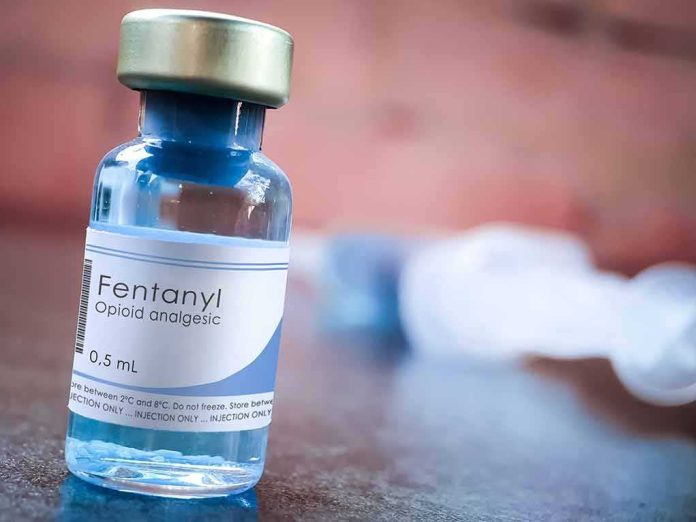
DEA’s handling of fentanyl in New Mexico is drawing new anger because the story centers on whether agents let poison move to the street on purpose.
Quick Take
- An Associated Press report says federal agents allowed hundreds of thousands of fentanyl pills to be distributed in New Mexico from 2023 to 2025.
- The DEA says those choices were lawful and matched Justice Department guidance on surveillance and prosecution.
- A 2023 case involved a shipment that investigators tracked but did not seize, and records cited in the report said 74,000 pills were delivered.
- The Justice Department’s Office of Professional Responsibility later found the decisions were reasonable and posed no specific danger to public health.
What the Report Claims
The Associated Press report says the DEA permitted hundreds of thousands of fentanyl pills to be distributed in New Mexico as part of larger federal cases.[2] The story says AP reporters reviewed hundreds of internal DEA records and interviewed current and former agents, including whistleblower David Howell. It also cites a 2023 shipment at an Albuquerque mobile home park where agents tracked the delivery but did not seize it.
The report’s most striking detail is the claim that investigators documented 74,000 pills in that case.[2] That number matters because it turns a broad accusation into a specific event that can be checked against case files, court records, and agency logs. The problem is that the public still does not have the full record. Without those documents, readers cannot tell whether this was a controlled delivery, a delayed seizure, or something else.
What the DEA Says in Its Defense
The DEA says public claims that it knowingly let fentanyl reach communities are false and misstate the facts.[4] The agency says the decisions were lawful, reasonable, and consistent with Department guidance. Former United States Attorney Alex Uballez also defended the approach, saying agents sometimes let drugs “walk” to reach bigger traffickers. That is the core legal argument on the other side of the fight.
That defense matters because law enforcement often uses controlled deliveries to build bigger cases.[14][15][16] In that kind of operation, agents may watch a shipment move under control and surveillance instead of grabbing it right away. That can be a valid tactic. But it also demands clear records, court approval, and tight supervision, since a bad call can put deadly drugs into public hands.
Why the Case Still Raises Red Flags
The public has good reason to be skeptical when a drug agency says it let fentanyl move through neighborhoods for a bigger case.[1] Fentanyl is tied to the cartels, and the DEA has long warned that Mexican trafficking groups are key suppliers. The agency’s own 2025 threat assessment names the Sinaloa Cartel and the Jalisco New Generation Cartel as leading fentanyl threats, which shows how serious the problem already is.[6]
The same report also notes that the Justice Department’s Office of Professional Responsibility found in 2024 that the DEA and the United States attorney’s office made reasonable choices and that the inaction posed no specific danger to public health.[4] That finding helps the DEA’s side. Still, it does not end the public concern. A finding of “reasonable” does not feel the same as trust when the subject is fentanyl and dead children.
The DEA allowed hundreds of thousands of fentanyl pills into New Mexico communities from 2023-2025.
New Mexico overdose deaths rose 21% while the national rate fell 14%.
DOJ concluded this posed no “specific danger to public health.”
That finding is not medically defensible.— Lucy’s Booth (@HeatherK9070) June 22, 2026
The larger issue is transparency. The AP account says reporters relied on internal records and whistleblower claims, but the underlying files are still not public in full.[2][4] That leaves a gap between what the DEA says it meant to do and what critics say happened on the ground. For readers who want straight answers, the missing court papers, approvals, and case logs are the real battleground.
What Should Be Released Next
The next step should be simple: release the case files that show who approved the non-seizures, when they were approved, and under what legal authority. If the shipments were part of a lawful controlled delivery, the paperwork should show it. If agents crossed the line, the records should expose that too. Until then, the public is left with a fight between a whistleblower, a news report, and a federal agency that says it did nothing wrong.
Sources:
[1] Web – Shades of Fast and Furious? DEA Allegedly Let Hundreds of Thousands of …
[2] Web – [PDF] Fentanyl Flow to the United States – DEA.gov
[4] Web – Press Releases | DEA.gov
[6] Web – The DEA allowed hundreds of thousands of fentanyl pills to hit the …
[14] Web – DEA investigations: What to Know to Protect Your Practice
[15] Web – [PDF] Practitioner’s Manual – DEA Diversion Control Division
[16] Web – Identifying controlled substance patterns of utilization … – PubMed