The most powerful spy in America just walked into Havana offering a lifeline—and a warning—while Cuba’s lights were literally going out.
Story Snapshot
- CIA Director John Ratcliffe made a rare, publicized visit to Cuba at the height of the island’s fuel and economic crisis.
- Washington dangled economic relief and intelligence cooperation—but only if Havana accepts “fundamental changes.”
- Cuba countered that U.S. sanctions, not communism, caused the crisis and insisted it is not a terrorist sanctuary.
- The trip signals a tougher, transactional U.S. strategy: help is possible, but the Castro legacy is no longer untouchable.
Why a CIA Director in Havana Signals a Strategic Turning Point
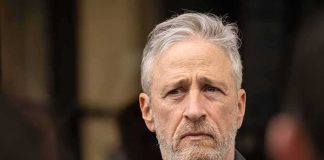
John Ratcliffe did not go to Havana for photo ops or mojitos. The Central Intelligence Agency director traveled to Cuba for a rare face-to-face with senior regime figures, including Raúl Guillermo “Raulito” Rodríguez Castro, grandson of former Cuban leader Raúl Castro, Interior Minister Lázaro Álvarez Casas, and the head of Cuban intelligence services.[2] When the spy chief, not the secretary of state, carries the message, the White House is saying: this is about power, security, and leverage, not nostalgia about 1959.
United States officials framed the mission in stark, conditional terms. Ratcliffe told Cuban leaders that Washington was ready to expand economic and security engagement if Cuba makes “fundamental changes.”[2] A Central Intelligence Agency official described discussions on intelligence cooperation, economic stability, and broader security issues, while stressing that Cuba can no longer be a safe haven for adversaries in the Western Hemisphere.[2] The offer came with a clock: the opportunity would not remain open indefinitely, and “red lines” would be enforced.[2]
Cuba’s Crisis and Washington’s Hard-Nosed Bargain
Cuba’s economy is on the ropes. The island has declared it is effectively out of fuel, with rolling blackouts and a shrinking ability to keep food, transport, and basic services running. Cuban officials blame United States sanctions and what they call an energy blockade. American conservatives see something else: a centrally planned, authoritarian economy finally colliding with math. When a regime mismanages for decades, outside pressure exposes the weakness, it does not create it.
The Trump administration’s message, delivered by Ratcliffe, fits that conservative lens. Help will not underwrite a failing socialist model; it will reward structural change. Expanded economic engagement would likely mean more legal trade, relaxed restrictions, and targeted support, but only if Havana stops hosting foreign adversaries, loosens its grip on the economy, and accepts accountability for past actions. U.S. officials also moved forward with steps to indict the ninety-four-year-old Raúl Castro over the 1996 shootdown of Brothers to the Rescue planes, signaling that old crimes still matter.[2]
Havana Pushes Back: “We Are Not Your Enemy”
Cuba did not simply sit and listen. The Cuban government took the unusual step of announcing the meeting first and framing it as part of ongoing political dialogue despite “complex bilateral relations.”[1] Cuban officials said they presented evidence to show the island poses no threat to United States national security and does not host or finance terrorist organizations.[1] From their perspective, Washington is the aggressor, wielding sanctions while accusing Cuba of sins it denies.
CIA Director John Ratcliffe traveled to Cuba on Thursday for a high-level visit to the island.https://t.co/vtBBcA8Ewi
The Cuban government announced that Ratcliffe met with his counterpart at the Ministry of the Interior. pic.twitter.com/UuYiSkZIUa— FOX SA (@KABBFOX29) May 15, 2026
This clash of narratives matters. On one side, the United States emphasizes that Cuba can no longer be a “safe haven” for hostile actors, a phrase that echoes longstanding concerns about intelligence ties to countries such as Russia and Iran.[2] On the other side, Havana claims it wants humanitarian aid, more fuel, and relief from sanctions, not confrontation. For American conservatives, the key question is credibility: a regime that controls media, jails dissidents, and hides its books does not get the benefit of the doubt.
The Real Game: Regime Survival Versus Conditional Engagement
The Ratcliffe trip fits a familiar pattern in United States–Cuba relations: private high-level contact paired with public pressure and demands for change.[1] The novelty lies in who carried the offer and how openly conditional it was. Instead of the usual gradualism, the Trump administration used crisis timing. Cuba’s fuel shortage and economic slide gave Washington maximum leverage; the message was essentially, “We will help you stabilize, but not to preserve business as usual.”
For Cuba’s rulers, that offer is both tempting and dangerous. Accepting “fundamental changes” threatens the political monopoly that has kept the Communist Party in charge since Eisenhower’s day. Rejecting it risks deeper blackouts, more scarcity, and rising unrest. For American conservatives, this is precisely where policy should aim: stop propping up authoritarian systems with unconditional concessions and make every dollar of engagement buy real reforms. Ratcliffe’s quiet meeting in Havana may be less about friendship and more about forcing that choice into the open.
Sources:
[1] Web – Cuba says CIA chief Ratcliffe met with officials in Havana amid US …
[2] Web – CIA Director John Ratcliffe makes rare trip to Cuba as island nation …