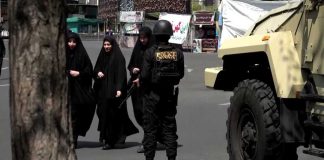
When athletes feel safer abandoning asylum than risking what a regime might do to their families back home, the world is seeing authoritarian leverage in real time.
Story Snapshot
- Seven members of Iran’s women’s national soccer delegation sought protection in Australia during the 2026 Women’s Asian Cup, but five later withdrew their requests and returned to Iran.
- Only two players remain in Australia, where they have been welcomed to train with Brisbane Roar FC while their legal situation unfolds.
- Reporting and advocates cite fears of coercion and family pressure, but the players’ individual reasons for reversing course have not been publicly confirmed.
- The episode triggered a public dispute involving Iran’s government, Australian officials, and President Trump’s warnings about the women’s safety.
Asylum Requests Turn Into Rapid Reversals
Iran’s women’s national team arrived in Australia for the Women’s Asian Cup in March 2026, then a group of players and one staff member sought asylum or protection from Australian authorities. Within days, the story shifted: five of those who initially sought protection withdrew their applications and chose to return to Iran, leaving only two players still in Australia. Australian officials publicly described the matter as complex while saying they would respect individual decisions.
The timeline, as compiled across multiple reports, also includes unusual on-field behavior that drew attention. Iran’s players did not sing the national anthem before an opening match against the Philippines, which was widely interpreted as a sign of protest or mourning. Later, the team did sing the anthem at another match, underlining how quickly the public signals and private decisions shifted. The lack of direct statements from each player leaves key motives uncertain.
Family Pressure Is the Hardest Variable to Measure
Human-rights advocates and members of Iran’s diaspora community in Australia warned that “choice” can be complicated when a regime can lean on relatives back home. That concern does not require guessing what any one player experienced; it rests on the widely reported reality that Iran’s authorities have historically used pressure tactics, including leverage through family networks. Australian reporting also raised claims that some players felt pressured by a team staff member, though details remain unverified publicly.
Iran’s government, by contrast, presented the returns as voluntary and celebrated. Officials said the women would be welcomed back “with open arms,” and Iran’s vice president publicly guaranteed their security. Those assurances are difficult for outsiders to independently confirm, especially in a system where monitoring and retaliation allegations are hard to document in real time. That gap—official promises versus the inability to verify conditions—helps explain why the reversals sparked such intense concern.
Australia’s Role: Protection Offered, But Limits Remain
Australia can offer a humanitarian pathway and physical safety on its soil, but it cannot easily neutralize threats aimed at people overseas. That reality sits at the center of this case. The two remaining players have been welcomed into training with Brisbane Roar FC, a move that signals practical support and stability while authorities evaluate their circumstances. At the same time, the players who returned face the most uncertainty, because independent follow-up from inside Iran is limited.
Trump’s Warning, Iran’s Pushback, and a Larger Lesson
President Trump weighed in publicly, urging asylum offers and warning that the women could face grave harm if they returned. Iranian officials accused him of interference while insisting the players would be safe. The public back-and-forth highlights a broader point that matters to Americans who value liberty: asylum systems can be overwhelmed not only by paperwork and politics, but by intimidation that crosses borders through family ties. Even when the West offers refuge, regimes can still exert leverage.
Why Are Iranian Women's Soccer Team Members Shunning Asylum and Returning Home to Repressive Regime?https://t.co/TanOpC848W
— RedState (@RedState) March 16, 2026
For readers trying to make sense of the apparent contradiction—seeking asylum and then reversing—it helps to separate what is known from what is suspected. The confirmed facts are clear: multiple members sought protection, most later withdrew, and two remain in Australia under support structures that include training access. The unresolved question is why individuals changed course, and the honest answer is that public reporting points to pressure concerns, but the players themselves have not provided detailed, verifiable explanations.
Sources:
https://www.jpost.com/middle-east/iran-news/article-890065
https://en.wikipedia.org/wiki/Defection_of_Iran_women’s_national_football_team