What looks like a clash over media “bias” is in fact a recurring collision between a durable political narrative—elite-driven claims of rigged elections—and the mundane mechanics of how American ballots are administered and counted.
At a Glance
- President Trump used a high-profile Meet the Press interview to reprise fraud claims about the 2020 election and to assert California’s current vote counts were “rigged,” then ended the interview amid a dispute with moderator Kristen Welker.
- Independent fact-checks and NBC’s own post-interview analysis reported no evidence supporting fraud in California’s vote counting and reiterated the extensive record against 2020 “rigged” claims.
- Election-fraud narratives reliably spike around slow counts and close races, a pattern political science and media research have traced to elite cues amplified by major outlets.
- California’s slower timeline is typically a function of its mail-ballot process and statutory verification steps, not a diagnostic of malfeasance.
What Happened And Why It Matters
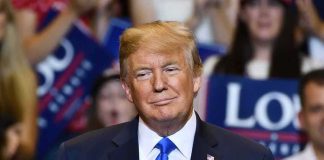
In a taped Meet the Press interview that later aired, President Trump asserted that the 2020 election was “rigged” and that California’s ongoing ballot counting signaled fresh wrongdoing; when pressed for evidence by moderator Kristen Welker, he criticized NBC as “crooked” and ended the exchange. Multiple outlets carried the on-the-record quotes and the walk-off. The core factual question is not whether the exchange occurred—it did—but whether the fraud contentions he advanced hold water. On that, the evidentiary ledger is lopsided: newsroom fact-checks and nonpartisan researchers have repeatedly found no substantiation for systemic fraud in 2020, and no evidence that California’s counting pace is proof of rigging.
That evidentiary gap matters for two reasons. First, fraud allegations from a sitting president are not routine rhetoric; they are agenda-setting signals to millions of voters. Second, the grievance often piggybacks on normal administrative features—especially the lag introduced by mail-in verification—so the appearance of delay is misread as the substance of deceit. Understanding the mechanics reduces the mystery.
How California’s Vote Counting Actually Works
California conducts elections with near-universal vote-by-mail, permissive postmark rules, and multi-step verification for signatures and provisional ballots. Those design choices trade speed for completeness: more ballots arrive near or after Election Day (if postmarked on time), more signatures require curing, and counties prioritize accuracy over instantaneous totals. In practical terms, the “blue shift” or any late movement reflects the order in which different ballot batches are processed, not ballots being invented out of whole cloth. Even commentators critical of expansive mail voting acknowledge the structural sources of delay—postmark windows, signature checks, and ballot curing—rather than pointing to concrete fraud findings.
None of this immunizes any state from error; it does explain why a race can take days to settle in a system designed to count eligible ballots that arrive within the statutory window. Delay is an artifact of process. It is not evidence of rigging.
The Evidence Record On 2020 Fraud Claims
By now the empirical record on 2020 is extensive: audits, recounts, court decisions, and multi-state reviews have failed to validate allegations of outcome-changing fraud. A decade of scholarship likewise dismantles the statistical scaffolding typically offered to imply mass wrongdoing; leading methodologists have shown that the marquee analytics used to infer “ballot dumps” or impossible turnout patterns misapply probability or ignore mundane explanations like differential mode of voting and precinct heterogeneity. Independent legal and civic groups that study election administration converge on the same base rate: voter fraud is vanishingly rare in the United States and nowhere near the scale required to “rig” a national election.
After the Meet the Press exchange, NBC’s fact-check summarized this backdrop directly, stating there was no evidence of election fraud in California’s counts and reiterating that Trump’s 2020 assertions have been debunked across multiple venues. That assessment is consistent with the broader research consensus rather than a newsroom outlier.
Why These Narratives Persist
Fraud narratives have reliable supply and demand. On the supply side, elite cues matter: when high-salience figures make claims, legacy and partisan media carry them, and the message saturates public attention. Researchers tracing the mail-ballot disinformation wave in 2020 documented an elite-led dynamic in which assertions from prominent political actors, amplified by mass media, set the agenda more than organic grassroots rumor. On the demand side, negative and morally outraged content travels farther and faster on social platforms—an observable feature of attention economics that helps conspiracy-tinged messages outperform process explanations. Put simply: “they’re cheating” is a more virally legible story than “signature cure periods lengthen the canvass.”
There is also a media-format trap. Journalists face an obligation to challenge unsupported claims in real time; doing so concisely, without turning a program into a procedural explainer, is hard. Experimental work suggests fact-checks can move opinion, even among Trump supporters, but the corrections have to be clear and anchored to specifics to avoid sounding like tribal assertion. Interviews that devolve into dueling assertions can entrench distrust rather than resolve it.
Bias Accusations Versus Evidence
Accusing an outlet or moderator of bias is rhetorically potent because it reframes the argument from “what is true about ballots” to “who can you trust.” Bias claims warrant scrutiny, but their existence does not supply evidence for a separate factual allegation. In this instance, the tangible claims are empirical—were California elections “rigged,” was 2020 “dirty” in a way that changed outcomes?—and the counterevidence is overwhelming. Media demeanor can be debated; the vote counts and court records are not adjudicated by vibes.
It is also worth separating editorial tone from the content of a fact-check. The strongest rebuttals to fraud claims lean on transparent, checkable facts: statutory timelines, audit records, litigation outcomes, chain-of-custody procedures. NBC’s post-interview write-up hewed to that lane when it cited the absence of evidence for California fraud and referenced the broader 2020 record. On the weight of the evidence, that framing stands.
What A Healthier Interview Would Surface
Polarized exchanges tend to collapse complexity. A better conversation surfaces the specific mechanisms a claimant believes are being exploited—ballot harvesting outside legal limits, ineligible voter rolls, chain-of-custody breaks—and then tests each against the state’s statute and documented audits. California, for example, permits third-party return of mail ballots with constraints; canvassing logs and surveillance at vote centers document custody; signature verification software plus human review gatekeep acceptance. Each step generates records that can be examined. Without specificity, “rigged” remains an unfalsifiable label rather than a hypothesis about a failure mode that can be checked.
For audiences trying to navigate future cycles, the most useful heuristic is to ask for the narrowest, checkable claim: which county, which precincts, what statutory breach, what document number? Specifics can be verified or falsified. Generalities can’t.
The Bottom Line For Voters
Interviews may produce heat; elections are administered by process. California’s slower counts flow from design choices that prioritize inclusion and verification. The 2020 “rigged” narrative has been tested across audits, courts, and statistical reviews and has not withstood scrutiny. Elite repetition and media amplification will keep these themes in circulation, but repetition is not proof. Treat claims the way an election office does a ballot: verify the signature, check the chain of custody, and count only what clears the process.
Sources:
pjmedia.com, politico.com, democrats.senate.gov, breitbart.com, cbsnews.com, theguardian.com, factcheck.org, time.com, nbcpalmsprings.com