A ruthless Maduro lieutenant, long accused of running Venezuela’s machinery of repression, now sits at the center of a high‑stakes showdown with President Trump over the future of Venezuela and U.S. power in the hemisphere.
Story Highlights
- A “brutal Maduro enforcer” describes a hardline security boss like Diosdado Cabello who kept the socialist regime alive through fear and force.
- Trump’s 2025–2026 campaign against Maduro, capped by a massive military operation and Maduro’s capture, directly targeted this inner circle of enforcers.
- These power brokers control Venezuela’s guns, oil, and patronage networks, making them the last serious obstacles to Trump’s vision for a post‑Maduro Venezuela.
- The clash raises big questions about U.S. sovereignty principles, military power, and whether leftist strongmen and their cronies will ever face real accountability.
The Media’s “Brutal Enforcer” And What It Really Means
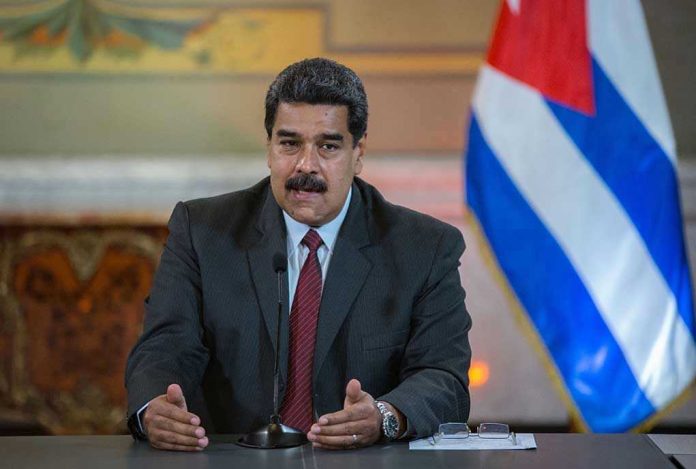
The phrase “brutal Maduro enforcer standing in Trump’s way” is not a formal legal label; it is a media frame used to describe senior Venezuelan regime figures who act as Maduro’s muscle and political insurance policy. In practice, that picture fits men like powerful party boss Diosdado Cabello, long portrayed as a feared hardliner and alleged kingpin inside the so‑called Cartel de los Soles. These figures oversee security forces, propaganda, and illicit money flows that kept socialism entrenched despite Venezuela’s collapse.
For Trump’s conservative supporters, these enforcers represent everything they reject: socialism propped up by thuggery, corruption, and foreign powers like China, Russia, Iran, and Cuba. Maduro inherited and radicalized Hugo Chávez’s system, leaning on this tight network of military, intelligence, and party bosses to crush dissent and protect their grip on oil, gold, and drug routes. When commentators talk about a brutal enforcer blocking Trump, they mean the man who can still order the secret police to knock on doors at night.
How Trump’s Venezuela Operation Put The Enforcers In The Crosshairs
Long before the 2026 airstrikes, Trump had recast Maduro and his circle as narcoterrorists and cartel‑linked criminals, with U.S. indictments and a reward for Maduro’s capture later doubled to an unprecedented fifty million dollars. As sanctions mounted, Trump’s team tried a pressure‑plus‑talks approach: envoy Richard Grenell met regime representatives, dangling relief and a chance to loosen ties with Beijing, Tehran, and Moscow in exchange for serious change. Some insiders flirted with “chavismo without Maduro,” but the hardest enforcers refused meaningful concessions.
After talks collapsed in October 2025, Trump backed words with visible force. U.S. naval power surged into the Caribbean, officially to fight narcotrafficking, while Washington steadily tightened the economic noose. Under “Operación Lanza del Sur,” U.S. forces destroyed dozens of small vessels and seized sanctioned Venezuelan oil tankers, hammering the networks that kept Maduro’s inner circle funded. That escalation made clear to every enforcer that the United States now viewed them less as politicians and more as targets in a hybrid war on drugs, terror, and dictatorship.
Maduro’s Capture And The Power Vacuum Around His Enforcers
In the early hours of January 3, 2026, that campaign peaked with “Operación Resolución Absoluta,” a massive air and special‑operations assault hitting Caracas and key surrounding states. The operation involved roughly one hundred fifty U.S. aircraft and ended with Maduro and his influential wife, Cilia Flores, in U.S. custody. Trump quickly confirmed the capture and announced that the United States would temporarily administer Venezuela while a new political order is negotiated, a stunning assertion of American power after years of perceived retreat under globalist leadership.
With Maduro removed, attention turned immediately to the remaining enforcers who for years directed security services, militias, and colectivos accused of torture, extrajudicial killings, and street‑level terror. Reports from Venezuelan political observers describe a scramble among hardliners and so‑called moderates to control what is left of chavismo, including scenarios that keep much of the socialist machine but swap out its figurehead. For constitution‑minded Americans, that raises a hard question: does simply removing one dictator go far enough if his brutal lieutenants still command guns, prisons, and stolen wealth?
What This Showdown Means For American Conservatives
For a U.S. right‑of‑center audience, the Maduro saga is about more than a distant Latin American strongman. It is a test of whether the United States will confront regimes that export drugs, chaos, and anti‑American ideology while hiding behind international law they routinely ignore themselves. Trump’s move blends law‑enforcement logic with military muscle, signaling that if you flood American communities with narcotics while brutalizing your own people, the days of polite diplomatic notes may be over. His critics, meanwhile, rush to international courts to accuse the U.S. of aggression.
At home, many conservatives who spent years watching “woke” elites downplay socialism’s failures see something else in this story: a long‑overdue reckoning for a regime that wrecked a wealthy country through socialism, corruption, and anti‑Western alliances. Yet they also know victory is not complete while Maduro’s most ruthless enforcers remain free, maneuvering to cut deals and preserve their power. The coming months will show whether Washington follows through, holds these men accountable, and helps Venezuelans finally escape the grip of a failed socialist experiment.
Sources:
Trump captura a Maduro en una operación militar en Caracas
Intervención de Estados Unidos en Venezuela de 2025-2026
Ataques de Estados Unidos a lanchas de Maduro y refuerzo militar venezolano
How Venezuela’s Political Scoreboard Looks After January 3rd
5 países a los que Trump ha lanzado advertencias después de la detención de Maduro
Detalles de la operación de EEUU en Caracas y el futuro de Maduro
Venezuela: Estados Unidos ataca lanchas de Maduro y el gobierno promete refuerzo militar