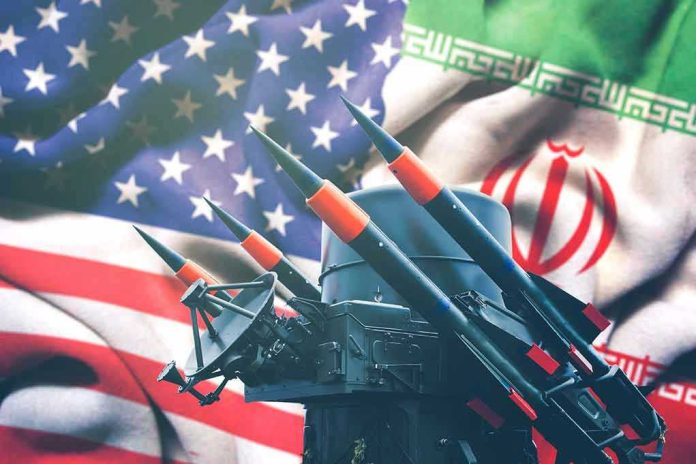
The latest military actions in Iran have ignited a fierce debate over President Trump’s foreign policy, leaving many questioning the balance between national security and the President’s “America First” promises.
Story Highlights
- Rep. Byron Donalds defends Trump’s military actions in Iran, citing constitutional obligations.
- Trump’s administration faces criticism for military escalation contradicting “America First” promises.
- Key supporters like Tucker Carlson and Steve Bannon express concerns over U.S. involvement.
- Potential Iranian retaliation raises concerns about regional stability and U.S. military safety.
Rep. Byron Donalds Supports Trump’s Iran Strategy
Representative Byron Donalds (R-FL) has emerged as a staunch defender of President Trump’s recent military actions against Iran. Donalds praised Trump’s decision to bomb Iranian nuclear facilities, asserting that the President has adhered to his constitutional duties by notifying Congress appropriately. In a series of public statements, Donalds emphasized the necessity of these actions to protect American interests, despite the growing concerns among some of Trump’s supporters.
The U.S. military’s involvement followed Israel’s Operation “Rising Lion,” which targeted Iran’s main nuclear sites. As tensions in the Middle East escalate, Donalds argues that Iran’s provocations left Trump with no choice but to act decisively. Despite this, the military move has not been without its critics, both domestically and internationally, who question the long-term implications of such action.
Internal Divisions Within Trump’s Coalition
Trump’s decision to support Israel’s military action against Iran has caused rifts within his political coalition. Prominent figures like Tucker Carlson and Steve Bannon have criticized the President for escalating military involvement, which they view as a departure from his “America First” foreign policy agenda. This internal dissent highlights the tensions between maintaining national security and adhering to campaign promises of reducing overseas military engagements.
Despite these criticisms, key Republican leaders, including Senate Majority Leader John Thune, have expressed their support for Trump’s actions, emphasizing the importance of defending American personnel and interests in volatile regions.
Potential Consequences and Future Outlook
As Iran signals intentions to retaliate, the risk of military escalation looms large. The disruption of scheduled diplomatic talks further complicates the situation, casting doubt on future negotiations. Experts warn that continued military engagement could echo the strategic missteps of past conflicts, such as the 2003 Iraq War, potentially leading to broader regional instability and increased vulnerability of U.S. forces.
While Trump’s actions aim to curtail Iran’s nuclear ambitions, the lack of a diplomatic resolution underscores the complexity of the issue. The potential impact on energy markets, defense spending, and diplomatic relations remains a concern for policymakers and stakeholders alike.
We need to trust Trump's judgment on Iran: Byron Donalds | American Agenda https://t.co/Wi8UKzrEge via @YouTube
— Monica Carrera (@mcarrera7) January 14, 2026
Sources:
Florida Politics: Israeli Strikes on Iran
MSNBC Opinion: Trump Tehran Evacuation
Newsmax: Byron Donalds on Trump’s Iran Policy
Congressional Records: Statements from Rep. Donalds