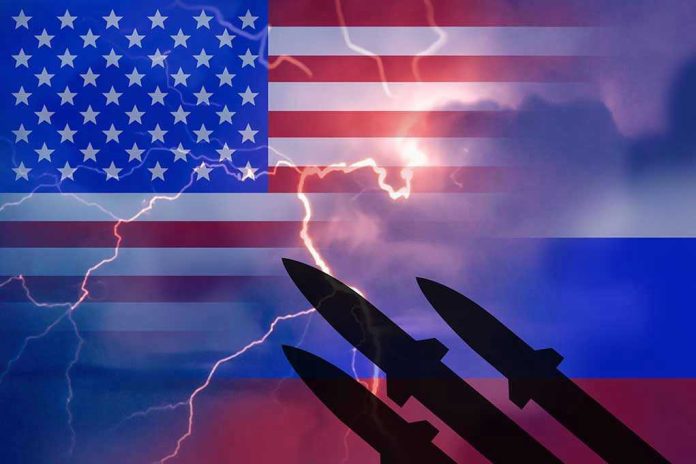
A U.S.-led seizure of a Russian-flagged “shadow fleet” tanker shows how Trump’s new crackdown is squeezing rogue regimes and testing the rules of the high seas.
Story Snapshot
- U.S. forces seized the Russian-flagged oil tanker Marinera (ex-Bella 1) near Iceland after a two-week pursuit tied to Venezuelan oil and Hezbollah-linked sanctions.
- The showdown exposes how shadow-fleet tankers use shell companies, flag-hopping, and “false flags” to dodge U.S. sanctions and policing.
- Trump’s administration is using courts, the Coast Guard, the military, and UK support to choke off illicit oil lifelines for Venezuela, Russia, Iran, and Hezbollah.
- Moscow is denouncing the operation as “piracy,” while Washington calls it a necessary warning shot to sanctions-evaders worldwide.
Shadow Fleet Tanker Chase Ends in U.S. Seizure
U.S. Coast Guard, Homeland Security, and Defense Department assets spent roughly two weeks tracking the oil tanker now known as Marinera across the Atlantic before boarding and seizing it in the North Atlantic near Iceland. Originally named Bella 1 and previously sanctioned in 2024 for carrying cargo on behalf of Iran-backed Hezbollah, the vessel had reappeared as part of a Venezuelan shadow fleet moving sanctioned oil outside lawful channels. That network depended on secrecy, shell companies, and opaque routing.
December 20, 2025 marked a turning point, when a U.S. Coast Guard team attempted to board Bella 1 in the Atlantic as it was steaming toward Venezuelan waters. The ship evaded that first interdiction, exploiting gaps in peacetime maritime policing. Days later, its operators shifted tactics again, reportedly repainting a Russian flag on the hull and renaming the ship Marinera in an effort to claim protection under Moscow’s authority while still tied to sanctioned Venezuelan oil movements and earlier Hezbollah-linked activity.
Flag-Hopping, False Flags, and Legal Fault Lines
Flag-hopping by Marinera’s operators illustrates how sanctions-evading tankers game the global system to stay one step ahead of enforcement. The vessel moved from earlier registration to temporary Russian flag authorization mid-voyage, a classic “false flag” pattern that lets owners obscure control, confuse regulators, and create legal friction on the high seas. By treating such ships as effectively stateless when they game flag rules, U.S. authorities argue they can lawfully board and seize them under established maritime law and domestic sanctions statutes.
This approach reflects broader frustration with the so-called dark or shadow fleet that has grown since heavy sanctions hit Russia, Iran, and Venezuela. Many of these aging tankers sail with transponders turned off, questionable insurance, and layers of shell-company ownership that obscure financial beneficiaries. For conservative readers, this is where Trump’s posture matters: instead of accepting loopholes and globalist hand-wringing, the administration is signaling that sophisticated paperwork tricks will not shield vessels that help hostile regimes and terror-linked networks cash in on black-market oil.
Trump’s Hard Line on Venezuela, Russia, and Hezbollah Financing
Under Trump’s renewed sanctions strategy, Venezuelan state oil exports face a de facto blockade with exemptions tied to political conditions, and Bella 1’s earlier 2024 designation over Hezbollah cargo put the ship squarely in Washington’s crosshairs. The seizure of Marinera therefore hits multiple targets at once: Venezuela’s sanctioned oil revenue, Russia’s sanctions-evasion network, and the broader logistics chain that has previously moved cargo for Hezbollah. Each successful interdiction tightens financial pressure on regimes and groups that have long relied on energy sales and covert shipping to fund anti-American agendas.
At the same time, U.S. Southern Command’s nearly simultaneous seizure of another sanctioned dark-fleet tanker, Sophia, in the Caribbean underscores that this is not a one-off stunt. Officials describe Sophia as a stateless, sanctioned vessel engaged in illicit activity and say it is now being escorted toward the United States for final disposition. Together, the twin operations send a message that U.S. blue-water and regional forces will actively target the logistics backbone sustaining hostile regimes in the Western Hemisphere, rather than simply issuing statements and hoping market forces do the work.
Allied Support, Russian Outrage, and Risks of Escalation
British support played a quiet but important role, with the UK Ministry of Defence confirming it provided pre-planned operational support and basing to facilitate the Marinera interdiction. London has its own campaign against the Russian shadow fleet and reports having sanctioned hundreds of vessels tied to sanctions evasion and revenue streams for Moscow. That transatlantic alignment strengthens Trump’s hand, turning what critics might call unilateral U.S. aggression into a coordinated enforcement push by key Western allies determined to cut off illicit funding to adversarial regimes.
Russian officials, meanwhile, have blasted the seizure as an attack on their flag and labeled the operation “piracy,” even as they avoided any direct naval confrontation when U.S. forces closed in near Iceland. Their transport ministry insists no state may use force against a properly registered vessel under another nation’s jurisdiction, while some political voices in Moscow have resorted to inflammatory talk of attacking U.S. patrol boats. For American conservatives, that bluster highlights the stakes: enforcing sanctions at sea now means facing down not just rogue regimes and terror proxies, but also larger powers testing how far Washington will go to defend its laws and interests.
Longer term, Marinera’s fate will likely shape how other shipowners, banks, and insurers view participation in the shadow fleet. When a vessel that once tried to shelter under a major power’s flag ends up in U.S. custody, the cost of doing business with sanctioned regimes rises sharply. That matters for Americans at home who are tired of seeing hostile governments bankroll destabilizing policies with energy money while U.S. taxpayers shoulder inflated defense and foreign-aid bills. Cutting off that lifeline aligns with a broader Trump agenda of putting American security and sovereignty ahead of globalist accommodation.
Sources:
U.S. Forces Seize Fleeing Russian-Flagged Oil Tanker in North Atlantic
U.S. Seizes Russian-Flagged Tanker Carrying Venezuelan Oil After Lengthy Pursuit
US, with help of UK, seizes Venezuela-linked oil tanker sailing under Russian flag