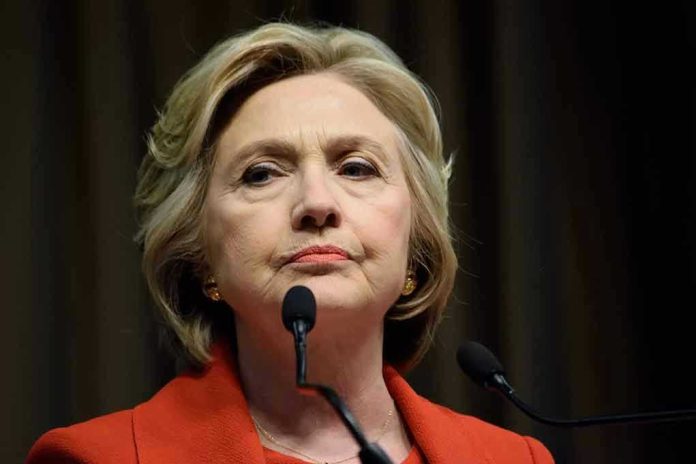
A closed-door Epstein deposition meant to stay confidential blew up after a sitting member of Congress leaked a photo of Hillary Clinton—handing Democrats a new procedural fight just as Republicans press for answers.
Story Snapshot
- Rep. Lauren Boebert photographed Hillary Clinton during a House Oversight Committee deposition and sent the image to influencer Benny Johnson, who posted it on X.
- The leak violated House rules for confidential depositions and briefly paused Clinton’s testimony while investigators traced the breach.
- Clinton’s team used the incident to argue for public proceedings, but Chairman James Comer kept the deposition closed-door.
- Republicans say the public deserves clarity on Epstein’s network and any high-level connections; Comer emphasized no wrongdoing was being alleged “at this moment.”
What happened inside the Clinton deposition—and why it matters
On Thursday, February 26, 2026, Hillary Clinton appeared for a closed-door deposition tied to the House Oversight Committee’s probe into Jeffrey Epstein and Ghislaine Maxwell. During the session, Rep. Lauren Boebert (R-Colo.) took an unauthorized photo of Clinton and sent it to conservative influencer Benny Johnson, who posted it publicly. Reporting says the deposition paused while officials investigated how the image got out before testimony resumed.
The immediate dispute is procedural: House rules treat these depositions as confidential, and the photo’s release triggered a scramble to reassert control. Substantively, the fight is also about transparency and trust. Republicans argue that powerful figures have dodged scrutiny for years in the Epstein scandal, and voters want answers now. Democrats, meanwhile, seized on the leak to claim the process is being mishandled and politicized.
How Clinton and Comer framed the standoff over “transparency”
Clinton entered the deposition denying knowledge of Epstein’s or Maxwell’s crimes, according to reports. Through spokesperson Nick Merrill, she said the hearing paused while the committee investigated the photo’s origin and why it appeared members might be breaching House rules. Clinton also pushed for her deposition to be public—an argument that gained momentum once the photo appeared online, because it underscored how “closed” proceedings can still leak in selective ways.
Chairman James Comer (R-Ky.) rejected public testimony and kept the format closed-door, with recorded testimony expected to be released later. Comer’s public messaging tried to hold two lines at once: press forward aggressively, but avoid overclaiming. He said Americans have questions and that the Clintons have not answered many about Epstein and Maxwell, while also stressing that “no one’s accusing, at this moment, the Clintons of any wrongdoing.” That distinction matters legally and politically.
What Republicans say they’re trying to learn about Epstein’s network
Republicans indicated they planned to question Hillary Clinton on several fronts: whether Epstein acted as a resource for a foreign nation, how he accumulated his wealth, and whether he raised funds connected to the Clinton Foundation. Those topics reflect a broader conservative concern that elite institutions—political families, major nonprofits, and well-connected financiers—often face softer scrutiny than everyday Americans do. The committee’s challenge is to turn those concerns into verifiable facts.
The Clintons’ path to this deposition also shows how hard it can be to get straight answers from major political figures. Reports say the Clintons initially offered sworn statements instead of appearing in person. After the committee rejected that approach, Comer threatened criminal contempt, which ultimately compelled their agreement to testify. For voters frustrated by years of “two-tier” accountability, the fact of testimony itself is significant—even if the closed-door format limits real-time public oversight.
Boebert’s response, Democratic blowback, and the risk of a wider political trap
Boebert defended the episode on X by saying “Benny did nothing wrong,” a short statement that became a rallying point online. The available reporting does not include a longer explanation from Boebert, despite viral claims of an “epic response,” so the public record is limited to that defense and the fact that House rules were violated. That limitation matters because it prevents a full evaluation of her intent beyond what is documented.
Rep. Lauren Boebert Issues an Epic Response to Democrats Hating on Her for Leaking Hillary Clinton Photo During Epstein Deposition https://t.co/Mfdaeu1Svm #gatewaypundit via @gatewaypundit
— Ken Mettler (@RealKenMettler) February 27, 2026
Democrats responded by arguing that if Bill Clinton testifies—his deposition was scheduled for Friday, February 27—they should be allowed to seek testimony from prominent Republicans, including President Donald Trump. That’s a familiar Washington pattern: a probe aimed at uncovering misconduct becomes a leverage point to broaden targets. For conservatives, the key issue is whether the Oversight Committee stays focused on Epstein’s trafficking network and any provable links, rather than letting procedural drama dilute accountability.
Sources:
Hillary Clinton Epstein deposition leaked photo
Hillary Clinton’s deposition briefly delayed over a leaked photo