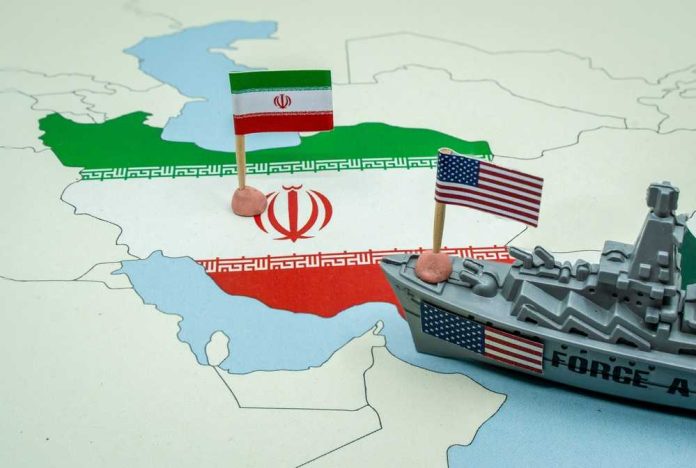
As Washington inches toward a fragile peace deal with Iran, Mike Pence is warning that America may regret not letting our military finish the job.
Story Snapshot
- Mike Pence says the U.S. should keep hitting Iran until the regime surrenders, instead of chasing a quick exit.
- Trump’s campaign against Iran has already “decimated” much of Tehran’s military power, Pence argues, and made America safer.
- A draft peace deal would reopen the Strait of Hormuz and dismantle parts of Iran’s nuclear program, but critics fear it lets the regime survive.
- War fatigue at home and pressure from global elites are pushing diplomacy, even as Iran’s hardliners claim victory in the streets.
Pence’s Call to “Finish the Job” in Iran
Former Vice President Mike Pence is telling Americans that the United States would be better off if our armed forces finished the job in Iran instead of rushing into a shaky peace framework.[2] In a recent television interview, he said the U.S. should “persist in Iran until the current regime surrenders unconditionally,” rather than look for a quick, politically safe exit ramp.[2] Pence argues that continued strikes on Iran’s security network could create the conditions for the Iranian people to finally overthrow their rulers.[2]
Pence has tied this tough line to what he calls a “brilliant campaign” of U.S. and Israeli strikes that have already “literally decimated the military capabilities of Iran.”[1] He praised Operation Epic Fury and said every American should be proud of how our troops crippled Iran’s ability to project force beyond its borders.[1] Pence says this military pressure, not trust in Tehran’s promises, is what has made America, Israel, and the free world safer so far.[1]
Trump’s Strategy: Crush Iran’s War Machine, Not Fight Its People
From the start of this conflict, President Donald Trump has said Iran could never be allowed to obtain a nuclear weapon and that American forces were right to strike key nuclear and military sites.[3] The Trump White House’s Iran strategy has focused on denying Tehran “all paths to a nuclear weapon” and punishing its support for terror groups and missile programs.[2] Pence echoes that line, stressing that we are at war with Iran’s nuclear and military ambitions, not the Iranian people themselves.[5]
Pence has also framed the war as part of a long struggle that began with the 1979 hostage crisis, arguing that the regime has been attacking America and Israel through terror proxies for nearly half a century.[4] In his view, unfinished wars invite more attacks down the road, while firm action now could prevent a larger, more costly conflict later.[4] But he has not publicly laid out detailed endgame plans, troop levels, or cost estimates, leaving some questions about how far “finish the job” would actually go.[2]
The Emerging Peace Deal and What It Gives Tehran
While Pence urges more pressure, negotiators have moved toward a peace deal that would end open fighting and reopen the Strait of Hormuz to global shipping. Reports say the United States and Iran have agreed in principle to extend a ceasefire by about sixty days and use that time to hammer out nuclear and sanctions terms. A draft framework described by officials includes reopening the strait and lifting parts of the blockade, in exchange for steps on Iran’s nuclear program and regional behavior.
According to several accounts, the deal would include releasing some frozen Iranian assets, easing sanctions on Iranian oil exports, and removing large amounts of enriched uranium from the country. The Associated Press reports that the emerging agreement calls for removing and destroying key nuclear materials and dismantling parts of Tehran’s nuclear program, while still allowing limited civilian nuclear activity under strict rules. A senior official told TIME that Iran could keep nuclear energy for power but not the infrastructure needed to race toward a bomb, with verification details still under negotiation.
Why Many Conservatives Are Skeptical of a “Paper Peace”
Many conservative voters remember past deals where Iran pocketed cash and sanctions relief, then cheated in the shadows while chanting “Death to America.” That history makes them wary of any agreement that lets the same regime stay in power and claim victory. Reuters notes that Tehran’s leaders are already bragging that they “won” the war even as they talk about peace. Street rallies inside Iran, led by hardliners, are also mocking negotiations and demanding revenge for slain leaders.
Mike Pence on the Iran peace deal: "It's my view that we would be better off allowing the armed forces of the United States to finish the job and give the people of Iran a real shot at freedom." pic.twitter.com/wZRGKg3yRr
— TheBlaze (@theblaze) June 16, 2026
Military analysts warn that Iran has managed to deny the United States clear dominance in parts of the air and missile battle, raising fair questions about what our real war goals are and whether they have been met. At the same time, new research shows that American war fatigue is real, with strong public resistance to any large deployment of ground troops into Iran. That political pressure, plus global elite calls for “stability,” helps explain why diplomacy is racing ahead even before the regime faces true unconditional surrender.
What “Finish the Job” Really Means for America’s Future
This clash between Pence’s “finish the job” message and the rush toward a deal is about more than Iran. It is about whether the United States still has the will to stand firm against terror states, or whether we accept endless cycles of conflict and weak agreements that keep our troops in harm’s way. For many Trump supporters, a real victory means Iran’s rulers lose their ability to threaten Americans, our allies, our energy supply, and our freedoms.
As this fragile framework moves ahead, conservatives will watch two things closely: whether Iran truly gives up its path to a bomb and terror funding, and whether our own leaders resist pressure to trade away U.S. strength for short-term calm. Pence’s warning is simple, and it resonates across red America: if we stop halfway, we may be forced to fight this same enemy again later, at a higher cost, with fewer friends, and with our children on the front lines instead of us.
Sources:
[1] YouTube – Former VP Mike Pence Says We’d be Better Off if U.S. Armed Forces …
[2] YouTube – Pence on best US war strategy in Iran: ‘Finish the job once and for …
[3] Web – Remarks by President Trump on Iran Strategy – The White House
[4] Web – Ex-Vice President Mike Pence says Iran war ‘had to happen’ – The Hill
[5] Web – Pence on best US war strategy in Iran: ‘Finish the job once and for …