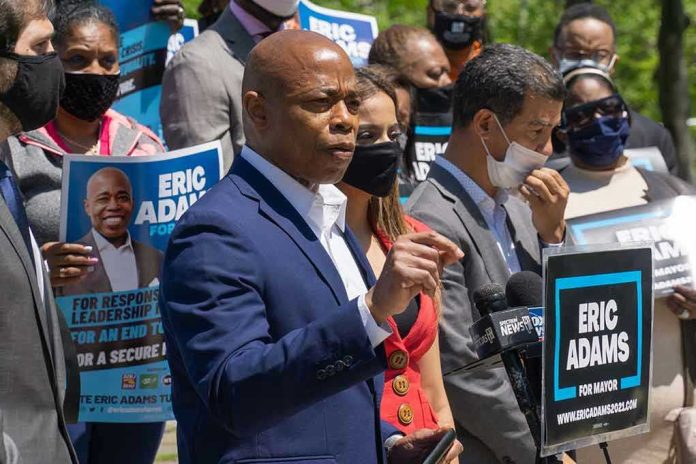
A sweeping executive order by New York City Mayor Zohran Mamdani has revoked post-indictment directives from former Mayor Eric Adams, sparking a debate on governance and accountability.
Story Snapshot
- Mayor Zohran Mamdani revokes Eric Adams’ post-indictment executive orders.
- Action symbolizes a clean slate and a shift towards tenant protections.
- Revocation tied to Adams’ 2024 indictment on corruption charges.
Mayor Mamdani’s Assertion of Authority
On January 1, 2026, barely a day into his term, New York City’s new Mayor Zohran Mamdani swiftly revoked all executive orders signed by his predecessor, Eric Adams, post-September 26, 2024— the date linked to Adams’ federal indictment. This decisive move underscores Mamdani’s intent to distance his administration from what he perceives as the shortcomings of Adams’ policies. By nullifying these orders, Mamdani aims to reset the city’s political landscape, prioritizing transparency and accountability while focusing on tenant protections and housing reforms.
This unprecedented action highlights Mamdani’s commitment to a governance style that resonates with many New Yorkers disillusioned by previous administrations. It also signals a potential shift in focus towards more progressive housing policies, as Mamdani has already issued new executive orders designed to revitalize tenant protection offices and establish housing task forces. This move reflects a broader strategy to align city governance more closely with the needs of working-class residents.
Implications for New Yorkers
The revocation of Adams’ executive orders, which included directives on non-discrimination against Israel and protest regulations, has significant implications for various stakeholders across the city. Tenant advocacy groups are likely to welcome Mamdani’s focus on housing and tenant protections, as these issues have been pressing concerns in recent years. Meanwhile, the Jewish community, while reassured by the preservation of the Office to Combat Antisemitism, remains watchful of potential policy shifts, especially considering Mamdani’s critical stance on Israel-related issues.
While Mamdani’s actions are seen as a victory by some, they also raise concerns among pro-Israel investors and other groups who view the revocations as potentially destabilizing. This tension underscores the complexities of balancing diverse interests in a city as multifaceted as New York.
Setting a Precedent for Future Leadership
Mayor Mamdani’s bold first steps set a precedent for future administrations, illustrating the power and impact of swift policy reversals. His actions on day one challenge the status quo and emphasize the importance of accountability in leadership. As the city moves forward, the true long-term effects of these changes will depend on how effectively Mamdani can implement his vision without alienating key constituencies.
This early move by Mamdani to revoke Adams’ orders may also influence how future mayors approach transitions of power, particularly in the wake of controversy or scandal. It sends a clear message that new leadership can bring substantial changes, potentially reshaping the governance landscape for years to come.
Sources:
amNY: Mayor Mamdani’s first 100 days
Times of Israel: Mamdani nods to Jewish and Palestinian New Yorkers in inaugural speech