As Washington finally tightens the screws on Cuba’s communist rulers, new U.S. sanctions on President Miguel Díaz‑Canel signal that the days of consequence‑free repression just got a lot shorter.
Story Snapshot
- The Trump administration has formally sanctioned Cuban President Miguel Díaz‑Canel and other top officials, freezing any assets under U.S. jurisdiction and blocking key financial dealings.
- The sanctions fit into a broader “maximum pressure” strategy aimed at forcing political and economic change inside Cuba’s entrenched communist regime.
- Cuba’s leadership is denouncing the measures as “collective punishment,” even as they claim not to hold assets in the United States.
- The new order also targets sectors like energy, mining, finance, and security, and can hit foreign banks that keep propping up the regime’s cash flow.
Trump Targets Díaz‑Canel Personally, Escalating a Long Sanctions Fight
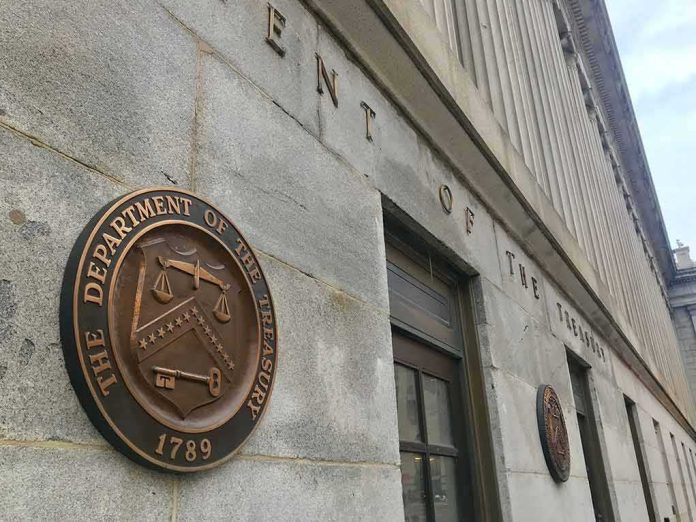
The United States has now directly sanctioned Cuban President Miguel Díaz‑Canel, along with several other senior figures, according to filings posted by the Treasury Department and confirmed in multiple news reports.[1][3] These designations freeze any property or interests in property that fall under United States jurisdiction and bar United States persons from doing business with those individuals.[5] By going after Díaz‑Canel personally, the Trump administration makes clear it sees the Cuban leadership itself as responsible for systematic repression and threats to American security.[5]
The move builds on decades of economic pressure, including the comprehensive embargo first imposed in 1962 and still in force today.[4][7] Under President Trump’s second term, Washington has doubled down, reversing prior attempts at normalization and restoring Cuba to the “State Sponsors of Terrorism” list early in the term.[3] Analysts describe this as part of a broader “maximum pressure” campaign to push for political and economic liberalization in Cuba and to potentially remove Díaz‑Canel from power, though experts are divided on the likelihood of rapid regime change.[2]
New Executive Order Expands Who Can Be Hit and How Hard
A recent presidential order titled “Imposing Sanctions on Those Responsible for Repression in Cuba and for Threats to United States National Security and Foreign Policy” dramatically widens the target set.[5] It authorizes sanctions on any foreign person who operates in key Cuban sectors such as energy, defense, metals and mining, financial services, or security, or who materially supports the government in those areas.[5] It also explicitly covers leaders, officials, senior executives, political subdivisions, agencies, and instrumentalities of the Cuban government, plus adult family members of designated individuals.[5]
Under this authority, the Treasury Department can block all property and interests in property of designated individuals or entities that touch the United States financial system, and it prohibits almost any transaction by United States persons involving those blocked assets.[5] The order further allows sanctions on foreign financial institutions that conduct significant transactions on behalf of sanctioned Cuban actors.[5] That step mirrors the “secondary sanctions” approach used elsewhere, threatening foreign banks with loss of access to dollar markets if they keep doing business with Havana’s power structure, which is designed to choke off the regime’s external lifelines beyond the longstanding embargo.[1][5]
Cuban Regime Cries “Collective Punishment” as Evidence Mounts of Pressure
Cuban President Miguel Díaz‑Canel has responded by publicly condemning the new sanctions, accusing the United States of “genocide,” “coercive” measures, and what he calls abusive collective punishment of the Cuban people.[2][5] In televised remarks and United Nations appearances, he has argued that these actions are unjustified, politically motivated, and aimed at strangling Cuba’s economy rather than promoting human rights.[2][6] Cuban officials also insist that neither the president nor senior military and party leaders hold assets under United States jurisdiction, claiming the sanctions are symbolic rather than practical.[5]
Independent reporting undercuts the idea that the measures are purely symbolic, emphasizing that the designations are part of a coordinated strategy to restrict foreign finance and trade flows that sustain the regime.[1][3] Earlier Trump‑era sanctions on Cuban companies tied to the military, including conglomerates controlling large swaths of the economy, have already made foreign partners more cautious due to the risk of losing access to United States markets.[1] Policy experts note that while Cuba’s tightly controlled system makes sudden collapse unlikely, the combination of oil shortages, blackouts, and financial isolation has significantly raised the cost of maintaining the current communist model.[2][3]
Maximum Pressure, American Security, and Conservative Priorities
The wider Trump strategy treats Cuba not just as a human rights concern but as part of a struggle over security in the Western Hemisphere, especially against adversaries like China and Russia that see Havana as a useful foothold close to the United States mainland.[2] By cracking down on sectors such as energy, defense, mining, and finance, and by threatening foreign institutions that enable those networks, the administration aims to weaken a regime that has long aligned with authoritarian powers and exported destabilizing influence across Latin America.[2][5] For many Cuban American leaders and dissidents, these sanctions are overdue accountability, not aggression.[6]
This approach also fits a broader conservative view that economic pressure is preferable to military intervention when confronting hostile regimes near United States shores.[2][6] The administration has repeatedly stated it is not seeking an invasion of Cuba, instead using financial tools to target elites while keeping the burden off American taxpayers and troops.[2][6] At the same time, the legal framework, including the Helms‑Burton Act, links lifting major sanctions to real democratic change, meaning the Cuban leadership faces a clear choice between clinging to one‑party control or opening political space if it wants relief.[2][3] For Americans worried about communist influence, border security, and the erosion of Western values, this latest round of sanctions is a sign that Washington is finally treating Cuba’s rulers as part of the problem, not partners to appease.
Sources:
[1] Web – U.S. sanctions Cuban president as Trump administration puts pressure …
[2] Web – U.S. sanctions Cuban President Miguel Díaz-Canel in … – CBS News
[3] YouTube – New sanctions on Cuba’s leaders prompts strong reaction from …
[4] Web – US sanctions Cuban President Miguel Díaz-Canel in latest move to …
[5] Web – US sanctions Cuban President Miguel Díaz-Canel in latest move …
[6] YouTube – Cuba president condemns additional sanctions imposed by Trump …
[7] YouTube – Cuban president criticizes U.S. sanctions at UN