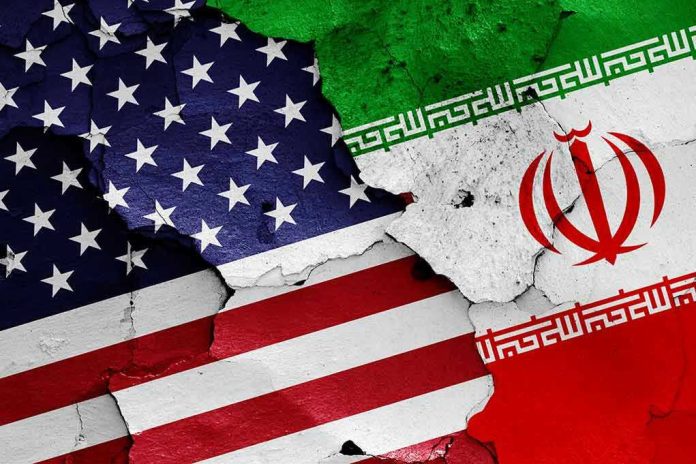
Amid escalating protests in Iran, a new threat from Tehran challenges President Trump’s resolve, raising alarms among U.S. allies.
Story Snapshot
- Iran issues threat amid nationwide protests, accusing foreign interference.
- President Trump signals possible U.S. intervention to support protesters.
- Protests demand regime change, marking the largest uprising since 2022.
- Iranian crackdown results in thousands of deaths, inciting international concern.
Iran’s Threat Amid Protests
As widespread protests engulf Iran, the regime has issued a stark warning targeted at President Trump. On January 14, 2026, Iran’s Foreign Minister, Abbas Araghchi, publicly accused Israel of arming demonstrators and cautioned the U.S. against intervention. This response follows Trump’s earlier threats of U.S. involvement, highlighting the regime’s attempt to frame protests as orchestrated by foreign adversaries.
Despite the Iranian government’s accusations, internal factors such as economic hardship and the demand for political reform are driving the protests. The demonstrations began on January 8, 2026, with tens of thousands of citizens taking to the streets to call for the end of the Islamic Republic, with some even advocating for the return of the monarchy. This surge of dissent is reminiscent of the 2022 uprisings but is noted for its unprecedented scale and intensity.
U.S. Response and Potential Intervention
President Trump has made his stance clear by posting on Truth Social that “Help is on its way… Keep protesting.” This message underscores the administration’s readiness to support the Iranian people in their pursuit of change. Trump’s warning comes amid a backdrop of U.S. military presence in the Gulf, suggesting a strategic positioning to deter Iranian aggression and support potential intervention if necessary.
The situation remains volatile as Iran continues its harsh crackdown, reportedly resulting in 10,000 to 12,000 deaths. The international community is closely monitoring the developments, with concerns over human rights violations and the potential for further escalation. Observers note that the Iranian regime’s survival tactics are pushing the populace further from reconciliation, risking long-term instability.
Implications for U.S. and Global Politics
The ongoing crisis in Iran presents both immediate and long-term challenges for U.S. foreign policy. In the short term, the heightened tensions could lead to limited military engagements, further straining U.S.-Iran relations. However, the protests also provide an opportunity for the U.S. to leverage its influence in support of democratic movements, potentially reshaping regional power dynamics.
For Iran, the regime’s reliance on force to quell dissent could erode its legitimacy, leading to increased internal and external pressure. Economically, the country continues to suffer under sanctions, exacerbating the crisis and fueling public discontent. The protests also highlight the critical role of technologies like Starlink, which protesters use to circumvent internet blackouts.
Sources:
CSIS: How Will Trump Administration Respond to Violent Protests in Iran?
Time: Iran’s Protests and Trump’s Response
Iran International: Live Updates on Iran Protests