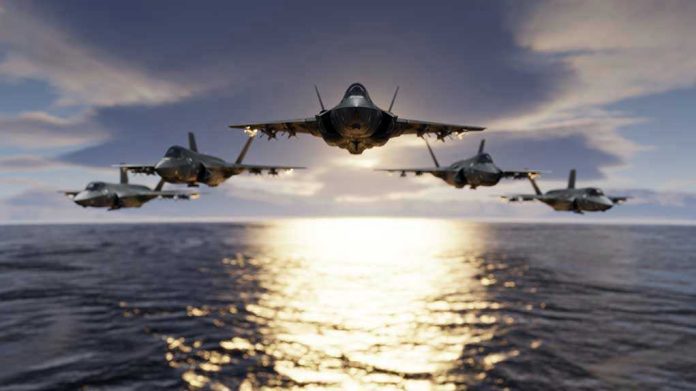
Germany’s air force chief says the Luftwaffe can “fight tonight” if Russia hits a NATO ally, jolting Europe’s powder keg and testing U.S. resolve.
Story Snapshot
- German air chief vows immediate strikes on Russian military targets if NATO is attacked [5].
- Message underscores “every inch” defense—no safer zones from Estonia to London [1][5].
- Analysts note the claim is deterrence talk amid ongoing German modernization [2].
- NATO posture since 2014 aims for faster response and forward defense on the eastern flank [9][10].
Luftwaffe boss issues “fight tonight” warning to Moscow
Lieutenant General Holger Neumann, Germany’s air force chief, said the Luftwaffe is ready to launch “devastating” strikes on Russian forces if Moscow attacks any North Atlantic Treaty Organization state. He framed defense as equal across the alliance, saying there are no zones with different levels of safety. He linked likely target areas to key Russian military regions such as Kaliningrad and the Black Sea if war comes. His comments came in an interview highlighted by British media [5] and summarized by regional outlets [1].
Neumann stressed “every inch” of NATO land would be defended, from Estonia to London, and said his air crews could fight on immediate notice if called. That is classic deterrence language meant to warn the Kremlin without firing a shot. It also echoes years of allied messaging that an attack on one is an attack on all. The standout line—“ready to fight tonight”—grabbed headlines and fueled fresh debate on what readiness really means in practice [1][5].
Deterrence message meets modernization reality in Germany
Germany is modernizing its air and space forces through the decade, according to industry reporting on Neumann’s plans. The German Air Force is adding space protection tasks, growing staff, and deploying satellites for inspection and defense of assets. Those efforts aim to strengthen air superiority and resilience against a high-tech foe. The push is serious, but it is still underway. That suggests the “ready tonight” line is strong deterrent talk paired with longer-term force upgrades, not a public audit of instant war capacity [2].
Public sources tied to the interview do not provide hard measures on aircraft availability, weapons stocks, sortie rates, or crew readiness. They report intent and posture, not a checklist of combat metrics. That gap is normal in military messaging, since such data is often classified or limited. It also means skeptics will ask how fast Germany could sustain high-intensity operations. The statement sets a red line for Russia, but it does not prove the readiness level with numbers the public can verify [1][2].
NATO’s faster-response posture since 2014 frames the claim
NATO shifted to quicker reaction forces after Russia’s 2014 moves in Crimea and eastern Ukraine. The alliance created a very high readiness task force and expanded the response force for rapid deployment. These steps anchor the pledge to defend allies at short notice. The aim is clear: move troops and firepower fast enough to stop a land grab and raise the cost for Moscow. That plan made deterrence language like Neumann’s more common, and more credible, across Europe [9].
Allied leaders also strengthened defenses on the eastern flank. NATO now fields nine forward land battlegroups, including a new one in Finland as of June 2026. These units are integrated in command chains to boost speed and responsiveness. Their presence tells Moscow that any attack would face immediate resistance, not just promises on paper. Air power, like the Luftwaffe, would be part of that first-week response, striking key nodes and helping shield ground forces and cities under attack [10].
What this means for American security and energy wallets
Neumann’s warning reminds us that peace in Europe still depends on strength and clarity. Clear red lines can stop wars before they start. For U.S. readers, that matters to pocketbooks and freedom. A wider European war would spike fuel prices, hit supply chains, and invite fresh calls for Washington to write blank checks. Strong deterrence today can prevent that mess tomorrow. It also backs the Trump administration’s push for allies to carry more of the load.
Germany: NATO Ready to "Fight Tonight" if Russia Attacks
Germany has declared NATO is fully prepared to respond immediately to any Russian aggression, with Luftwaffe chief Lt. Gen. Holger Neumann stating the alliance is ready to "fight tonight" and will defend "every inch" of… pic.twitter.com/xYvHT1PYlc
— Parsa Imran (@Parsa__Imran) June 15, 2026
Conservatives should demand two things at once: real allied readiness and honest metrics. Germany’s words are welcome, but numbers seal the deal. Allies need hard stocks of missiles, spare parts, and fuel, plus trained crews and dispersed bases. NATO planning since 2014 points the right way, yet the proof is in sustained capacity, not headlines. Deterrence works best when our adversaries know the jets fly tonight—and fly again next week if they must [2][9][10].
Sources:
[1] Web – POWDER KEG EUROPE: German Air Force Ready To Fight Russia ‘Tonight’, …
[2] Web – German air chief says Luftwaffe will strike Russian military targets …
[5] Web – Germany is ready to “fight tonight” against Russia and will defend …
[9] Web – [PDF] Chief of the German Air Force – Bundeswehr
[10] Web – Defense Trends: Unmanned Aircraft and High-Intensity Warfare …