The promise of a universal 30% discount on core groceries is only as credible as its financing model; without documented unit economics and enforceable contracts, a municipal “public option” inevitably resolves into a subsidy—and the only real policy question is how large, how targeted, and with what consequences for the rest of the food economy.
The Short Version
- City Hall has committed to price a defined core basket—produce, meat, seafood, and staples—30% below typical retail, once a month, available to all shoppers.
- The operational model is public facilities with private operators; capital spending around five sites is reported at $70 million, distinct from ongoing operating costs.
- Critics anchor their skepticism in grocery math: with industry net margins near 1–3%, a 30% retail discount implies direct subsidies or cross-subsidies inside the store.
- The durable test of the plan is not rhetoric but documents: pro forma economics, supplier contracts, “affordability payments,” audit methods for the 30% benchmark, and competitive impacts.
What the city has actually promised—and what it hasn’t
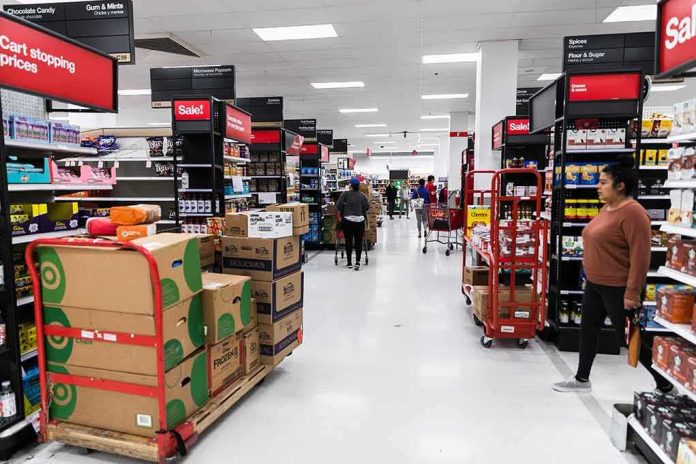
On paper, the policy architecture is unusually specific for a price intervention. The Mayor’s Office says five city-facilitated stores will post a 30% discount on a core basket encompassing all fresh produce, all meat and seafood, and roughly twenty additional staple categories. Prices on the core goods will be set once a month, held for the month—“no exceptions, no gimmicks”—and offered to every shopper regardless of income. The remainder of the assortment can sell at market rates, which gives operators room for conventional pricing and creates at least the possibility of internal cross-subsidies between discounted and non-discounted goods.
The implementation is framed as a public-option model rather than a city-run chain: the city would supply or prioritize public sites and eliminate rent where possible, while private operators run day-to-day retail under contract. Reporting pegs capital committed for five sites at approximately $70 million—money for build-outs and facilities rather than ongoing payroll, shrink, utilities, distribution, and the other costs that determine whether a 30% discount is sustainable in operation.
The nonnegotiable arithmetic of a 30% discount
Grocery retail is a low-margin, high-turn business. Across cycles, typical net margins cluster around 1% to 3%. That constraint drives the central critique: unless the municipal stores can remove a cost equal to roughly fourteen times the industry’s average profit, a persistent 30% markdown is, economically, a subsidy transferred from one ledger to another—most plausibly from taxpayers to shoppers. That critique is not mere punditry; it is the standard baseline analysis used by industry economists and general-audience outlets alike when evaluating proposals to underprice market retail by large increments.
The more specific the documentation, the more decisive the case. Reporting indicates that the city’s procurement contemplates “affordability” or operating-deficit payments to cover losses attributable to the discounted basket. If those provisions are indeed in the request for proposals, they answer the feasibility question while sharpening the fiscal one: yes, the stores can price 30% below typical retail—but only with a committed stream of public operating support layered atop the rent-free facilities and capital spend. An eminent finance scholar made the same point in simpler form: even a zero-profit operator does not create a 30% consumer markdown; if these stores also lose money after discounting, the implied subsidy exceeds 30% on the discounted items.
Mechanics that could narrow—but not erase—the gap
There are legitimate levers that can reduce the scale of subsidy required. First, facility economics: rent-free public space and abated property costs remove a meaningful fixed expense. Second, basket design and cadence: limiting the 30% mandate to a core list and resetting it monthly reduces exposure to weekly price volatility and allows operators to balance promotions, assortments, and replenishment against a known obligation. Third, procurement: if the city aggregates volume and bids wholesale supply contracts specific to the basket, it can shave points off cost of goods sold. Fourth, merchandising mix: non-basket categories priced at market rates can contribute incremental margin, softening basket losses. These are not hypotheticals; they are the levers any constrained-price retailer would pull to uphold a mandated discount while minimizing cash burn.
But arithmetic does not vanish. Wholesale costs for produce and protein move with weather, fuel, labor, and global commodity markets; shrink (spoilage, theft, damage) on perishables is structurally higher; and labor at municipal partners is unlikely to be below industry standards. Unless documented procurement savings and store-level productivity gains close most of the 30-point gap, the remaining difference shows up as a recurring affordability payment or an operator loss that must be backstopped contractually.
Coverage, access, and who benefits
Universal eligibility is a political and operational choice—clean at the register, but blunt as policy targeting. A discount available to all reduces stigma and administrative cost but inevitably subsidizes higher-income shoppers alongside households facing food insecurity. City messaging emphasizes monthly savings on the order of $90 per household, roughly $1,000 annually. Those are significant numbers for a tight budget, but without distributional analysis they do not tell us where the public dollars are landing by income band or neighborhood.
Geography matters as much as price. With five stores—one per borough—an attractive discount can be eroded by travel time, transit fares, and queueing if capacity is constrained. A public option that shifts purchases rather than expanding access may look successful on register volumes while leaving food deserts unchanged. That is why credible evaluations hinge on catchment analysis, before-and-after neighborhood price surveys, and small-business sales trends around host sites—particularly because opposition is already organized among bodegas, independent grocers, and trade groups that operate on thin margins and fear displacement by an entity insulated from rent and taxes.
During a recent interview with journalist Andrew Ross Sorkin, New York City Mayor Zohran Mamdani was asked to explain the math behind his planned city-owned grocery stores.
He is planning to offer products at a 30 percent discount when supermarkets typically operate at a margin…
— Carl (@gsb0824) November 20, 2026
The documents that would settle the debate
At this stage, the strongest claims—on both sides—resolve to testable, documentable questions. If the city releases a five-year pro forma for each store, including gross margin assumptions by category, labor, shrink, utilities, security, distribution, depreciation, and an explicit affordability-payment schedule, the public will be able to see the true subsidy per dollar of discount delivered. If supplier agreements, bid responses, and wholesale schedules show cost-of-goods reductions adequate to fund much of the 30% gap, the policy looks more like procurement innovation than budget transfer. If the benchmark for “typical retail” is fully defined—matched UPCs, sizes, grades, geographic sampling, treatment of promotions—and independently audited monthly, the 30% claim becomes a verifiable consumer promise rather than a slogan.
What an honest assessment should conclude now
Two things are clear. First, the city has established a specific, universal price commitment on a core basket and a mechanism—monthly resets, private operators in public space—to enforce it. Second, absent detailed unit economics, the only plausible bridge from wholesale and operating costs to a 30% retail discount is a recurring public subsidy, whether routed through operators or paid directly by the city. The broader implications—on food access, on small-business viability, on taxpayer value—depend on execution: where the stores are sited, how procurement is designed, how the basket is audited, and whether the city is transparent about covering the unavoidable delta between cost and checkout.
Sources:
southshorepress.com, sacbee.com, fortune.com, nyc.gov, zot.news, 6sqft.com